Beans with cornmeal porridge - Pilar Hernández's Chilean Kitchen
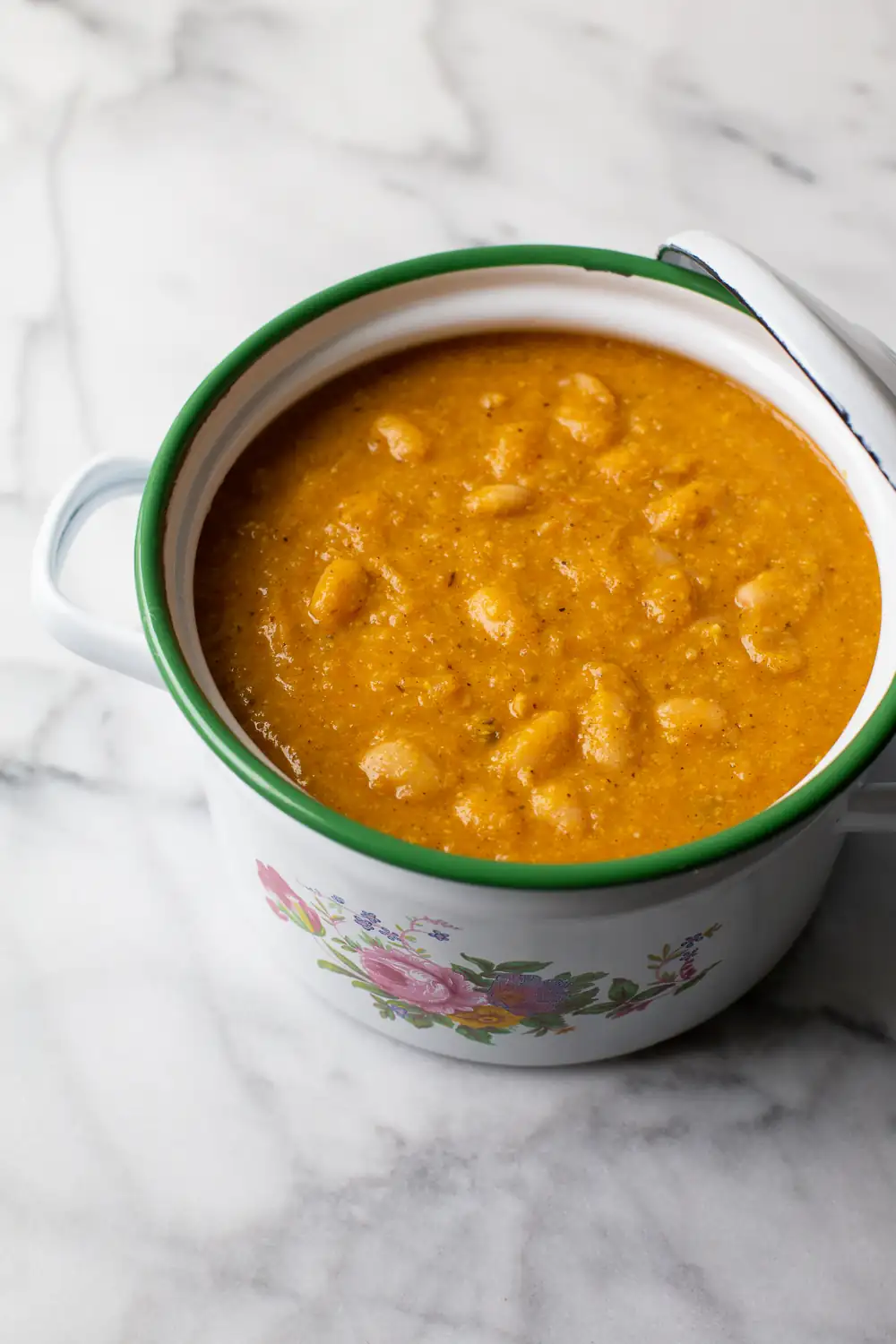
When I was a child, I was quite picky, and one thing that always bothered me was my family's obsession with soup in the summer. One of the dishes that was a staple during the hot months was, of course, beans with cornmeal porridge.
- 750 grams of shelled beans (without the pod), buy between 1.5 and 2 kilos of shelled beans with the pod
- 1 large onion or 2 medium onions, diced
- 2 cups of peeled and diced yellow pumpkin, about 400 grams
- 3 large ears of corn or a 400-gram bag of frozen corn
- basil, a small bunch
- 1 peeled, seeded and sliced tomato, optional
- salt and pepper
- 1 clove of chopped garlic, optional
- color or chili pepper, to serve
- In a large pot, cook the beans in cold, salted water. Once they come to a boil, cover and cook for 15-20 minutes. Once cooked, drain, reserving the cooking water for the mazamorra.
- In the same pot, heat a tablespoon of vegetable oil, add the onion and cook, stirring occasionally, for 5 minutes, until translucent. Add the garlic, if using, and cook for 1 minute.
- Add the corn, squash, tomato (if using), and basil, along with salt and pepper to taste. Stir and add just enough of the bean cooking water to cover the vegetables. If using fresh corn, you can add it grated and avoid using an immersion blender later.
- Cover and simmer gently for 10-15 minutes until the squash is cooked. Using an immersion blender, roughly blend the vegetables, leaving some chunks or to your liking.
- Add the beans and heat everything, taste and adjust the seasoning.
- Serve hot with paprika.
What beans are traditionally used?
This is a summer dish in Chile, when granados beans are easy to find at farmers' markets and supermarkets. You can buy them in the pod or shelled and ready to cook. If you buy them in the pod, I recommend shelling them the night before while chatting about tea. Break the pod, remove the stringy side, open it, and push the beans into the bowl with your finger.
Two kilos of dried beans in the pod serve 4-6 people.
Which bean do you recommend in the US?
I generally use canned beans; I recommend cannellini, white kidney, or great northern beans. Or you can use fresh frozen speckled butter beans. In Texas, it's not common, but in other states, you can find beans in the pod during the summer, like Dragon Tongue or Cranberry beans. It's important to make sure the beans are formed and plump. These varieties are also grown for green beans, and depending on when they're harvested, they can be used as shelled beans. Ask for shell beans. In the US, the term "frijoles" is more commonly used for beans, and "ejote" for green beans, especially at fairs where Spanish is spoken. You can also use dried beans like cranberry beans, but you must cook them first. Tips for cooking legumes here.
Which type of corn is traditionally used?
Porotos granados are made with humero or choclero corn, a variety very common in Chile but difficult to find in other countries. It is characterized by its irregular kernels; if the rows of kernels are neat, it's not the right kind. The husk is tough. When pierced, a whitish milky sap oozes out. It is used fresh, within the week. It is not recommended to store it for more than 10 days, as the corn dries out and loses its texture.
How do I replace corn on the cob in the US?
I recommend using frozen whole kernel corn. Fresh corn available in the US is sweeter because it's a different variety. You can sometimes find fresh Mexican corn in Latin supermarkets, which is less sweet.
Can I use canned corn, and what kind of basil should I buy in the US?
I don't recommend using canned corn; it has more water than frozen. Be careful with the basil; Asian basil (which tends to be purple) has a strong anise flavor. I recommend using Sweet Basil or Genovese basil (in moderation). Taste the basil before adding it to the pot.
What type of squash can I use in the USA?
I used a butternut squash, which is sweeter and creamier than the typical Chilean yellow squash. Squash varieties with a flavor more similar to the Chilean one are Hubbard, Turban, and Kabocha. Butternut squash is now available in some Chilean supermarkets; if you find it, buy it—it's delicious in salads, risottos, and soups.
The mazamorra turned out dark in the photos because I spilled some merkén in the pot at the beginning. If you use less, it will be more yellow. And since I didn't have basil, I used dried.
Description
Tasty and summery.