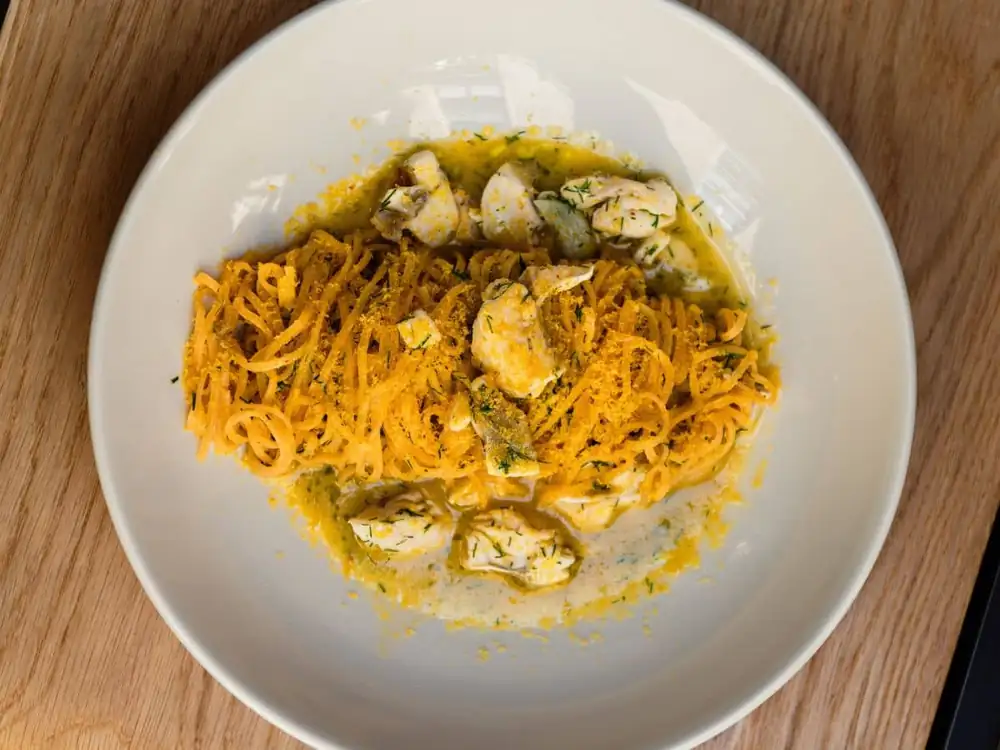
Gurnard Pasta with Dill & Bottarga
Gurnard Linguine with Dill and Lemon
- 500 g linguine
- 400 g gurnard fillet ((sea bass, bream or red mullet also work well))
- 3-4 garlic cloves (thinly sliced)
- pinch of dried chilli (adjust to taste)
- 150 ml olive oil
- 100 ml white wine
- 1 bunch dill (20g, chopped)
- juice of 1 lemon
- 60 g butter
- 40 g grated bottarga (this is optional as it can be a little tricky to get hold of but it’s just as delicious without)
- Make sure the gurnard has been scaled and any pin bones removed, then slice into 2 cm (3/4 inch) pieces.
- Bring a large pan of salted water to the boil and cook the linguine according to the packet instructions.
- Meanwhile, in a large frying pan or sauté pan add the olive oil, sliced garlic and dried chilli. Turn on the heat to medium and gently saute for 1-2 minutes until until fragrant and softened, but not browned.
- Add the sliced fish to the pan and gently cook for another 2 minutes then add the white wine, try not to break up the fish too much.
- Let the wine cook off for a minute then add the butter
- Once the pasta is cooked (you can turn off the heat under the fish if it’s ready before the pasta) add it to the pan and gently toss everything together, along with a ladle or two of the pasta water.
- Add the chopped dill and lemon juice (don’t add the lemon juice all in one go - adjust to taste)
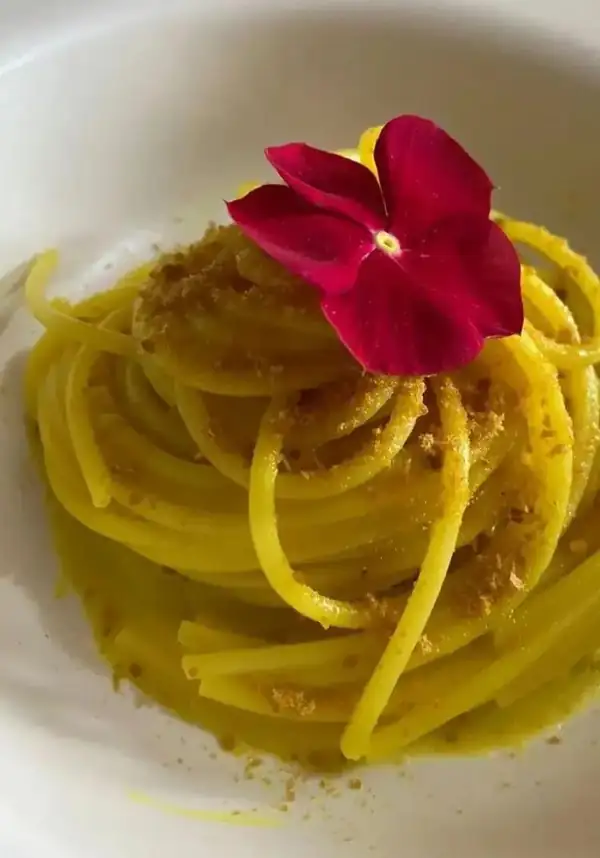
- Transfer to a serving platter and grate over the bottarga, finish with a healthy glug of olive oil, if you wish.
This restaurant-quality gurnard linguine comes from Chef Matt Beardmore of Legare, the Michelin Bib Gourmand–awarded London restaurant. Fresh and full of coastal flavor, it pairs tender pieces of gurnard with garlic, chilli, and dry white wine, before tossing everything with linguine, butter, and starchy pasta water to create a silky, glossy sauce.
Fresh dill and lemon bring brightness and balance, while a final grating of bottarga adds an intense savory, briny note. Bottarga is salted, pressed, and dried fish roe, most commonly made from grey mullet, and is best added at the end, away from direct heat, to preserve its distinctive flavor.
If bottarga is difficult to find, simply leave it out, the pasta will still be delicious. And if gurnard isn’t available, sea bass, sea bream, or red mullet all make excellent substitutes.