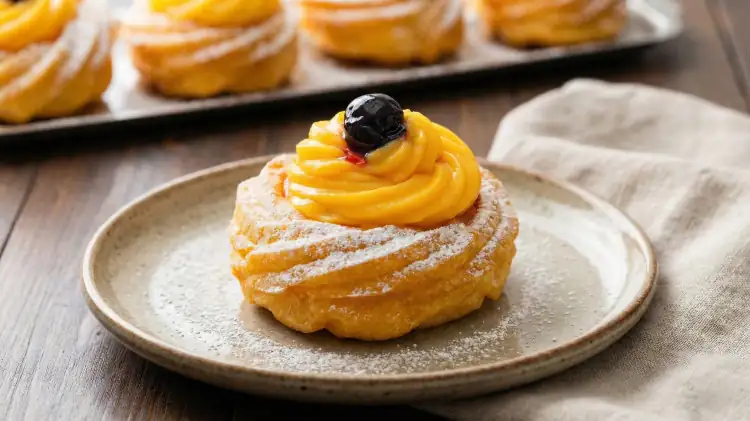
The True Recipe for St. Joseph's Zeppole: Secrets and Tricks
Zeppole di San Giuseppe are the symbolic sweet of Father's Day, a tradition steeped in Neapolitan history and pastry-making.
- Latte 500 gr
- Sugar 130 g
- Corn starch 40 g
- Egg yolks 6
- Vanilla extract 1 teaspoon
- Lemon zest 1
- Water 180 gr
- Flour 180 gr
- Butter 75 g
- Eggs 145 g 3
- Egg yolk 20 g 1
- Salt 1 pinch
- Sunflower oil for frying 2 l
- 12 Black Cherries in Syrup
- Powdered sugar
- Begin preparing the St. Joseph's zeppole by making the custard. First, heat the milk in a saucepan with the lemon zest until just below boiling. Meanwhile, in a large bowl, whisk together the egg yolks, sugar, and vanilla extract. Stir well until the sugar has completely dissolved, then add the cornstarch and mix thoroughly to avoid lumps. Remove the lemon zest from the hot milk and pour a ladleful onto the egg mixture. This will help loosen the mixture: whisk quickly before adding the remaining liquid.
- After removing the lemon zest from the milk, pour the egg yolk mixture into the saucepan. To obtain a thick and velvety custard, the secret is gentle cooking: stir with a wooden spoon or spatula, without using a whisk or whisking vigorously. Continue cooking over low heat until the custard begins to thicken. When you notice that the consistency is perfectly firm, immediately turn off the heat. Now it's time for the professional trick: stir vigorously for a few moments to emulsify the custard, making it shiny and silky. Finally, transfer the custard to a bowl and cover it with a sheet of parchment paper or plastic wrap. This step is essential to prevent an unsightly skin from forming on the surface during cooling.
- Now move on to making the choux pastry. In a small saucepan, preferably one with a heavy bottom, combine the water, butter cut into pieces, and a pinch of salt. Bring to a boil and wait until the butter has completely melted and the liquid is almost boiling. Then, add the flour all at once and stir vigorously with a wooden spoon. Continue cooking the mixture over medium heat, stirring constantly: in a few moments, you'll have a smooth, dense, lump-free polenta. The secret to perfect dough? Let the mixture cook until it completely pulls away from the sides of the saucepan and a thin white film forms on the bottom. This indicates the dough is properly dry and ready to receive the eggs.
- Transfer the dough to a large bowl and spread it slightly with a spatula. Let it cool for about 2 minutes. This short rest is essential to prevent the eggs from "cooking" when exposed to the excessive heat of the polenta. Now add the eggs one at a time, stirring vigorously. Follow this professional secret: don't add the second egg until the previous one has been completely absorbed by the dough. The final consistency should be thick and creamy. Don't be alarmed if the choux pastry seems "separated" or ruined at first: that's the nature of this dough! Continue to work the mixture patiently, and you'll see that it will become smooth, shiny, and homogeneous again, perfect for holding its shape during cooking. Once all the eggs have been incorporated, transfer the choux pastry to a piping bag fitted with a star-shaped nozzle (minimum diameter 12 mm). Now you're ready for the crucial shaping stage.
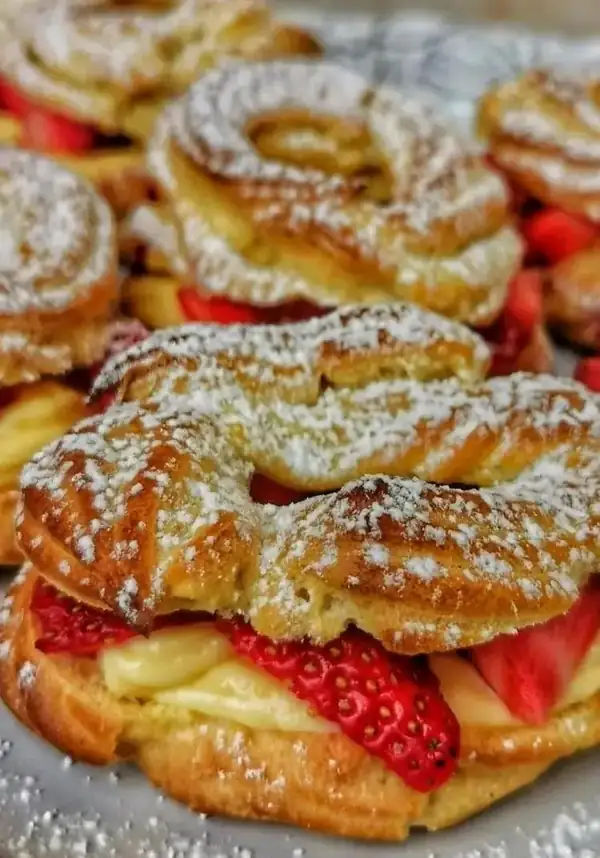
- On a baking sheet lined with parchment paper, begin forming the zeppole: pipe circles of dough with a pastry bag, maintaining an outer diameter of about 9 cm. If you're baking them in a convection oven, preheat it to 220°C (428°F) and bake for about 20 minutes, until golden and light. If you prefer traditional methods, try fried zeppole. Cut squares of parchment paper around each dough circle: this will allow you to dip them in the oil without ruining their shape. Heat the seed oil to 180°C (use a cooking thermometer for perfect results). Lower the zeppole into the boiling oil, flipping them over with the parchment paper facing up. After a few seconds, carefully remove the paper with tongs. Cook for about 3 minutes per side. A trick for even cooking? Turn them clockwise or counterclockwise: this way, you'll always know which one went in first and will ensure perfect browning. Once ready, remove the zeppole with a slotted spoon and place them on paper towels to remove excess oil. Let them cool completely before filling them.
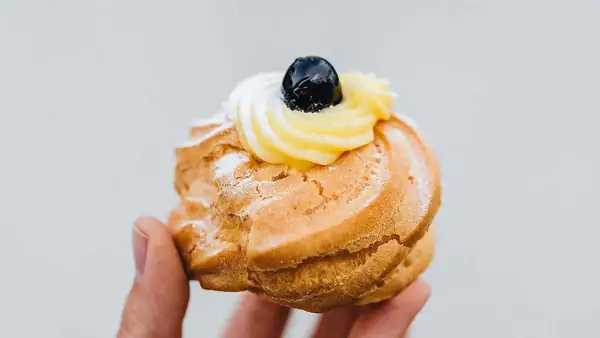
- Revive the cooled pastry cream by whisking it briefly with a hand whisk: it should be silky, shiny, and lump-free. Then transfer it to a piping bag fitted with a star-shaped nozzle for the classic professional decoration. Before filling, generously dust the bases of your zeppole with powdered sugar. This step is crucial not only for the flavor, but also to create that visual contrast typical of the best Neapolitan pastry shops. Now, with a firm movement, create a swirl of cream in the center of each zeppole. Start from the center and work your way up in a spiral motion. For the finishing touch, place a cherry in syrup on top of each swirl, allowing a little of its syrup to drip onto the cream. Your homemade St. Joseph's Day zeppole are ready! Serve immediately to enjoy their crunchiness, or store them in the refrigerator until it's time to celebrate Father's Day.
But what's the secret to making them perfect and fluffy? In this guide, we'll reveal the original recipe, explained step by step, for both fried zeppole (crispy and traditional) and baked zeppole (light and fragrant).
The success of this dessert starts with two impeccable bases: a choux pastry that doesn't deflate during cooking and a dense, velvety custard, ideal for the final decoration.
If you're looking for alternatives, try our air fryer zeppole for a surprising result with less fat, or the light version of butter-free zeppole.
For those with a sweet tooth, there are chocolate zeppole, while if you prefer the classic cream puff shape, don't miss the recipe for Bignè di San Giuseppe. And if fried food is your passion, discover how to make authentic Neapolitan fried graffe!
Doses & Ingredients
- Medium difficulty
- Very low cost
- Food availability very easy
- Powdered sugar to taste
- Star nozzle / Hand whisk / Frying pan / Saucepan / Piping bag / Skimmer / Baking tray lined with parchment paper / Kitchen thermometer.