Where to eat in Alsace near Colmar, wine cellar tours, and what to see
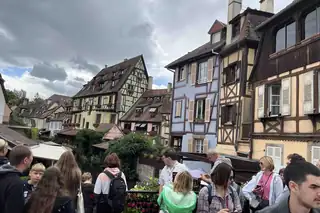
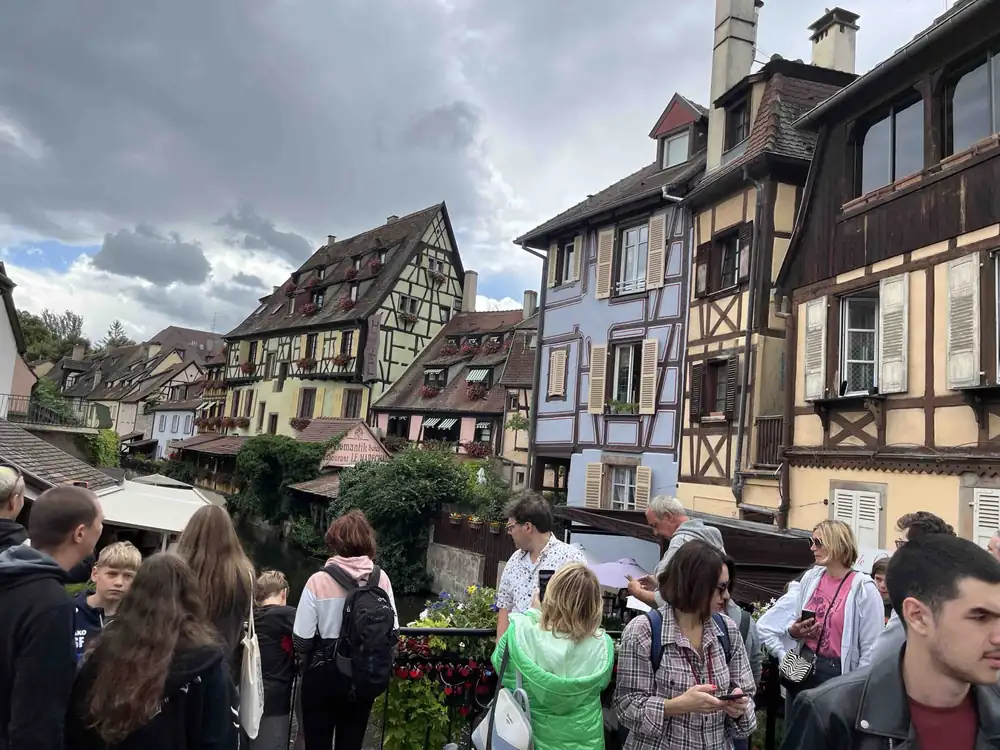
There's a piece of Alsace, the one that revolves around Colmar, made up of fairytale villages, with these colorful houses with high, sloping roofs, called "half-timbered houses" because of their exposed wooden beams. Beautiful places, sometimes a little artificial, but very pleasant to visit.
Countries to visit
Colmar is the largest town. It has nothing to do with the sportswear brand (that comes from Monza's Colombo Mario), but it has 70,000 inhabitants and a vibrant tourist scene, concentrated primarily in the area known as "Little Venice" because of its river and gondolas, less characteristic than those in Venice but equally picturesque. During the first two weeks of August, there's a highly attended wine festival, La Foire aux vins.
We recommend traveling about twenty minutes south and visiting some truly worthwhile villages. Smaller in size, they're perfect for outdoor strolls: the prettiest are perhaps Riquewihr and Kaisesberg, but also Ribeauville and Eguisheim.
What to eat
The first thing you'll see is this Tarte flambée. At first glance, it might look like a pizza, but it's nothing like it. It has a crust that resembles the crispy white pizzas of Rome, but on top there's sour cream, bacon bits, and onion, all a little charred. Nothing extraordinary, but worth a try.
Then there's Baeckeoffe (pictured above): a stew of meat, potatoes, and vegetables. Choucroute Alsacienne: sauerkraut flavored with juniper berries, served with sausage, bacon, pork knuckle, or ham. Try the soft Munster cheese. Also typical are pretzels, much softer and tastier than any you've ever eaten. For dessert, Kougelhof, a cake-shaped brioche with whole almonds and raisins, flavored with kirsch or rum. Alsatian asparagus is also a popular dish.
Where to eat
Tarte flambée can be found practically everywhere: if you smell burnt cheese in the air, you're there. We recommend a few wine bars, meaning wine bars where you can grab a bite to eat: Un de sense and Le Cercle des Arômes. If you want more, the rôsti and pork hocks at Bratschall Manara in Kaysersberg are very good, a popular brasserie with an excellent wine list. Next to the Domaine de Rouffach (more on that below) are the quality restaurant Philippe Bohrer and the more informal brasserie Julien. Reservations are essential: by phone or email (very few websites have modern booking systems).
What do you drink?
White wines are especially essential: the most common varieties are Riesling and Gewurtztraminer, which is sweeter and more aromatic. But there are also Pinot Blanc and Pinot Gris, Muscat, Sylvaner, Chasselas, and Auxerrois. The only red grape in the area is Pinot Noir. Try the Crémant d'Alsace, which is a Champagne made outside of the Champagne region, much less expensive and often of comparable quality. In France, the classification of Cru and Grand Cru wines is crucial; they are the best, and their prices are comparable.
The cellars to visit
There are dozens, probably hundreds. We've tried some magnificent ones: Pierre Frick, a great storyteller (pictured above), a passionate natural winemaker; Jean Ginglinger, another natural winemaker, spartan, cheerful, no-frills. And Paul Blanck, not natural but organic and high-quality. Generally, you don't have to pay, but it's a good idea to buy a few bottles.
Where to sleep
We recommend the Domaine de Rouffach, located in Rouffach, a small village just minutes from Colmar, and an excellent starting point for a visit. It costs around €100-150 per night and has an indoor pool and sauna.