Arrope, from additive to star of wines
In the Mediterranean region, arrope is much older than cane sugar, which was introduced by the Arabs from the 8th century onwards.
In Málaga, until the arrival of phylloxera in 1878, vineyards covered 112,000 hectares, one-seventh of the province's territory. A type of porridge called "gachas de mosto" or "gachas puercas," now largely forgotten, was made, as Fernanse do Rueda recalls in 'La cocina popular de Málaga' (The Popular Cuisine of Málaga), by filtering the leftover grape must from the harvest and cooking it to obtain a homemade syrup to which water and flour were then added. In 'La cocina popular de Marbella' (The Popular Cuisine of Marbella), Carmen Mata Millán offers a recipe for another type of syrup, this one made with figs.
Arrope was, first and foremost, a wine additive, widely used in the production of certain blended fortified wines in Málaga, Jerez, Montilla-Moriles, Condado de Huelva, and practically throughout Spain. In the wines of the historic Málaga DO, blending played a fundamental role. The most remarkable aspect of the Málaga DO is that this entire range originates from two main grapes, Moscatel and Pedro Ximénez, harvested at different stages of ripeness, raisined or not, fully or partially fermented, and blended with various types of authorized additives: wine alcohol, intermediate or cellar wines (not commercial wines but wines made specifically for blending), and, of course, arrope.
Arrope was used to add color, complexity, and stability to wines. To achieve this, high-quality must was (and still is) cooked over an open flame or in a bain-marie until the desired color and thickness were reached. In Málaga, arrope is typically made by reducing the must to one-third of its original volume.
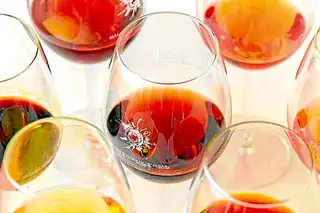
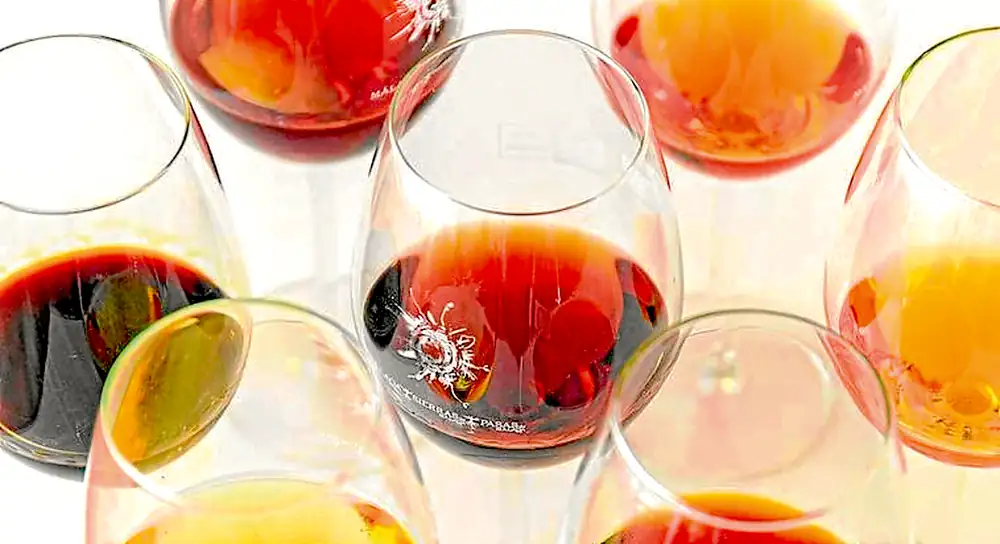
One of the complexities of the Málaga Designation of Origin is the classification of its wines. There is a classification based on color, determined by the use of arrope (a type of grape syrup). If they contain up to 5% arrope, they can be called 'red gold' or 'rot gold' (the Germans were major consumers of Málaga's historic wines, hence the term). These wines have reddish and golden highlights and amber hues. If they contain between 5% and 10% arrope, the color will range from dark amber to dark mahogany, and the wines can be labeled 'dark' or 'brown'. With the addition of 10% to 15% arrope and colors ranging from dark mahogany to ebony, they can be labeled as 'colored' wines, and with more than 15% arrope, there is the designation 'dunkel' (dark in German).
The Málaga Virgen winery has revived this category with a fantastic and unique wine, Málaga Virgen Dunkel, made using 20-year-old grapes. The syrup they produce at the winery, which is also used in the production of their famous Málaga Virgen, is now serving as the raw material for the new syrup ice cream recently launched by Nonna Helados exclusively for the Horeca channel (hotels, restaurants, and catering).
Arrope fell into disgrace due to its misuse after the phylloxera epidemic. "It was used to mask poor-quality wines," explains Ignacio Garijo, sales manager at Bodegas Dimobe. However, Juan Muñoz, a great guardian of sweet wines from Málaga, has joined the movement to revive this once-popular wine in recent years, releasing a Málaga Dulce with a small addition of arrope made at the winery.