A Minimalist Restaurant That Defies All Trends
I can’t recall having so much fun at a restaurant as I did recently at Kisa on the Lower East Side.
Located at 205 Allen Street at Houston Street, right above the F stop, it channels a Korean kisa sikdang — a restaurant aimed at taxi drivers, who presumably like to run in, eat fast, and depart quickly in search of another fare.
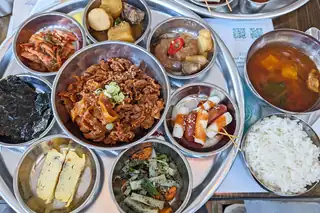
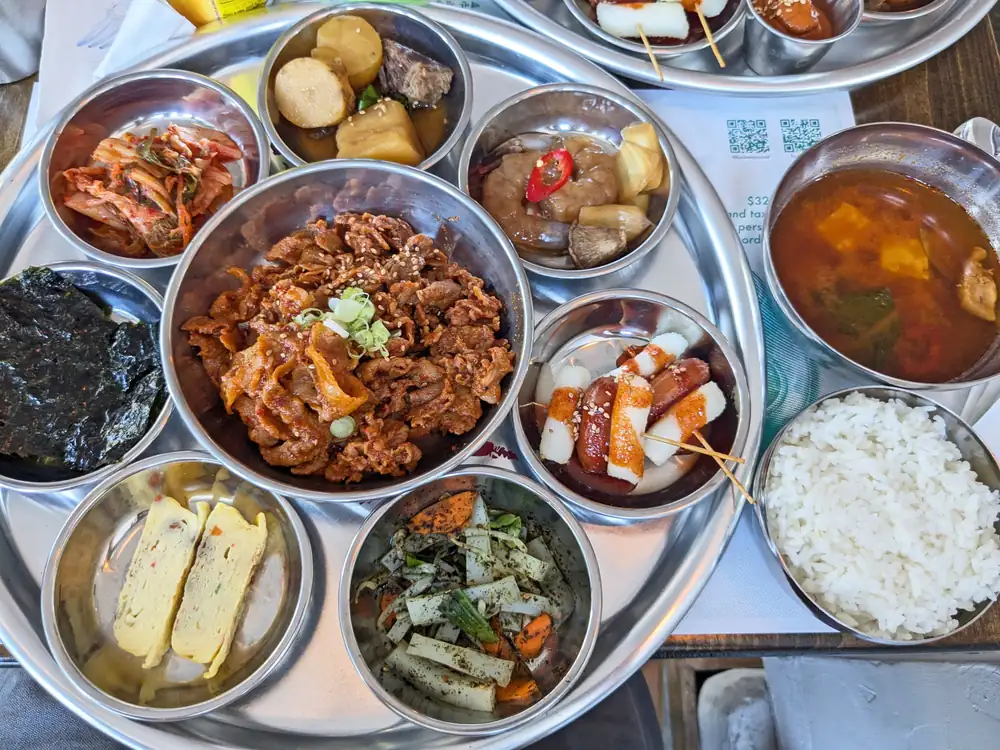
The restaurant provides a set meal with a choice of four main courses, all of which are already familiar to many diners. It arrives all at once on a round tray, along with rice and soup. I loved it more than most restaurant experiences I’ve had this year.
Why did I enjoy my meal so much? The food is unimpeachable: Every dish we tried was solid and even distinguished in a quotidian sort of way. This, in itself, is refreshing, a utilitarian triumph for a restaurant that doesn’t rely on picturesque platings or novel and expensive ingredients.
Plus, I love the nostalgia of the place: While the idea behind it is new for New York, it feels like an old-fashioned institutional restaurant, in the vein of a Parisian bouillon or a school refectory. And it’s democratic: Everyone eats the same thing. There’s no looking enviously at the wagyu tomahawk on the next table, or the bottle of vintage Champagne cooling on ice.
Open two months, the restaurant is the work of C as in Charlie partners David JoonWoo Yun, Steve JaeWoo Choi, and Yong Min Kim.
Kisa is wildly popular and does not take reservations. (Also, it’s nice not to have your phone number demanded when you walk in.) The first seating occurs at exactly 5 p.m.: We found that if you arrive around 4:45 p.m., you’ll soon find yourself inside. After the first seating, names go on a waiting list to return at 7:30 p.m. My friend and I were installed at our table, ordered beverages (rice wine, soju, fruit wine, beer, and Korean or American sodas), and main courses. Service is in waves, as trays are carried across the room — an enjoyable spectacle in itself.
The room is wonderfully plain and its position on Houston reinforces the transportation theme, as crowds and traffic buzz by. The decor consists of details like red tile, a few painted landscapes, a wall clock with a pendulum, and a stuffed animal in a niche. Most of the patrons are in their 20s, but some have brought their bewildered parents, wondering why this type of restaurant should kindle such excitement here.
With a main dish choice of beef bulgogi, jeyuk (spicy pork), ojingeo bokkeum (spicy squid), and a vegetarian bori bibimbap, the entire meal costs $32. A friend and I grabbed the spicy pork, with a mellow heat from gochujang that builds, and the bibimbap, which had all sorts of crunchy vegetables. For the latter, mix them with the barley rice at the bottom of the bowl, and consider adding the fermented tofu paste on the side.
While most modern Korean restaurants in town have reduced the complement of banchan side dishes that come with a meal to two or three, Kisa offers seven. They include a homemade cabbage kimchi and a very good stew of potatoes and beef. The dried laver is remarkable mainly for crunch and oceanic savor. Don’t try to wrap it around rice; it’s too delicate. We also liked the tiny skewers of tubular rice cake and smoky sausage. In fact, we requested seconds (additional banchan is free). The waiter nodded approvingly.
We ate with dispatch and were out the door by 5:50 p.m., which is some kind of record in a restaurant that’s not a counter-service establishment.
For dessert, a machine stands by the door that offers small paper cups of hot chocolate, coffee with milk, or a black bean latte, and with your check comes a quarter to use in the machine. I loved the black bean latte, which was sweet but not too sweet, and I sipped it as I left the restaurant and headed for the subway.