Tips for enjoying the calçots season
It used to be two or three months, but now the calçot season seems to be getting longer and longer. It's one of those recurring phrases you hear every year around this time, and although it's often repeated, it's not without truth.
Regardless of the calendar, what is undeniable is that this product, and above all, the ritual surrounding it, is becoming increasingly popular. The Protected Geographical Indication (PGI) Calçot de Valls (Tarragona) sold 18.5 million calçots last year, to which we should add all those produced in other areas or outside the PGI. And all this despite the fact that rising temperatures are detrimental to the harvest of this spring onion, which grows in furrows of earth—hence the name—and which is also grappling with drought this year.
This success, albeit on a much more modest scale, is also evident outside of Catalonia. In Madrid, for example, they have been appearing in some establishments for some time now, both in their traditional form and in more refined versions. Among the former, Can Punyetas is one of the long-established and renowned options.
The most gastronomic version of calçots on the plates of Barra Alta in Madrid
And this year, for example, Barra Alta, the restaurant that is also present in Barcelona but wants to bring a more gastronomic vision of this product to Madrid, is launching in the capital, with calçots confit at low temperature on romesco sauce accompanied by meat juice and butifarra de perol, and a calçot in tempura, with a touch of chaatmasala and romesco sauce.
Fire and sauce
Buying them raw anywhere in the country is relatively easy. Beyond specialized websites, gourmet shops are also taking advantage of the season. For example, Petra Mora sells both bunches of calçots and packs that include the traditional romesco sauce, wine, and meats for grilling to complete the meal.
And can you bake calçots at home, without a fire? It depends on who you ask, of course. For many, ordering them in a restaurant instead of grilling them yourself with friends is already sacrilege, so it's easy to imagine that this oven-baked, flameless version won't be very well received, although the truth is, they turn out quite good.
Petra Mora offers raw calçots to bake at home.
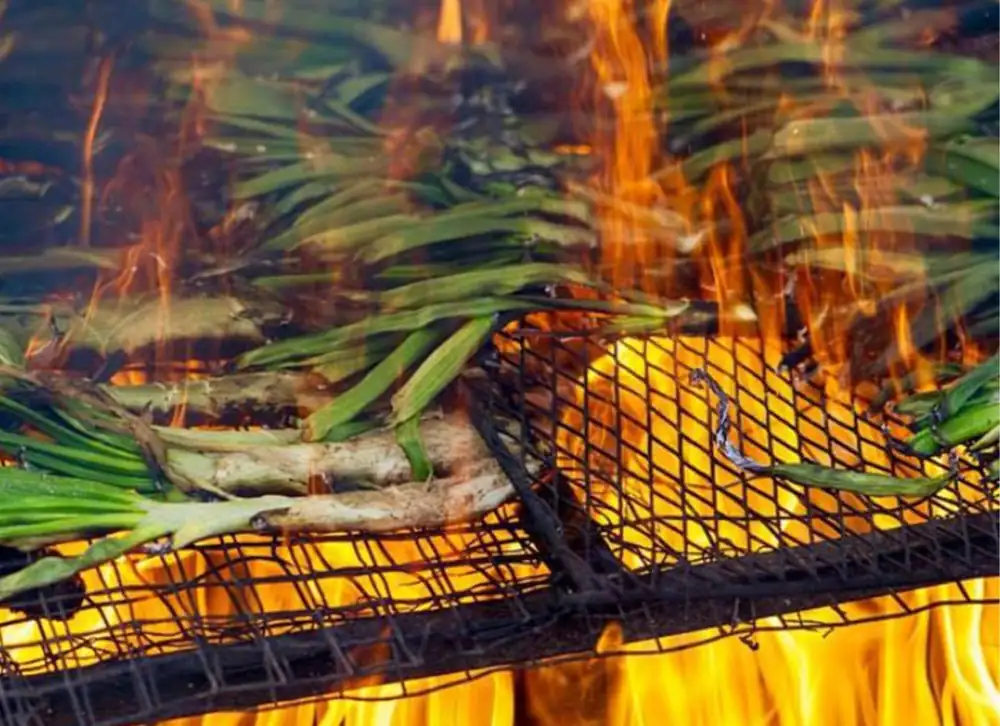
Placing these spring onions directly over the fire—calling them spring onions doesn't exactly win you any friends in Tarragona—and charring their outer layers is part of the traditional way to cook them. It also gives the edible center a milder, sweeter flavor.
Another option, of course, is to buy them already roasted, or as they say in Catalonia, "cuits." When in season and by special order, there are many ways to get them this way, or even have them delivered to your door hot and ready to eat.
Majols Natura, one of the largest distributors of calçots, sells them raw or grilled. And it's rumored among veterans of the business that they already sell more grilled calçots at Mercabarna than in Tarragona, so it's safe to assume that beyond their individual customers, there are also restaurants without grills that use these ready-to-eat calçots.
In fact, even supermarkets are now selling roasted calçots, vacuum-packed and ready to open, heat, and eat. The Suquipa brand, specializing in cooked vegetables, markets them this way, both to the end consumer in supermarkets and to the Horeca channel (hotels, restaurants, and catering).
Just as important as the quality of the calçot or the fire over which they are roasted—very hot, preferably from dry vine shoots—is the sauce they are served with. It is made with roasted tomato and garlic, ñora peppers, and a mixture of almonds and hazelnuts as the main ingredients. Although it is always referred to as romesco sauce, calçot sauce—also known as salvitxada—is not exactly the same. It is often pointed out that romesco includes choricero peppers, while calçot sauce is made with ñora peppers to enhance its sweetness.
Grilled calçots and romesco sauce in TavernaGlop, Barcelona
Indeed, outside of Tarragona, in 99% of cases, the term romesco sauce is used interchangeably. There are many variations on the original recipe, and of course, every restaurant boasts of making it themselves, although the truth is that there are dozens of ready-made versions on the market. Some of them, by the way, are quite decent.
Where to eat them
Valls and the entire Alt Camp region are the epicenter of this product, so during the season it's easy to find calçotadas everywhere. And on weekends, hundreds of Barcelonans make the pilgrimage south in search of them. If that's your plan, we recommend playing it safe and going to L'Esportell del Bou (Picamoixons, Tarragona), a classic that has been preparing calçotadas for over 15 years and enjoys a very good reputation among locals and visitors alike.
The menu is very similar everywhere: grilled calçots, sometimes served on a tile, with their accompanying sauce, followed by grilled meat (butifarra sausage, black butifarra sausage, lamb, potatoes, and beans). For dessert, crema catalana, and to drink, wine served in a porrón (a traditional Catalan wine pitcher).
Those who don't want to leave Barcelona have plenty of options within the city. Some have been featured in every calçotada guide published each year for so long (Can TraviNou, Can Cortada, Bodega Joan…) that it's always worth looking for something different. Especially considering that during peak season it's not easy to get a table on weekends, so it's best to have several options to choose from.
Belbo Terrenal's calçotada at a luxury hotel in the center of Barcelona is once again a success this year.
Since last year, Belbo Terrenal at the ME Barcelona hotel has gained popularity among those seeking a different and somewhat refined calçotada experience, as it's located on the terrace of a five-star hotel right in the heart of the city. Every weekend until the end of April, they serve a set calçotada menu for 45 euros (vermouth included), featuring freshly grilled calçots and meats of a higher quality than what is typically found in many of these set menus.
Glop's offerings are also very popular at its three locations in the city. We especially like the one in the Gràcia neighborhood, the original location that opened in 1978, and where the local crowd is strongest. Traditional cuisine, grilled food, and lots of families celebrating the weekend with calçots, snails, and rice dishes.
Calçotada in a beach club of the hand of Mamut, in Viladecans
Calçotada
If you're short on countryside, Montjuïc mountain can be a good alternative. There you'll find La Foixarda, the restaurant of the equestrian center of the same name. Specializing in grilled meats, their calçotada (a traditional Catalan barbecue) is also very popular. Besides this location, they also have another restaurant nearby in Poble Espanyol, which is probably better known among tourists visiting the center.
Outside the city, Masia Can Borrell is another interesting option. Located between Barcelona and Sant Cugat in the heart of the Collserola Natural Park, walking there from the city and finishing the excursion with some calçots (served as a set menu, but also in portions to combine with other dishes) can be an excellent plan.
Also outside Barcelona, another unique offering. Calçots and the beach might seem like an unlikely combination, but at Mamut Beach Club (Viladecans) they want to prove otherwise with a calçotada menu that perfectly aligns with the philosophy of this establishment, where the grill reigns supreme and they focus on produce from the nearby ParcAgrari del Baix Llobregat.