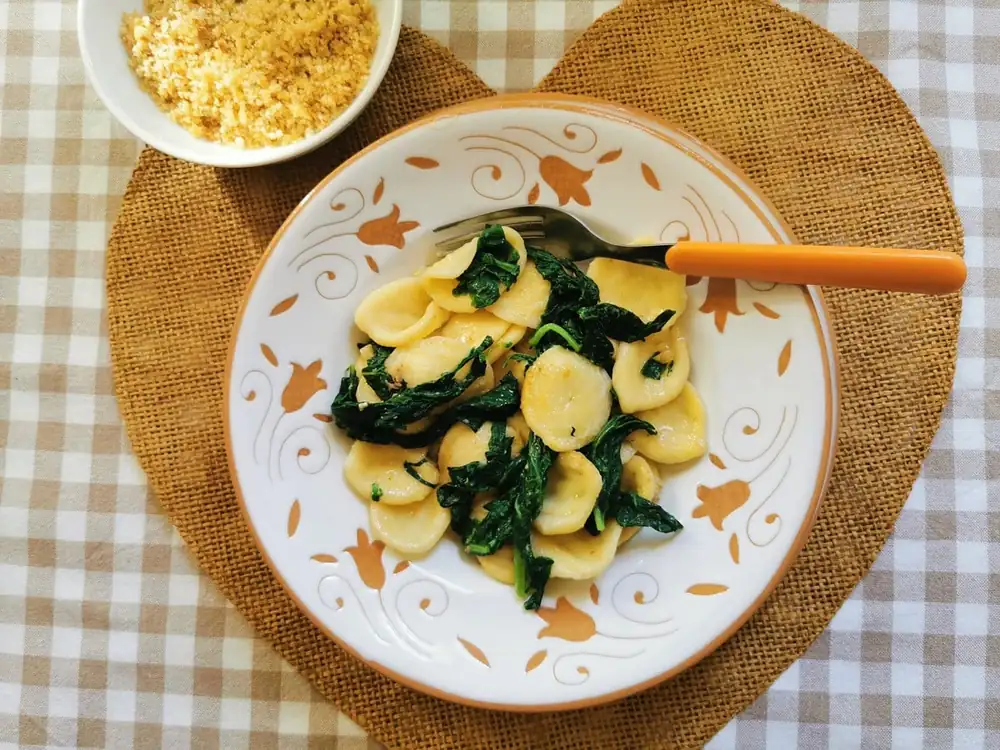
Orecchiette with Broccoli Rabe (rapini) from Puglia
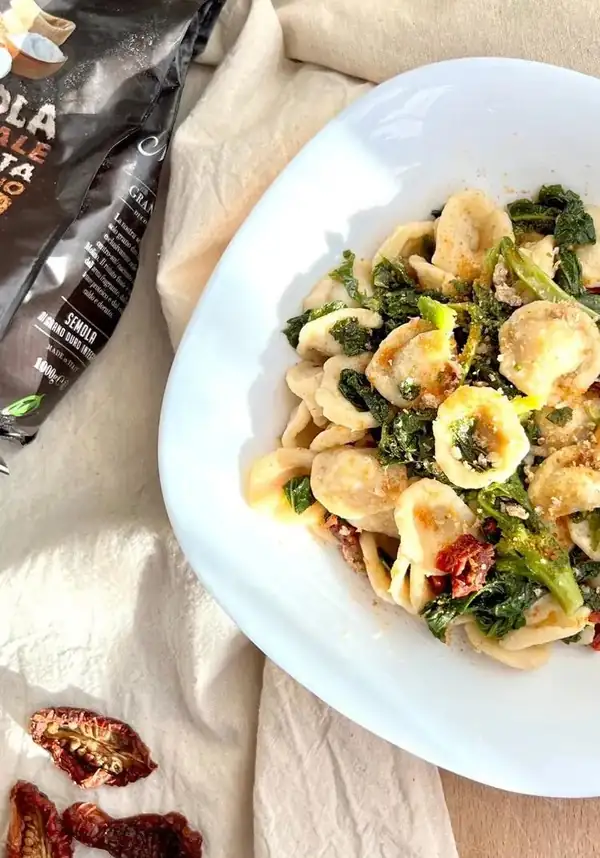
This orecchiette with broccoli rabe, also known as rapini, is one of the signature pasta dishes of Apulian cuisine. It uses simple, mainly pantry-stable ingredients while being full of flavor and taking just 30 minutes to make!
- 14 oz orecchiette (or cavatelli or penne)
- 14 oz broccoli rabe (rapini)
- 4 oz stale country bread
- 6 tbsp extra virgin olive oil
- 4 cloves garlic (2 chopped and 2 whole)
- 5 anchovy fillets (salted and rinsed or preserved in oil)
- 1/2 tsp fresh peperoncino (optional)
- 2 oz pecorino or hard sheep ricotta (optional topping)
- To prepare the homemade breadcrumbs, take stale country bread and blend it into crumbs using a food processor. In a small saute pan, heat two tablespoons of extra virgin olive oil. Once hot fry the breadcrumbs with the whole garlic cloves until golden and set aside.
- Clean the broccoli rabe by removing the hardest and thickest stems and the larger leaves (you can keep the flowers). Break the greens into pieces and wash well.
- In a large pot of salted water, boil both the broccoli rabe and orecchiette together until the pasta is al dente. Drain the water.
- Note: If you're using fresh orecchiette, allow the broccoli rabe to cook for 5 minutes first before adding the pasta.
- In a separate frying pan or skillet, add four tablespoons of extra virgin olive oil over low heat. Add in the chopped garlic, dried peperoncino flakes, and anchovy fillets.
- Continuously stir until the anchovies dissolve into the mixture, ensuring the heat remains low to prevent burning.
- Transfer the drained orecchiette and broccoli rabe to the skillet containing the olive oil, garlic, and peperoncino mixture. Stir well until well combined.
- Serve hot with a sprinkle of the homemade breadcrumbs.
It's like so many other traditional Italian pasta dishes that make simple ingredients so surprisingly tasty!
What is Broccoli Rabe? (cime di rapa)
In Italy, broccoli rabe has different names. In Naples, it is called ‘friarelli. Romans call it broccoletti and in Puglia it's cime di rapa. I wasn’t familiar with these wonderful greens until I came to Italy. Although called broccoli rabe in English, these greens aren’t related to broccoli.
Yes, they have little florets which look like broccoli. But, in fact, are not! Broccoli rabe is related to turnip greens. However, it’s not the same, despite the fact that if you ask Google to translate ‘cime di rapa’, it will give you back turnip tops! (These greens are also called rapini in English).
History
The simplest way this pasta with broccoli rabe is eaten involves just boiling the pasta and greens together and then dressing them with extra virgin olive oil, grated cheese and pepper. Some people don’t boil the pasta and greens together. They boil the pasta in the water in which the broccoli rabe was first cooked.
In the past, the poorer people didn’t use olive oil, as this was reserved for the rich. Instead, they fried the orecchiette with broccoli rabe in lard before eating it.
The recipe I followed is probably the most popular today. It requires a little more work and a couple more ingredients but is still super simple.
I cooked the broccoli rabe and orecchiette together, starting with the greens and then I added the pasta a bit later. Fresh pasta requires less cooking. If you are using dried pasta you can cook it with the vegetables at the same time.
While the pasta and greens were cooking, I fried the garlic, anchovies and peperoncino flakes in extra virgin olive oil (you can also use fresh peperoncino. Then, all you need to do is drain the pasta, add it to the pan with the garlic etc and add grated cheese or toasted breadcrumbs before serving.
- Pasta: Orecchiette is the traditional pasta served with broccoli rabe in Puglia. Orecchiette means "‘little ears" and its shape helps catch the cooked broccoli rabe and fried breadcrumbs. You can use both fresh or dried orecchiette or if unavailable, you can also use cavatelli or penne.
- Broccoli Rabe: When buying broccoli rabe, look for vibrant green leaves free of yellowing or brown spots. The stems should also be nice and firm.
- Anchovy Fillets: They add a rich, umami depth, which makes this dish stand out. Use salted or preserved in oil for the best flavor. Salted anchovies need to be rinsed well before use.
- Garlic Cloves: I recommend only using fresh garlic cloves for this pasta with broccoli rabe. Garlic powder and jarred garlic will not give you this recipe's unique flavor.
- Extra Virgin Olive Oil: Since we are cooking the extra virgin olive oil only on low heat, you can use a good quality one as much of the original flavor will be retained.
- Dried Peperoncino Flakes: These chilis add a gentle kick and flavor to the dish. If unavailable, red pepper flakes or fresh peperoncini can be used. Just make sure to adjust for your heat preference.
- Breadcrumbs: You can either make freshly made breadcrumbs from stale bread like I did or use store-bought breadcrumbs.
1) To prepare the homemade breadcrumbs, take stale country bread and blend it into crumbs using a food processor. In a small saute pan, heat two tablespoons of extra virgin olive oil. Once hot fry the breadcrumbs with the whole garlic cloves until golden and set aside.
2) Clean the broccoli rabe by removing the hardest and thickest stems and the larger leaves (you can keep the flowers). Break the greens into pieces and wash well.
3) In a large pot of salted water, boil both the broccoli rabe and orecchiette together until the pasta is al dente. Drain the water.
4) In a separate frying pan or skillet, add four tablespoons of extra virgin olive oil over low heat. Add in the chopped garlic, dried peperoncino flakes, and anchovy fillets.
5) Continuously stir until the anchovies dissolve into the mixture, ensuring the heat remains low to prevent burning.
6) Transfer the drained orecchiette and broccoli rabe to the skillet containing the olive oil, garlic, and peperoncino mixture. Stir well until well combined.
7) Serve hot with a sprinkle of the homemade breadcrumbs.