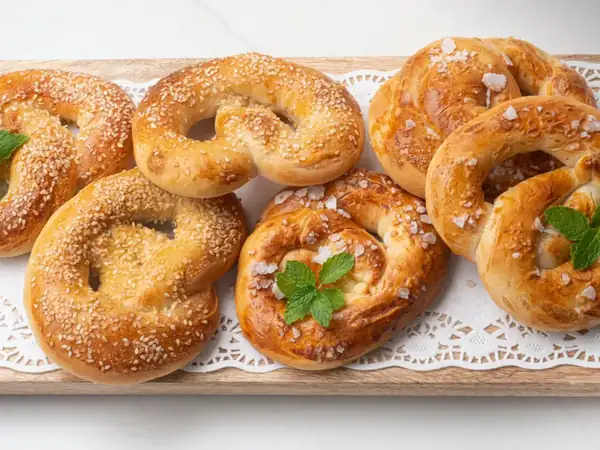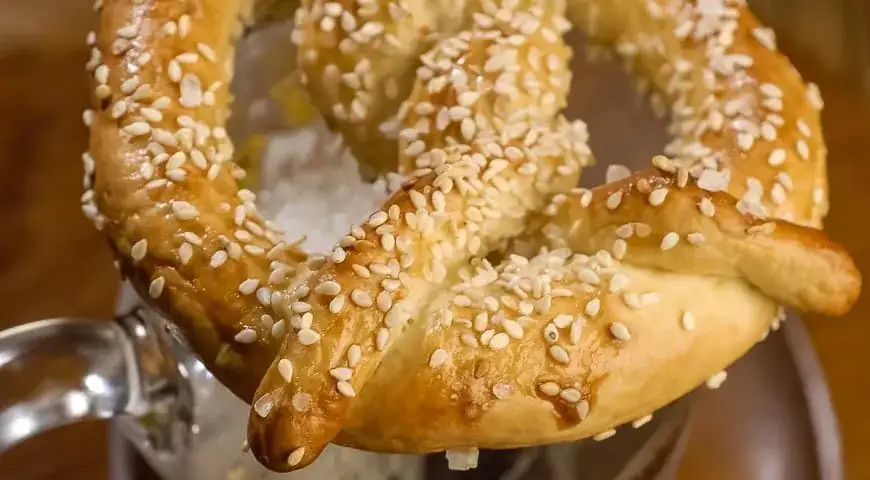
German Pretzels
In some regions of Germany, sweet pretzels are also prepared. They are filled with marzipan, covered with custard, or simply sprinkled with powdered sugar mixed with cinnamon before serving.
- Salt
- Dry yeast
- Granulated sugar
- Premium grade wheat flour
- Sea salt
- Sesame
- Baking soda
- Milk
- Prepare the pretzel dough. Dissolve the yeast and sugar in warm milk. Sift the flour and salt into a bowl, combine with the milk-yeast mixture, and mix thoroughly. Let the dough rest in a warm place for 1.5 hours.
- Punch down the pretzel dough, knead it again, and divide it into 12 pieces. Roll them into long logs and fold them into pretzels, twisting the ends as shown in the picture. Boil 1 liter of water and dissolve the baking soda in it. Drop the pretzels one by one into the water for 40 seconds.
- Transfer the pretzels to a greased and floured baking sheet. Sprinkle with sea salt and sesame seeds. Bake for 15–20 minutes at 200°C. Let cool slightly before serving.
Salted pretzels are not only great with beer: they can be served for breakfast with a cup of sweet tea, complemented by delicious butter or cream cheese.
Vodka is served chilled to a temperature of 6-8ºC. Some drinkers even chill their vodka shot glasses and shot glasses in the refrigerator. The key is not to overdo it: excessively chilled vodka will not deliver any...
Traditional beer snacks include various seafood (especially shrimp), fried chicken wings, small salty skewers, snacks, chips, hot dogs, and sausages. Shrimp can be fried...
Savory baked goods are traditionally present in any national cuisine. This includes anything made from dough without the use of large amounts of sugar (this ingredient is present...
Baked goods are generally defined as any type of dough baked in an oven or stove. However, dough fried in a pan or deep-fried in oil is also often called baked goods. All baked goods can be...
The Vyborg pretzel is a distinctive culinary landmark of the fortified city located a hundred kilometers from St. Petersburg. This pastry originated here during the Middle Ages: legend has it that it was invented by Franciscan monks. Later, these aromatic pretzels began to be made in city homes and local bakeries. The pastry was so good that its fame quickly spread beyond the small town and reached St. Petersburg. And it was highly praised in the capital! It is said that Peter the Great demanded that Vyborg pretzels be delivered to the Assemblies, and Alexander III made this pastry an essential part of the imperial menu. While the original recipe has not survived, we invite you to try the closest possible version of the Vyborg pretzel. It's worth a try!