The most well-known modern or haute cuisine techniques. Airs, foams, spherification, 3D,...
I'm sure you've tried a dish at some point with an ingredient that has a different texture or flavor. And you've wondered, "How did they do it?" Foams, spherification, cooking with liquid nitrogen, 3D printing, a rotary evaporator… Do these sound familiar?
The culinary world is constantly evolving; innovation is one of the most important aspects of haute cuisine, although thanks to the democratization of some of these techniques we can enjoy haute cuisine at home on a regular basis.
Something similar happened with the microwave back in the day, or with non-stick pans and pots, or the silicone molds for making cakes or muffins that we use every day with the little ones at home. Even simple things like vacuum sealing, which we use to package cold cuts, or being able to wrap an ingredient with plastic wrap or aluminum foil—inventions that have made our lives easier. The same thing happened years ago with the freezer or the refrigerator.
The same has happened with new cooking techniques, some based on traditional cooking techniques and others on molecular gastronomy, where a Michelin-starred restaurant kitchen can become a real laboratory, giving a twist to traditional cooking.
Many of us have a siphon at home (don't make faces, you told me so by email); it's become a restaurant tool within reach of any household. I even use it to make foams in my mojitos and tinto de verano when guests come over. I'd even say the siphon can be considered one of the first symbols of contemporary cuisine to arrive in my home, my own personal touch of haute cuisine. Another example is agar-agar seaweed, always present in my pantry as a substitute for baking powder.
The kitchen has become a continuous laboratory of innovation that has given a twist to traditional cuisine, always respecting the product; the ingredient is the most important thing for me, and it should continue to be so.
These new techniques deserve a special section on cooking techniques, as many of them are for professionals due to the need for specific equipment or machines not readily available in home kitchens, except for things like siphons or low-temperature cooking, which are now very competitively priced. You've probably heard of them; here's a list of the most cutting-edge and innovative culinary techniques currently available. Which ones are you familiar with?
1. Airs and foams
How many times have you heard about carrot foam or lemon air? Well, to achieve them, we must dare to mix science with cooking. Airs are emulsions produced from the fusion of a gas and a liquid.
In gastronomy, this is achieved by adding soy lecithin to the whipping mixture. The air incorporated into the liquid is encapsulated in the form of bubbles. This technique doesn't alter the flavor of your dishes but does create a different texture that will surprise both the eye and the touch. On the other hand, there's foam, a technique used, for example, to achieve a texture similar to mousse, but lighter.
Here we must use a siphon with pro-foam powder into which we will introduce the ingredients. It is heated in a water bath and then nitrous oxide cartridges are introduced.
A new culinary technique, brimming with creativity yet maintaining the same flavor as the originals, is called foam or air. Similar to a mousse, but much lighter, with a fluffy finish. Any flavor you can imagine can be transformed into a foam. Thanks to science, two elements—a liquid and a gas—are mixed in a siphon, aided by a stabilizer.
Foams can be cold or hot; the difference lies in the stabilizers used and the preparation methods. Cold foams are more common and more stable. They use gelatin, egg whites, or fats. Hot foams use only egg whites or starches and are heated in a bain-marie before serving.
2. Deconstruction
Have you tried the deconstructed potato omelet? It's a prime example of the most traditional (and Spanish) dish taken to the next level: culinary innovation. Created by Ferran Adrià, deconstruction involves modifying the texture, shape, and even temperature of dishes, while maintaining the original flavor. (The omelet is served in a glass, with the egg runny and the potato transformed into a foam.)
Deconstruction is a new technique, created in Spain and later exported internationally, based on the idea of using the same ingredients as the original recipe, maintaining the flavors and aromas, but with different shapes, textures, and temperatures. This way, the end customer will not visually recognize the dish at first glance.
3. Spherification
Although it seems very new, this technique was patented in 1946. It consists of gelling the outer layer of the food, creating a circular shape, while the inside remains liquid.
Spherification is a culinary technique that involves shaping any liquid food into an oval or sphere through a chemical process. This results in a soft exterior and a liquid interior, providing the customer with a pleasant mouthfeel similar to that of an egg yolk. A gelatinous layer is created using sodium alginate and a calcium-rich solution. When these ingredients are mixed, a resistant gelatin layer is formed, allowing it to be submerged in liquids, provided it is handled carefully.
We can make oil pearls, spherical pea ravioli, apple caviar, tea caviar, liquid croquettes, spherical gazpacho… To make these dishes, you need sodium alginate, an algae extract, and calcium chloride. The liquid food is introduced with the alginate solution in sodium chloride. It doesn't seem suitable for beginners, but it's all about getting started…
4. Gelation
It's simply turning a liquid into a gel. This gives it a more solid and dense texture. For this, you need to use a gelling agent. There are many varieties available at the supermarket.
The most common are agar-agar, which is colorless and tasteless. It comes from different types of red algae. We can also use xanthan gum or instagel, which allows food to gel at room temperature.
5. Liquid nitrogen
The super freezer. Liquid nitrogen has a temperature of -200°C, meaning it can instantly freeze any food placed inside. However, despite freezing, it doesn't alter the food's structure, shape, or consistency, and allows it to cook while still frozen. It also helps eliminate bacteria and minimizes the loss of nutrients. This technique makes it possible to prepare dishes that would be impossible without it.
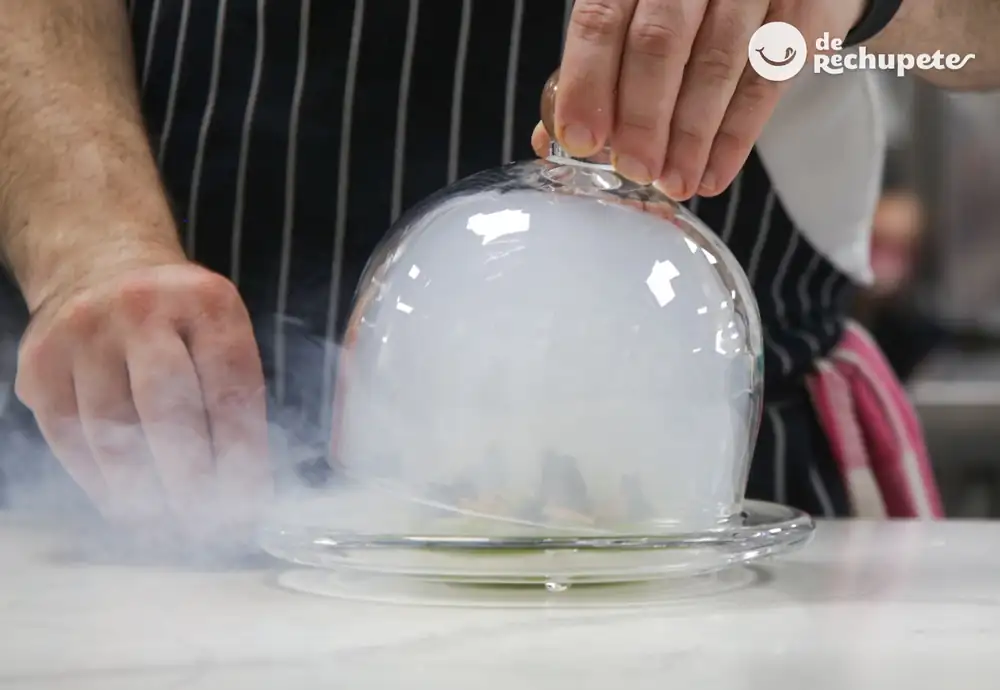
It's a very eye-catching and spectacular technique because of the cloud of smoke or mist it creates, and because of the sensation it produces in the mouth. Different results can be achieved, such as a hot-cold effect, where the exterior remains frozen and crispy while the interior is liquid, or a frozen exterior and a warm interior.
Renowned chefs like Ferran Adrià and Dani García are among the pioneers of this technique. It must be said, however, that it is a complex and dangerous technique due to the burns it can cause.
6. 3D Printers
3D printers have been used to produce objects for some time now, but their possibilities are endless. Among them is a way to enhance creativity in the kitchen. It's simply another tool a chef can use, although this particular printer's applications lean more towards mass production.
Incredible, but true: like a kitchen robot, these printers can work with almost any type of ingredient. They allow you to deconstruct and modify the nutritional content of food before reconstructing it through printing and presenting it in the desired form. From small chocolates with logos and chocolate figures to simple cookies, or fruits that look real, cheese, butter, jam… these products come not only from the machine to the kitchen, but also to the table, in full view of the diners.
Moving beyond haute cuisine, you can load the printer cartridges with food made from dense purees of foie gras, truffle, pumpkin, seaweed or cheese, with which you can create edible and three-dimensional designs on a plate, for example like cheese noodles or seaweed pasta.
7. Terrification
The terrification technique involves turning any fatty food into a powder, giving it a texture similar to earth. This is achieved using a starch carbohydrate called maltodextrin, which, when mixed with oil, becomes a powder that dissolves easily upon contact with saliva. This surprises the customer when they taste it.
8. Low-temperature sous-vide cooking
A new culinary technique that emerged in the quest to preserve the maximum flavor of food is sous-vide cooking. This involves placing food in vacuum-sealed bags, jars, or other containers, which are then submerged in water to be cooked at a controlled low temperature for extended periods. It allows for results that are not possible with traditional, gentler cooking methods, which better preserve the flavors and properties of the food.
Another new technique that's generating a lot of buzz is low-temperature cooking. This involves cooking at a constant temperature, no higher than 70-80°C, without boiling, to achieve a softer texture and more authentic flavors. Professional kitchens use a special machine that facilitates maintaining a constant temperature. Unlike sous-vide cooking, it doesn't require vacuum sealing and can be cooked in water or oil.
9. Rotavapor
A tool originally used in chemistry labs was brought to the kitchen by chef Joan Roca in 2007, and it can now be seen in fine dining establishments around the world. This device offers a complete aromatic experience for our senses when it comes to cooking techniques. Operating under vacuum, this distiller allows for work at very low temperatures. In this way, aromas are extracted in liquid form, giving dishes an unparalleled touch.
10. Depression pot
To illustrate the role of science in cooking, this technique was developed by the Polytechnic University of Valencia, where the patented pot is called Gastrovac. It works by creating a vacuum inside the pot and reducing atmospheric pressure by 20%. This allows food to be cooked slowly at 65°C, creating an artificial atmosphere of low pressure and absence of oxygen. This lowers the cooking temperature while preserving the original texture, color, and nutrients of the food. It's a way to keep vitamins intact in vegetables and fish.
One of its features is the so-called sponge or impregnation effect, whereby the food inside the pot empties its air-filled pores, and when the pressure is restored, the food absorbs all the surrounding liquids. It's the perfect tool for foods that need to be infused with liquid.
This allows you to create dishes as unique as apples with a mint flavor, sangria figs or persimmons with a horchata flavor, grapes in cava perfect for monkfish or a cucumber in lime juice for a pil pil, a ceviche or any citrus recipe that allows this infusion.
Unlike traditional pressure cookers, this one doesn't pose a risk of explosion, but rather of implosion. So rest assured, using it is completely safe.
11. The antigravity furnace
This device eliminates gravity inside, resulting in controlled, uniform heat that is applied evenly to the entire dish. It's perfect for preparing soufflés, tarts, and sweet or savory cakes. Using an antigravity oven allows you to achieve perfectly spherical and symmetrical results. The presentation in the dining room, for your guests, can be simply spectacular.
12. Reverse grill
The reverse teppanyaki, or reverse grill, is a technological development in Spain by chef Paco Morales. Already used by some of the world's top chefs, it's a way to play with textures and create shapes like sheets, drops, or spirals, which you can sample on Morales's restaurant menu. Drops of honey amber, a spiral of mojo picón sauce, or a chocolate mousse macaron coulant are just some of the ways he presents and accompanies the dishes on his new menu.
This grill works like a normal one, only in reverse. That is, instead of heating the food, it cools it, reaching temperatures as low as -34.4°C without the need for liquid nitrogen. It's a cooking method with similar results to the liquid nitrogen popularized by Dani García from Malaga, which allows you to achieve creamy textures that are impossible to obtain in a silicone mold, as well as crispy textures that will surprise diners. It's about innovation in the kitchen, but always keeping in mind that the product remains the foundation of good cooking.
13. Smoke gun
With a smoking gun, we can give food a smoky flavor without applying any heat. In this case, the food isn't placed over a flame or exposed to smoke; the gun itself achieves this result. We can add smoky notes to a specific ingredient or to the entire dish.
In summary
As you can see, there is a whole world of new techniques applied to the world of cooking; many are not complicated in themselves, but obviously they are not cheap, although they are starting to become available to home cooks, things like the kitchen siphon.
This isn't an exhaustive list, but these are some of the techniques and tools used in haute cuisine. There are many more, and others are currently being developed, just like the foods and ingredients of the future that are here to stay in our daily lives. The culinary world is always evolving. What did you think?