Matbuja, the cooked tomato and pepper salad from the Maghreb and Israel
Para 6 0.8 €/pers. 130 kcal/100g.
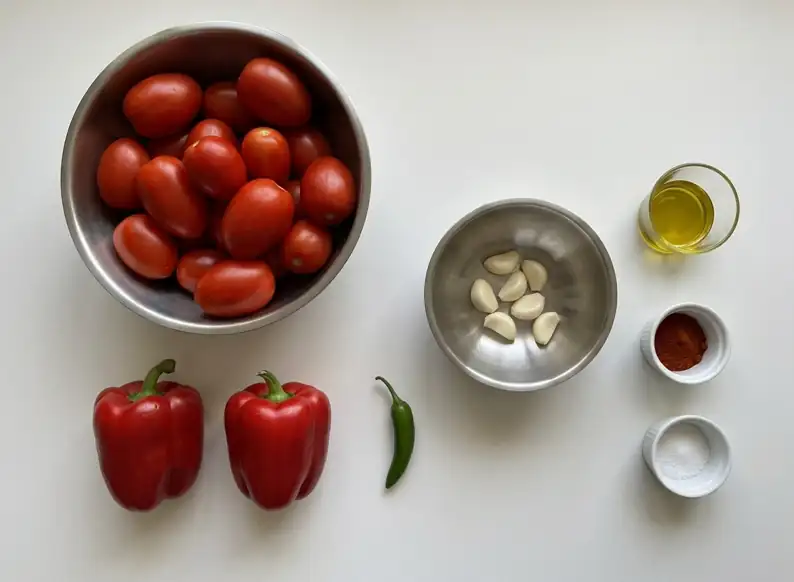
- 1.2 kg of ripe pear tomatoes
- 2 red peppers, about 450 g
- 1 small fresh green chili pepper, or half a pepper if you want a mild spice
- 5 cloves of garlic
- 70 ml of extra virgin olive oil
- 2 teaspoons of sweet paprika
- 1/2 teaspoon of hot paprika, optional
- 7 g of salt, approximately
- Wash the peppers, dry them, and place them whole on a baking sheet. Roast them at 220°C (425°F) for 25-30 minutes, turning them once, until the skin is charred and the flesh is soft. Cover them after removing them from the oven and let them cool for 10 minutes. Then peel them, remove the seeds and stem, and cut them into small strips. Do not rinse them, so as not to lose the roasted flavor.
- While the peppers are cooking, bring water to a boil. Make a shallow cross-shaped cut at the base of the tomatoes and blanch them for 40-60 seconds. Transfer them to cold water, peel them, and remove the tough part of the stem. Dice them into small pieces.
- Peel and slice the garlic. Open the chili pepper and remove some or all of the seeds if you want it less spicy. Put a wide saucepan on the heat with about 20 ml of oil and cook the garlic and chili pepper over medium-low heat for 1-2 minutes, without browning the garlic.
- Add the tomato, salt, and mix. Cook uncovered over medium heat for about 45 minutes, stirring occasionally. There will be quite a bit of liquid at first; it should gradually reduce, thicken, and turn a darker red.
- Add the roasted peppers and continue cooking for another 20-25 minutes. Stir more frequently because the mixture has less water and can stick. We're not aiming for a smooth sauce: there should still be small pieces of tomato and pepper.
- Mix the remaining 50 ml of oil with the sweet paprika and, if using, the hot paprika. Reduce the heat, stir in the mixture, and cook for another 10 minutes, stirring frequently.
- The point is reached when, after running a spoon along the bottom, a visible groove remains for a few seconds and no more water appears around it. We taste it, adjust the salt or spice, and remove it from the heat.
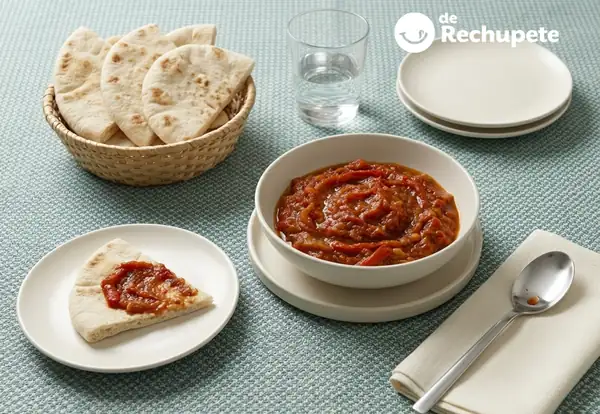
- Let it cool slightly. You can serve the matbuja at room temperature or chilled, accompanied by pita bread. It should be thick and easy to scoop up with bread, not like a runny tomato sauce.
- We choose very ripe, flavorful tomatoes. If they contain a lot of water, we extend the cooking time; turning up the heat too much increases the risk of the bottom burning before the mixture has reduced properly.
- A wide saucepan facilitates evaporation and makes reduction easier.
- We cover the peppers for a few minutes after roasting them. The steam helps to loosen the skin without having to wash them.
- The spiciness is best controlled at the beginning with the amount of chili pepper and at the end with the hot paprika. If you don't know how hot the chili pepper is, start with a small amount.
- The oil in the final stage helps achieve a shiny, smooth texture. We don't want the matbuja to be swimming in oil, but neither do we want it to be a dry paste.
- The timer is just a guideline. The true sign is when all the free water has evaporated and the mixture has thickened. If you make it in a narrow saucepan or with very watery tomatoes, it will take longer.
- Once cooked, store it in a sealed container in the refrigerator. If it has been served, refrigerate any leftovers within two hours of leaving them at room temperature.
Matbuja is often served with sauces and spreads, but in the Maghreb it's also understood as a cooked salad. Tomatoes and peppers are cooked for a considerable time until they lose much of their water, concentrate their flavors, and become almost candied. It's then served warm, at room temperature, or cold, usually in small portions.
Its history doesn't fit neatly into a single national label either. It's a North African dish, especially linked to Moroccan Jewish tradition, and arrived in Israel with Jewish communities from the Maghreb. There, it became integrated into everyday cooking. That's why today we can find it both in Moroccan cuisine and on Israeli tables.
There's no single recipe. Some versions are dominated by tomato, while others feature plenty of bell pepper; some are very spicy, while others are mild. In this version, we're aiming for a thick, syrupy, and concentrated texture, with roasted bell pepper, cooked garlic, and paprika added at the end to prevent burning. We won't be adding sugar or cumin as essential ingredients.
If you like these vegetables cooked until they've released all their flavor, on the blog you'll find recipes for zaalouk (Moroccan eggplant salad), shakshuka, and romesco sauce. They're different preparations, but all three help you understand the potential of tomatoes, peppers, and well-controlled cooking.