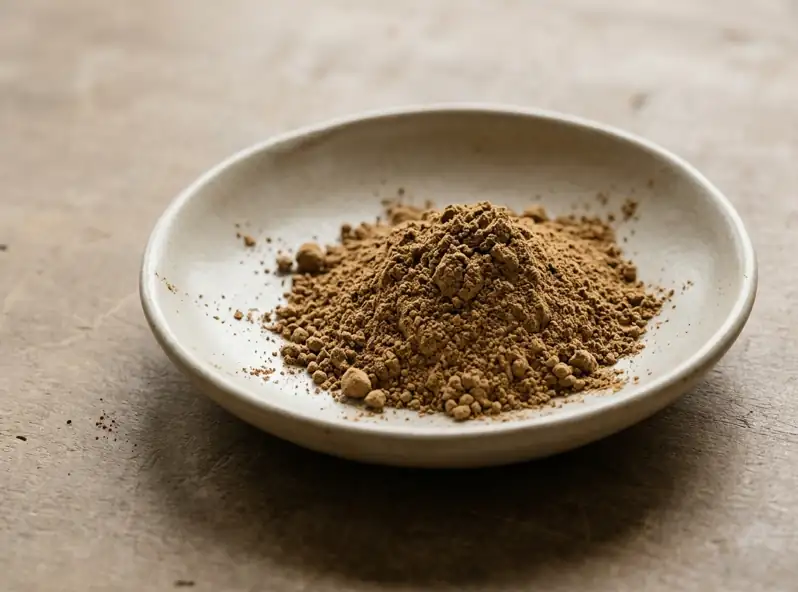
Guarana: what it is, how much caffeine it contains, and how to take it
Guarana has a somewhat misleading reputation. It often appears in powders, capsules, and drinks as if it were a more "natural" or gentler way to wake up than coffee, but its main stimulating effect is precisely due to its caffeine content.
This significantly changes how we understand it. Guarana is not a caffeine-free beverage nor a neutral alternative for those looking to reduce their caffeine intake. It is a highly concentrated plant-based source of caffeine, and the actual amount we consume depends greatly on the product: ground seeds are not the same as a standardized extract, a capsule, or an energy drink.
It's also worth separating what we know from what has been repeated for years. The so-called "guaranine" is not a different kind of caffeine, nor is there good evidence that guarana provides six hours of sustained energy through a supposed slow-release mechanism. There are interesting things to say about this Amazonian plant, but there's no need to embellish them.
What exactly is guarana?
Guarana comes from Paullinia cupana, a climbing plant in the Sapindaceae family native to the Amazon basin. Its ripe fruits are easily recognizable: the red capsule opens to reveal a white part surrounding a black seed. Hence its distinctive appearance, reminiscent of an eye.
The part used is primarily the seed. Traditionally, it is dried, roasted, or processed before being ground into powders and extracts. Its use has a long history among Amazonian communities, and over time, guarana also became a common ingredient in soft drinks and other beverages in Brazil.
Today, guarana is available in powder, extract, capsules, tablets, and beverages. The format matters a lot, because it determines the amount of seed or extract we're taking and, above all, how much caffeine it actually provides.
Guaranine is caffeine, not another stimulant.
For a long time, different names have been used depending on the plant of origin: theine for tea, mateine for yerba mate, and guaranine for guarana. Chemically, however, we are talking about the same molecule: caffeine.
Guarana also contains tannins, catechins, epicatechins, and small amounts of other methylxanthines, such as theobromine and theophylline. This makes the seed chemically more complex than a dose of isolated caffeine, but it doesn't automatically imply extraordinary properties.
How much caffeine does guarana have?
It's important to distinguish between the seed and the product we buy. Scientific reviews place the caffeine concentration of the seeds at approximately 2% to 8% of their dry weight; other reviews mention values as high as around 6%. Coffee beans, for reference, typically contain around 1-3%.
This means that, gram for gram of raw material, guarana can contain more caffeine than coffee. But this comparison doesn't mean that a guarana beverage "has more caffeine than coffee." A cup of coffee is an infusion prepared with a specific amount of coffee beans and water; a guarana product can be powder, concentrated extract, capsules, or a soft drink.
Can you calculate caffeine from a teaspoon of guarana powder? Not reliably if the packaging doesn't indicate the concentration. Two products can contain very different amounts of caffeine per gram. Therefore, to know how much you're consuming, the useful information is what's on the label: milligrams of caffeine per dose or the percentage of caffeine in the extract.
If a product declares, for example, an extract with a specific percentage of caffeine, then the calculation can be done. If it only states "500 mg of guarana" without specifying the caffeine content, 500 mg of guarana does not equate to 500 mg of caffeine.
Does guarana last longer than coffee?
This is probably the most repeated claim about guarana: that its tannins cause caffeine to be released slowly and that the stimulus lasts for many more hours without the supposed "crash" of coffee.
The explanation is appealing, but not well-supported. A study comparing caffeine release from guarana capsules with an equivalent amount of free caffeine found no significant differences. It also observed no significant differences in absorption in the experimental model used.
Therefore, we have no solid basis to claim that the caffeine in guarana has a special slow release or that it guarantees "energy for six hours." The duration of caffeine's effects varies from person to person and depends on the dose, individual sensitivity, time of consumption, and other factors.
This doesn't mean that everyone will perceive coffee and a product with guarana in the same way. The overall beverage, the amount of caffeine, sugar, other ingredients, and the speed at which it's consumed can significantly alter the experience. What's not advisable is attributing this difference to a supposedly different type of caffeine.
What effects does it have and what does science say?
The most obvious effect of guarana is what you'd expect from a caffeine-rich food: a temporary increase in alertness and a reduction in drowsiness. Caffeine acts on the central nervous system and, in moderate amounts, can make us feel more awake.
Furthermore, the authors themselves point out that it is unclear whether this small effect is due to caffeine or other compounds in guarana. Therefore, statements like "it improves concentration more cleanly than caffeine" go much further than the available evidence allows.
The European Medicines Agency (EMA) does include guarana seed in its monograph as a traditional herbal medicine for relieving symptoms of tiredness and weakness in adults. The key word here is "traditional": the EMA itself explains that this conclusion is based on long-term use and that evidence from clinical trials is insufficient to establish its use as well-defined.
It's also wise to be wary of promises of weight loss, "fat burning," detoxification, or almost medicinal effects. Just because a plant contains caffeine and polyphenols doesn't make it a miracle product.
How to use guarana in food and drinks
In Brazil, it's particularly well-known in guarana soft drinks, but outside of Brazil, it's commonly found in supplements and energy drinks. It's also sold in powder form for mixing with liquids or food.
The powder usually has a bitter and somewhat astringent taste, so it's typically combined with other ingredients. It can be added to drinks, smoothies, or cold preparations, but there's an important difference compared to cocoa, cinnamon, or any other spice: the amount shouldn't be decided solely on taste, because we're adding caffeine.
That's why it doesn't make much sense to give a "standard teaspoon" that works for all products. The sensible thing to do is follow the amount indicated by the manufacturer and check the caffeine content of that serving.
How to read the label without getting confused
With guarana, etiquette is more important than any house rule. There are three particularly useful points:
- Amount of guarana per serving. This indicates how much of the ingredient or extract the product contains, but it does not, on its own, indicate how much caffeine it provides.
- Caffeine per serving. This is the most practical information to add up to the coffee, tea, mate, energy drinks or other products consumed that day.
- Concentration or standardization of the extract. If a percentage of caffeine is declared, it allows you to calculate the actual amount provided by the dose.
Can a "natural" product with guarana have a lot of caffeine? Yes. The word "natural" doesn't reduce the concentration or change the molecule. In fact, guarana seeds are among the plant-based sources with the highest caffeine content.
There are also products where guarana appears alongside added caffeine, tea, yerba mate, or other stimulating ingredients. In these cases, you should look at the total amount of caffeine in the product, not try to attribute each milligram to a different ingredient.
How much guarana can you take?
There is no universal daily amount of guarana that works for any powder or extract, because its caffeine concentration can vary greatly. The practical guideline is the total caffeine provided by the product plus the caffeine you consume throughout the rest of the day.
The European Food Safety Authority (EFSA) considers that, for healthy adults, single doses of up to 200 mg of caffeine do not pose general safety problems, and that an intake of up to 400 mg per day, from all sources, also does not pose a concern for the healthy adult population.
That doesn't mean 400 mg is a target, nor that everyone tolerates caffeine the same way. Some people experience nervousness, palpitations, or sleep problems with much smaller amounts. In fact, the EFSA points out that 100 mg of caffeine near bedtime can disrupt sleep in some people.
During pregnancy, the EFSA guideline is up to 200 mg of caffeine per day from all sources. This figure refers to total caffeine and does not automatically make any guarana supplement or extract advisable.
The EMA monograph advises against medicinal preparations of guarana seed in people with gastrointestinal ulcers, hyperthyroidism, hypertension, or arrhythmias. If you have a medical condition, a marked sensitivity to caffeine, or are taking medications with potential interactions, it is not advisable to improvise with concentrated extracts: it is best to consult a healthcare professional.
So, is guarana better than coffee?
There's no single answer because we're comparing very different products. Coffee is a beverage; guarana usually comes in powder, extract, capsule, or other beverage form. There's no proven advantage to guarana simply because it's plant-based, since the caffeine in coffee is also plant-based.
If we want to reduce caffeine, guarana isn't the most logical solution. However, if we want to consume it for its flavor, due to tradition, or because it's part of a product we like, it can be a good option, provided we know how much caffeine we're adding.
And if the reason for buying it is a promise of "clean energy," "no crash," or several guaranteed hours, it's worth taking a second look at the label. Guarana is an interesting plant and a very particular raw material; it doesn't need to become a magic caffeine to be worthwhile.