Muse, the challenge (and risks) of AI that will do everything for us
The first Muse AI commercial began flooding American TV last weekend. And it's effective, yes, it is. It features a young woman slicing an orange, mixing a cocktail, while her smartphone responds to emails (first beep), enrolls her kids in soccer school (second beep), buys backpacks and notebooks (another beep).
Alexandr Wang, Meta's chief AI officer, hired by Mark Zuckerberg last year when he acquired his startup for $15 billion, posted the ad on X, quickly racking up 1.5 million views. But beyond the twenty-nine-year-old genie's personal engagement rate, the AI-powered personal assistant launched by Meta two weeks ago promises to change several things, starting with the fate of the Facebook and Instagram giant, which has remained on the sidelines of the controversy over chatbots first, and now over agentic models.
In just five days, Muse AI became the most downloaded free app on the Apple and Google stores (with an even better debut than ChatGPT in 2023), and is on track to reach 2.8 million downloads despite privacy concerns, even though it's only accessible in the United States and Canada, and only to adults. For years, Amazon, Alphabet, and Apple have tried to fill homes with personal assistants that have proven to be little more than voice-activated search engines, capable of selecting a playlist, providing traffic information, and little else. But now the rapid development of AI is paving the way for "agentic butlers" capable of developing solutions, making relatively autonomous choices, and—indeed—acting on our behalf.
Muse, and soon its competitors, can write emails, select those that need urgent responses, book a flight or a restaurant table, fill out forms, and even promise to negotiate electricity or gas rates. All you have to do is share a goal. This is also different from ChatGPT or Claude: in those cases, you ask a chatbot that processes huge amounts of data to provide a response, with a margin of error that's not yet completely eliminated. The personal agent, on the other hand, takes over the user's role, working for them "24/7," omnipresent and integrated with Meta's services (WhatsApp, for example) or third-party services.
Muse's debut coincided with a surge in shares of semiconductor manufacturers Arm and AMD (Advanced Micro Devices), both of which are tied to Meta through agreements to develop so-called inference CPUs. Since September 8th, the three stocks have risen by seventeen, twenty-four, and twenty-seven percent, respectively.
The reason for the market's enthusiasm is easy to explain. The LLMs that underpin Claude or ChatGPT process enormous amounts of data and require powerful graphics processing units (GPUs) for their intensive training. Billions of operations in a very short time generate responses in the form of words: GPUs, designed to calculate the color of millions of pixels in video games in real time, were the ideal solution, and this led Nvidia, a leader in their production, to become the world's most valuable company in just a couple of years. Personal agents that perform continuous actions, on the other hand, require central processing units (CPUs), i.e., traditional processors capable of handling even complex, yet repetitive and sequential, operations. They receive an input (buying a plane ticket), decide what to do (the cheapest one, for example), obtain a result, wait for an OK, and process the purchase process.
Let's put it more simply: the CPU is like a highly experienced chef: it's versatile, it can handle unexpected events and come up with ways to cook its dish anyway. It's accustomed to problem solving ("If this happens, I'll do that"), it coordinates, but it can't do more than a certain amount at a time.
The GPU is a huge brigade of kitchen helpers. They all work together, but each one does a specific job: one for the starters, another for the main courses, one for the garnishes, another for the platters. The CPU can do different and complicated things, one after the other, while the GPU does many simple ones, all at once and quickly.
Muse AI, as far as we know, integrates both aspects. It has a cutting-edge reference model, Spark, which runs on GPUs, and a dedicated virtual machine, a sort of small computer hosting both the agent and the personal data. Markets, therefore, are betting not so much on the decline of GPUs as on the growth of CPUs alongside them.
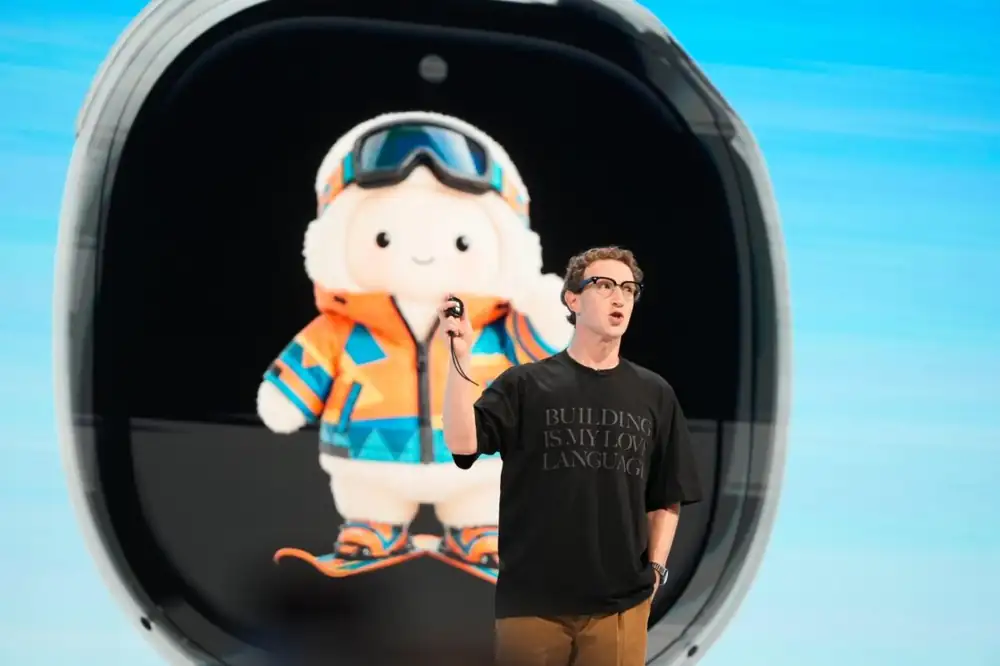
Above all, Muse is the first serious attempt to bring agentic AI from the realm of programming and business into everyday life. This became even more evident last Wednesday, when Zuckerberg took to the stage at Meta's annual conference to introduce Muse Charm, a device the size of an AirPods case, similar to a Tamagotchi and complete with a customizable on-screen avatar. Charm is activated by a fingerprint scanner and controlled by voice: the goal is to interact with your agent without the need for a smartphone or PC. The search for a device that can replace the phone, after all, has obsessed the hi-tech industry for a decade now, but smartwatches, smart glasses, and various headsets have so far failed.
Expectations are sky-high, with analysts estimating that the global market for AI agents could grow from eight billion dollars in 2025 to nearly two hundred and forty billion a year by 2034. OpenAI may soon launch its own agent (after hiring Peter Steinberger, the creator of Open Claw), Elon Musk is betting on Grok Bot, Apple finally seems to have found a way to upgrade Siri to artificial intelligence, and not to mention Instinct, the start-up run by a twenty-three-year-old whose AI agent has already received a valuation of ten billion dollars.
All wow? Not quite. E-commerce giants were the first to perk up their ears; intelligent butlers could easily bypass them, and last year alone, in the November-December period, traffic from AI increased by 693 percent. Result: Amazon rushed to block Muse, preventing it from making purchases on its marketplace, accusing the agent of having started collecting customer data without identifying itself. Meanwhile, competitor Shopify quickly reached an agreement with Meta three days later.
Above all, an AI agent isn't very useful if it can't access your files, take over your apps, learn about your interests and activities; and anyone who downloads Muse grants access to your bank accounts, credit cards, and passwords, immediately contributing to the model's training. A huge privacy issue.
Meta assures that the system has been designed so that the agent does not have direct access, but only to temporary passwords and credit cards. This is also thanks to Sentinel, a second system that monitors Muse to ensure it does not exceed its assigned tasks.
Zuckerberg, who endured the Cambridge Analytica scandal, settled for $18 billion to settle a major lawsuit over the psychological harm his social media platforms caused to minors, and is still dealing with class action lawsuits in the US and investigations in France into the cameras in Ray-Ban Metas, knows this will be the main obstacle. How many of us will he be able to convince that it isn't?