Uruguayan Figazza: onion pizza in the Montevideo style
Para 4 1.1 €/pers. 205 kcal/100g.
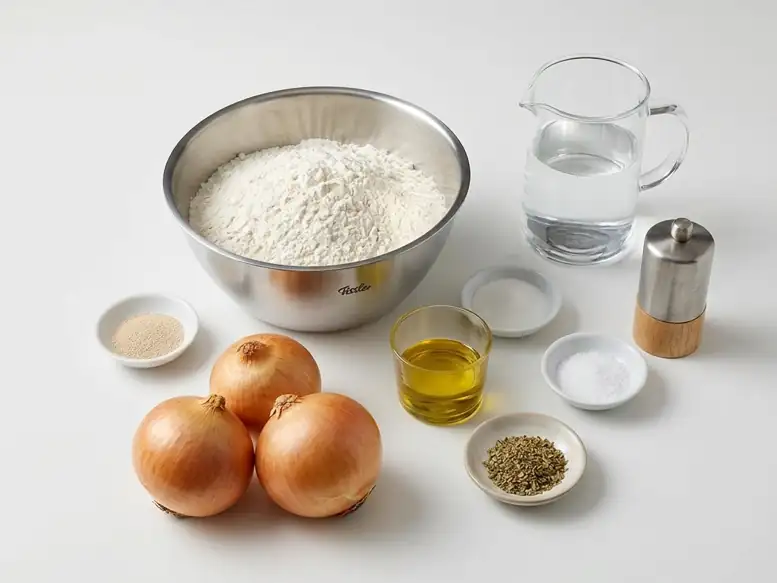
- 400g of medium strength wheat flour
- 260 ml of water at room temperature or slightly warm
- 7 g of dried baker's yeast or 20 g of fresh yeast
- 10 g of sugar
- 8g of fine salt for the dough
- 25 ml of extra virgin olive oil for the dough
- 3 large onions, about 600g
- 25 ml of extra virgin olive oil for the onion and the tray
- 1 teaspoon of dried oregano
- Freshly ground black pepper, to taste
- A pinch of salt for the onion
- Mix the water with the sugar and yeast. Add the flour and stir until there are no dry areas. Incorporate the salt and oil once the flour is hydrated. Don't add the salt directly to the yeast at first; it's easier to distribute it throughout the dough later.
- Knead for 8-10 minutes, until you obtain a smooth, elastic, and slightly sticky dough. Form a ball and transfer it to a lightly oiled bowl. Cover and let it rise for about 60 minutes, or until it has clearly increased in volume. There's no need to aim for an exact double rise if the dough already feels airy and relaxed.
- Can I use dried yeast instead of fresh? Yes. The 7g of dried baker's yeast in this recipe can be substituted with about 20g of fresh yeast. We don't use baking powder. If you'd like to review the differences, they are explained in detail in the yeast types guide.
- Slice the three onions into thin strips, about 4-5 mm thick. Heat a large frying pan with some of the oil and cook them for 3-4 minutes over medium-high heat with a pinch of salt. Stir so they soften evenly.
- Should the onion be cooked before putting it on the figazza? There's no single way. Some Uruguayan recipes put it on directly, while others soften it first. In a home oven, we prefer this quick step: the onion becomes translucent at the edges, still firm and not browned, so it will finish cooking on the dough. Remove from the heat, add pepper and some of the oregano, and let it cool slightly.
- Grease a rectangular metal baking tray, approximately 30 x 25 cm. Turn the dough out onto the tray and spread it with your fingertips, working from the center outwards, being careful not to deflate the dough. If it shrinks back, stop for 5 minutes and continue. The base should be rectangular with a uniform thickness, but not perfectly geometric.
- Let the rolled-out dough rest for about 20 minutes. Meanwhile, preheat the oven to 240°C (465°F), conventional setting (top and bottom heat), with the rack in the lower-middle position. Spread the warmed onion evenly over the surface, almost to the edges, and finish with the remaining oil and a little more oregano. The onion should really cover the dough, not just be a skimpy garnish.
- Bake for 18-22 minutes. Look for golden edges, a cooked base, and tender onions with some toasted tips. The pastry should still have a light, bready crumb; if it's dry and crumbly, it's overbaked.
- What do we do if the onion burns before the pastry is ready? We lower the baking tray one level or loosely cover the surface with aluminum foil for the last few minutes. We don't drastically lower the temperature, because then the base might turn pale. The guide to common oven mistakes helps to identify if your oven is heating up too much at the top.
- Remove the figazza from the oven and let it rest for 5 minutes before cutting it into rectangles. This allows the base to firm up without losing its tenderness. It can be served hot or warm.
In Montevideo, pizza doesn't always come out of the oven round. The tradition of pizza a la pala—long, with a spongy crumb, and cut into rectangular slices—also gave rise to one of its simpler variations: the Uruguayan figazza. Here, there's no tomato sauce or a layer of cheese hidden underneath. The surface is onion, lots of onion, with oil and oregano; no tomato sauce. The dough is firm enough to hold the bread without becoming a dry crust.
The name retains the trace of the Genoese *fügassa*, but in Uruguay it acquired its own distinct character. Does figazza have mozzarella? The basic version we're going to prepare doesn't. In Montevideo, there is a *figazza with mozzarella*, but it's a different variation, and the cheese is placed on top. This recipe deliberately sticks to the onion version so it's clear what dish we're making. If you're interested in comparing the textures of thick, tray-baked doughs, pizza al taglio offers another point of reference, even though it's Italian and has different toppings.
The dough is based on a similar principle to homemade pizza dough, but here we're aiming for a slightly softer crumb than a thin-crust pizza. A moderately strong flour helps, without making it chewy. The onion is cooked for just a few minutes before going into the oven: it softens, but we don't want caramelized onions. This detail allows us to work with a good amount of onion without it remaining raw or burning while the dough finishes baking.