Milan is in a crisis, but some venues are packed and booked for weeks. Here's which ones and why
Milan is in a crisis, but some restaurants are full and booked for weeks. The crisis bites, restaurants are closing like never before.
Future Roman Pizzeria
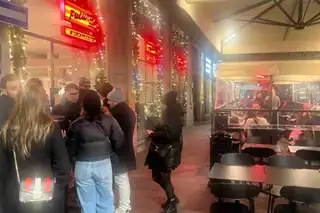
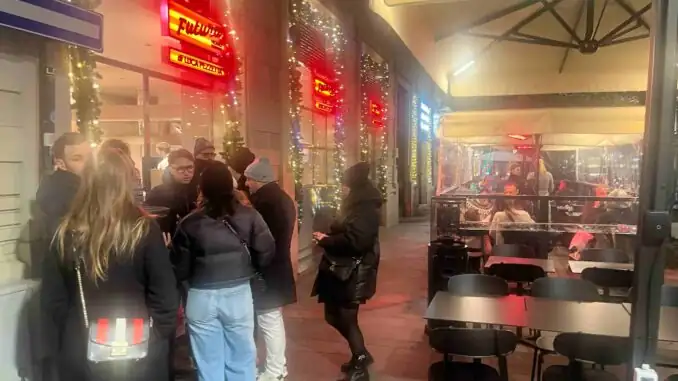
Let's try to see a few. Luca Pezzetta is a very well-known Roman pizza chef in the capital. He opened a few weeks ago and is already packed. On Tuesday, January 6th, at 12 noon, we try to book a table for two at Superb: the first available spot is Monday, February 16th. Over a month, then. But is this a strategy? Are there any free spots? Maybe, but in reality, all you have to do is walk in and discover there's a line and all the tables are taken. So why? The place isn't much: rather cold, bare, very chaotic, with excessively loud music. The pizza, however, is delicious. Above all, surprising, for a city like Milan. Because it's very thin, very light, only 160 grams. Just as has been trendy in Rome for some time (Neapolitan Enzo Coccia maintains that Roman pizza, in fact, has no tradition or territory): scrocchiarella, they call it. The wine list is also decent, and the Pan suisse with vitello tonnato is very good. But of course, simply having a good pizza isn't enough to fill a pizzeria. There are other factors. In this case, as in many others in Milan, the area is crucial: the Isola neighborhood. A strategic location, crowded with Milanese, with countless restaurants competing with one another but creating a center of gravity. Futura is also on the corner of Via Borsieri and Porro Lambertenghi, offering two points of visibility and traffic. Another crucial factor: pizzerias have been booming for some time now. Because they're relatively inexpensive, because it's a satisfying experience for groups of friends, because it's neither demanding nor formal, and for families, because children love it. And it's no coincidence that pizzerias are booming, both in Milan and Rome.
Ratana
Let's look at another. Ratanà, Cesare Battisti's restaurant. The very definition helps. Cesare Battisti isn't just a talented chef. He's a chef who has successfully marketed himself as the standard-bearer of new contemporary Milanese cuisine, as he titled one of his books. His risottos and his cotoletta are renowned. The atmosphere is beautiful, informal, yet perfect for Milan's new intellectual bourgeoisie, who demand elegance but also casual ease. It's also located on Isola, but this time away from the chaos: the plus is the restaurant, which is housed in a renovated villa, with a lovely outdoor space where children can play, right in front of the Bosco Verticale. But above all, Battisti has become an influencer. He's not a kid, of course, but for the past couple of years he's managed to capitalize on the influencer chef era, taking his recipes to Instagram and winning over a significant following (including this writer). Spontaneous, charming, with captivating recipes and a Milanese flair that's evident but not unpleasant, Battisti has gained followers (300,000 for him and 330 for Ratanà) and clicks, which have converted into customers. Result: his ResDiary reservation system only has room for customers starting January 21st. And to divert some customers, Battisti has opened the Ratanà and Remulass pasta factory, located behind Via Melzo.
Tripe
And then, what the hell am I telling you (quote Al Pacino), there's Trippa. The most popular restaurant in Milan by definition. It's been sold out for years, and you have to queue for reservations. To organize his ten tables, Diego Rossi has chosen this rule: every first of the month at 12 noon, the system will open for reservations for the entire following month. For January, they opened on January 5th, so just a few hours ago. The result: no availability for either January or February. In this case, a formula that is cited throughout Italy as "the perfect trattoria" has prevailed. It's unclear what the exact ingredients are to embody this archetype (if it were that simple, everyone would replicate them). But the informal atmosphere, the Milanese trattoria vibe (and therefore not chaotic), the recipes that aren't forcedly traditional but not unnecessarily creative, the use of the increasingly fashionable quinto quarto, the prices that aren't rock-bottom but moderate, the pleasant service, and a tailor-made wine list are elements that complement a model that makes Trippa a place you want to return to. To cater to a demanding clientele, the Trippa partners have opened new venues: Osteria della Concorrenza (also always packed), Fratelli Torcinelli, and Nino. A tried-and-tested technique: Davide, the owner of the first Roman restaurant, Giulio Pane e Ojo, had long lines in front of his trattoria about twenty years ago. So he opened a Tuscan osteria next door and a Puglian restaurant across the street.
Places always full in Milan
Tourists and sad pasta makers
So, to sum up, what's the recipe for filling a restaurant? There isn't one, of course. Many factors come into play. Being trendy on social media can work, but only for a short time. If there's no substance, it won't last long. Which isn't to say that if there's substance, it'll immediately work great. The area in Milan is truly crucial. People flock there, especially young people. Take Via Melzo. The restaurants there are mobbed, but you only need to move a few meters and you're out of the eye of the storm. Another category of places that are always packed: restaurants catering to tourists. The Romans excel at these, like Fortunata, which, thanks to some rather sad gimmicks—the poor "sfogline" in the window, melancholic stand-ins who make pasta but, more importantly, play a role—attract foreign tourists in search of tradition and supposed authenticity, who endure lines that can last up to an hour. Milanese cuisine isn't well-known abroad, so in Milan, Roman and Neapolitan dishes are also acceptable. The quality lies elsewhere, but the goal is achieved.