What is “omiotsuke”? We'll introduce its kanji writing, origin, and recipes!
Have you ever heard the word "omiotsuke"? It has a slightly nostalgic sound, like something people used in the past would have said, but it's actually a polite word that was used in the imperial court during the Muromachi period.
What is "omiotsuke"? We'll introduce its kanji writing, origin, and recipes!
What is "omiotsuke"?
What is the origin of omiotsuke?
Miso soup originated in the Kamakura period.
What is the difference between omiotsuke and miso soup?
Is "omiotsuke" a dialect word?
Miso soup recipe
Omiotsuke is a more polite way of saying miso soup.
What is "omiotsuke"?
"Omiotsuke" is a polite way of saying miso soup, and it is written as "御御御付" in kanji. "Omi" means "miso," and "otsuke" means "soup" served with rice on a tray. This word is said to have originated from the language used by court ladies during the Muromachi period.
Nyōbō kotoba refers to the secret language used by the ladies-in-waiting who served in the imperial court. Besides "omimitsuke," other examples include "omiki" (sacred sake) and "omiashi" (sacred feet), and these words are said to be softer ways of expressing things related to clothing, food, and shelter.
What is the origin of omiotsuke?
There are several theories about the origin of omiotsuke, but all of them suggest that miso soup was treated as a very important dish. Here are two of the most representative theories.
◼︎ A polite way of referring to soup The kanji "御" is used when referring to things politely, as in "御挨拶" (greeting) or "御ご連絡" (contact). It is said that "御御御付" is a word that adds "御御" to "御汁" (otsuke), which means soup, to make it an even more polite expression.
◼︎Miso (omi) with soup (otsuke) When miso is written politely, it becomes "omi". When soup is added to this, it becomes "omiotsuke", and it is said that this was mistakenly written as "omimitsuke" and spread as such.
Miso soup originated in the Kamakura period.
Miso production in Japan began during the Heian period. At that time, miso was a coarse-grained miso with many whole beans, and it was commonly eaten as a condiment for food. Furthermore, miso was a luxury item used as a salary or gift for people of high status, and was beyond the reach of ordinary people.
During the Kamakura period, mortars and pestles were introduced from China. When people tried grinding miso paste in them, they found that miso dissolved easily in water, leading to the creation of miso soup. The emergence of miso soup is said to have established the "one soup, one dish" (staple food, soup, side dish, and pickles) dietary style of the Kamakura samurai, which emphasized frugality and simplicity.
Miso soup became widespread during the Edo period. Soybeans and miso began to be produced in large quantities in various regions, making miso accessible to ordinary people. It is said that this was also the time when the population of Edo reached 500,000, and with more men than women, the eating out industry flourished, leading to an increase in the variety of dishes using miso.
However, since commoners were unfamiliar with the term "omiotsuke" used in the imperial court, they began calling soup made by dissolving miso "miso soup," and this term became widespread.
Is "omiotsuke" a dialect word?
Later, the word "omiotsuke" spread to the common people and came to be used mainly in eastern Japan. For this reason, some say that "omiotsuke" is a Tokyo dialect word, but it is actually a polite word used by court ladies during the Muromachi period and was used in the imperial court.
Also, "omiotsuke" is an obsolete word in modern times and is rarely used. However, it might be fun to use it occasionally as a nostalgic word that people used in the past.
Miso soup recipe
Now, let's look at a variety of miso soup recipes. The deliciousness of miso soup made carefully from scratch is exceptional, so please give them a try!
A recipe for miso soup made from scratch!
When you have some free time, why not try making miso soup from scratch, starting with the dashi stock? It might seem difficult, but the ingredients and steps are simple, so please give it a try.
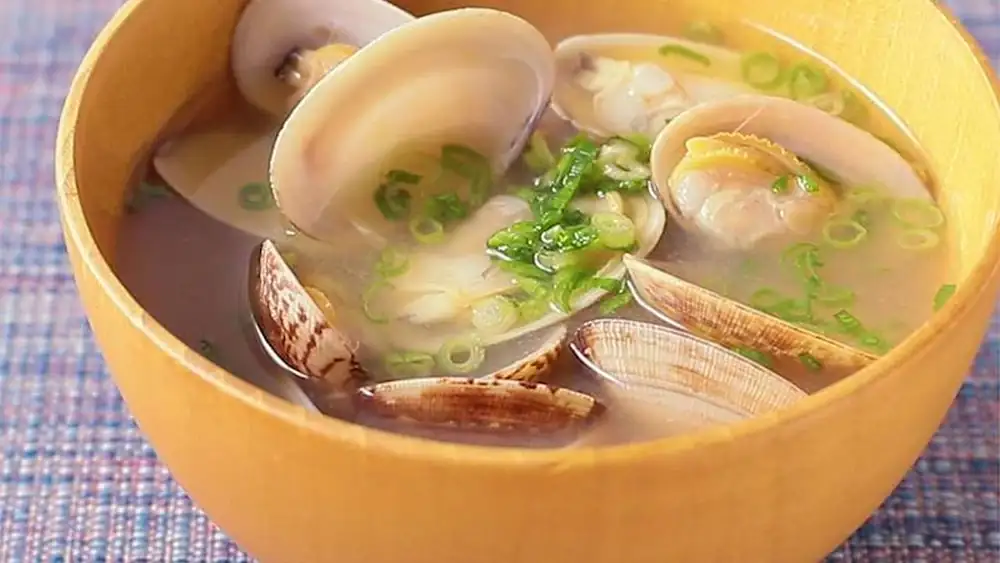
Clam miso soup
This miso soup is packed with flavor thanks to the generous amount of clams. The broth is simple, made only with clams and kelp, but the rich umami of the clams makes it irresistibly delicious!
Miso soup with dried sardine broth, fried tofu, and green onions
If you want to make dashi easily, using dried sardines is highly recommended! The simple umami of the dried sardines goes well with the aroma of miso, creating a nostalgic flavor that you can enjoy.
A flavorful miso soup made with bonito broth.
This miso soup has an elegant flavor, made with bonito broth and white miso. Adding ingredients like shrimp and mitsuba (Japanese parsley) makes it colorful and perfect for entertaining guests.
Enoki mushroom and tofu red miso soup
The savory flavor of enoki mushrooms pairs perfectly with rich red miso soup. Since it uses ingredients that cook quickly, it's also great that it can be made easily in a short amount of time.
Easy miso soup recipe using granulated dashi!
If you want to easily make a flavorful miso soup, using granulated dashi is highly recommended! There are many different flavors of granulated dashi available, so it's fun to use your favorite or compare them.
Miso soup with komatsuna (Japanese mustard spinach) and fluffy sweet potatoes.
We've added sweet potatoes to the miso soup for a subtle sweetness. Enjoy the comforting and gentle flavor, where the fluffy texture of the sweet potatoes pairs perfectly with the aroma of miso!
Eggplant and enoki mushroom miso soup
How about a quick and easy eggplant and enoki mushroom miso soup? The crunchy enoki mushrooms are delicious, and the eggplant, which has absorbed the savory flavors, is also very tasty.
Deep-fried tofu and nameko mushroom miso soup
While tofu is a classic accompaniment to nameko mushroom miso soup, adding deep-fried tofu (atsuage) creates a richer flavor. It's simple yet satisfying, making it a great side dish as well.
Pork belly and okra miso soup
This miso soup is packed with flavor, featuring pork belly and okra. Sautéing the pork belly in sesame oil before simmering enhances its aroma and creates a rich, deep flavor. Try making this when you want to enjoy a quick and easy pork miso soup!
This time, we introduced the origin and etymology of "omiotsuke," the difference between it and miso soup, and a variety of miso soup recipes. "Omiotsuke" is a polite way of saying miso soup, and it originated from the language used by court ladies in ancient times. Although the word "omiotsuke" is rarely used today, why not try using it occasionally as a polite way of referring to miso soup?