What is “Senmai” (a type of offal)? We'll explain its taste, texture, and delicious ways to eat it!
"Senmai" is a common offal dish often seen at yakiniku (Japanese BBQ) restaurants. While it's a part of the cow's stomach, many people may not know what it tastes like or what it looks like.
What is "Senmai" (beef tripe)? We'll explain its taste, texture, and delicious ways to eat it!
What is senmai?
What are the characteristics of tripe?
Differences from other hormones that are often confused
Delicious ways to eat tripe
Let's try senmai, which is appealing for its crunchy texture and mild flavor.
What is senmai?
Senmai is a type of beef offal, specifically the third stomach of a cow. Cows have a habit called rumination, where they swallow grass they've eaten and then bring it back to their mouths to chew, which is why their stomachs are divided into four sections. Roughly speaking, the first to third stomachs are for rumination, while the fourth stomach plays a role in digestion, similar to the human stomach.
The largest part of the stomach, the first stomach, is home to many microorganisms that use enzymes to ferment and break down food, transforming it into a usable nutrient. It is also said to absorb some of the nutrients. The second stomach assists the first stomach's function. The third stomach, located behind the second stomach, has multiple layers of membranes that further break down the contents and send them to the fourth stomach. The fourth stomach is an organ similar to the stomachs of humans and other animals. Here, gastric juices are secreted to digest the food eaten. However, because most of the food has already been thoroughly broken down by enzymes, the digestive action is not as strong as in other animals.
Omasum is a type of stomach tissue with many layers of folds and ridges. It is commonly believed that this appearance is the origin of the name "senmai" (meaning "tripe" or "bumperhead"). In English, it is called "Omasum."
What are the characteristics of tripe?
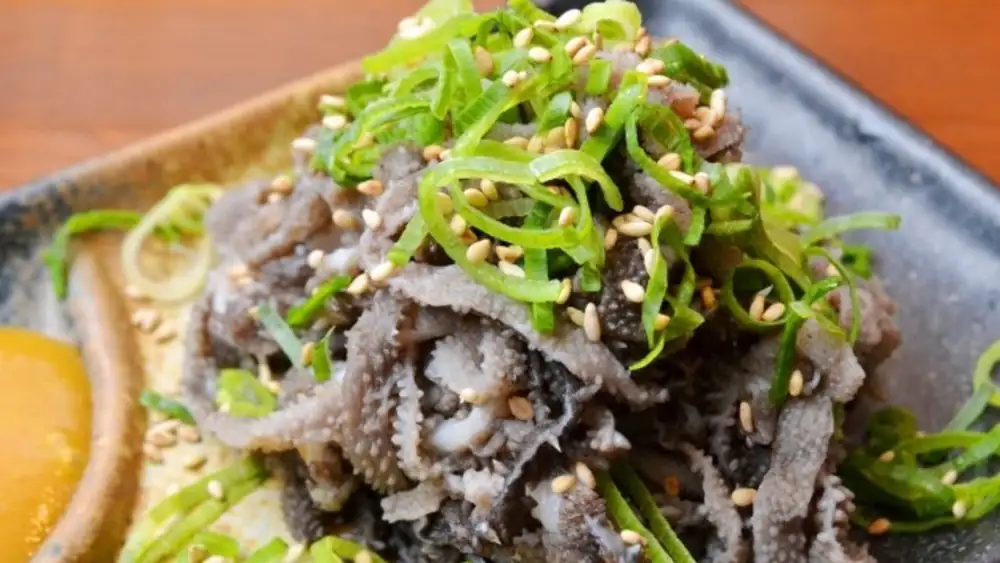
Tripe has a thin, fold-like membrane on the outside. It is dark gray in color due to its high iron content, giving it a distinctive appearance. This membrane has a unique smell and taste characteristic of tripe. On the other hand, the inside, once the membrane is removed, is thick and white. Tripe that has been processed by removing the membrane is called white tripe, while tripe that is eaten with the membrane intact is called black tripe. Incidentally, when people refer to tripe in general, they seem to be referring to black tripe.
Beef tripe has a unique, pleasant chewiness, with a slightly rough texture and a crunchy bite that is part of its appeal. Contrary to its rich appearance, it is one of the leaner parts of offal and has a light flavor. Since tripe itself doesn't have much flavor and is rather bland, it is generally eaten with a rich sauce or soup.
As mentioned earlier, cows have four stomachs. All of them are eaten as offal, but how do they differ from tripe? Here, we will look at the characteristics of each part, from the first to the fourth stomach, including their taste and origin.
Mino
Mino, the first stomach of the pig, is a very famous and staple offal dish in yakiniku (Japanese barbecue). It has a thick, whitish appearance and doesn't have a particularly strong taste. Because it is elastic, it is usually cut with a knife before eating, and it is said that it got its name, mino, because its appearance resembles a straw raincoat (minokasa). The chewy texture combined with the melting fat creates an addictive deliciousness.
Honeycomb
The second stomach, called honeycomb tripe, is characterized by its bumpy, hexagonal structure resembling a beehive. The surface is dark and tough, but after preparation and peeling off the skin, a white honeycomb-like interior is revealed. Many people find its thick, chewy texture addictive. It has a light flavor, but also the umami unique to offal. It is characterized by its lack of sinew and ease of chewing. The longer it is simmered, the softer it becomes, making it recommended not only for grilled meat but also for stews. It is used in Chinese and Korean cuisine, and in Italy, tripe stewed in tomato sauce is a famous example.
Giara
The fourth stomach, the abomasum, looks similar to the tripe. Since it follows the omasum, it's also called red omasum or red omasum. Of the four stomachs, it's the fattiest, offering a rich flavor. It has a strong umami taste and, among the offal, has a texture closer to meat.
Delicious ways to eat tripe
Tripe is the part of the beef that ferments pass through, and it has a distinctive taste and smell, so proper preparation is essential. Most tripe sashimi sold is boiled and can be eaten as is, but if you use raw tripe in chunks, preparation is necessary.
Beef tripe can also be enjoyed as yakiniku (Japanese barbecue). For yakiniku, black tripe with the thin outer skin left on is common. Simple sauces such as salt sauce or soy sauce go well with tripe, which has a subtle umami flavor. Be careful not to overcook boiled tripe. Overcooking will not only make it tough and rough, but it will also lose its unique flavor. The key to enjoying it is to first grill the white side thoroughly, and then lightly grill the black side.
A classic dish using tripe is senmai sashimi. While the name might suggest it's eaten raw, it's actually boiled and then thinly sliced to resemble sashimi. There are two types: white senmai (with the thin membrane removed) and black senmai (with the membrane intact), each offering its own unique flavor. The appeal of senmai sashimi lies in its crunchy texture and mild taste. It's typically eaten with a spicy dipping sauce; a rich sauce made with gochujang, vinegar, and sugar pairs well. Adding garlic, sesame oil, or sesame seeds also enhances the flavor. You can also try it with other sauces like ponzu, soy sauce, or mustard miso.
If you want to make the most of the unique crunchy texture of tripe, stir-frying is a great option. Combining it with ingredients that complement the mild flavor of tripe, such as garlic, will create a robust and delicious taste. Another classic preparation is stewing it. When making motsunabe (offal hot pot), it's recommended to add it to a rich, flavorful broth along with other offal dishes.
So, what did you think? We've introduced the taste, origin, and differences between tripe and other offal, as well as delicious ways to eat it. Tripe is often avoided because of its appearance, but its crunchy texture and light, savory flavor are appealing, and many people find it addictive. If you've never tried tripe before, why not take this opportunity to give it a try?