Garambullo Project: collective kitchen for a more conscious future
The act of cooking can become a symbol of community and a source of cultural resistance. The Garambullo Project, located in Colón, Querétaro, embraces these concepts. Discover a cultural project that invites reflection through art and cuisine.
Garambullo Project: gastronomic identity through the nature that surrounds us
Querétaro is a state with a very important cultural heritage in Mexico; however, in recent years, the influx of new inhabitants from other regions of the country has led to the slow disappearance of many Querétaro customs.
The semi-desert region of Querétaro is one of the least explored areas where regional identity still prevails. But it is thanks to projects like Garambullo, which, in collaboration with artists, scientists, and the community, keep much of this local knowledge alive.
Through intellectual exchange, the aim is to learn to respect the nature and biodiversity of the Querétaro semi-desert. Furthermore, there is an added interest in protecting the ancestral knowledge of the local communities.
Mariana Morales, founder of Proyecto Garambullo, tells us how her project came about:
“My idea was to have a cultural space that starts from nature, as a starting point, and with the children we work in gardens and art workshops. Everything has to do with nature, with reflecting on where we live, we talk about identity and recovering traditions that I feel are very disconnected from the land.”
It is not only a project focused on children and young people, it is a proposal that aims to link people of any age to their territory and the preservation of their culture:
“With the women in the kitchen, we created a recipe book, but it stopped being one. Now it's a participatory research project, because they come. They leave us their recipe and we keep a record of who gave us their recipe and what their name is.”
Garambullo, the fruit of nostalgia
The project's name stems from nostalgia, as Mariana has a special connection to the town. Her grandfather was born in Colón, a small village in the semi-desert of Querétaro. Here, Mariana learned the great value of foraging cuisine.
“As a child, it was common for us to be taken to the hill to collect garambullos, a common outing that families take to gather nopales, garambullos, and other wild fruits. There are even people who dedicate themselves to this, not just for leisure, but as part of their livelihood. They sell their jars of garambullos, nopales, guamiches, etc.”
The Garambullo Project arose from the need to create a community that advocates for preserving the biodiversity and culture of the Mexican semi-desert. Mariana, an art historian, aims to create workshops that use art to help people understand their environment and rediscover its value.
But Garambullo also stems from the vision of using cooking as a learning resource. Through collective cooking and foraging workshops, we have a kind of "living laboratory" where participants re-evaluate part of their heritage.
Collective Kitchen: A constantly changing laboratory
It is through the collective cooking workshop that Proyecto Garambullo finds an opportunity to reconnect with the community. Through local recipes and regional products, they have discovered that foraging cuisine is part of Colón's cultural heritage.
In this exchange of information, they have been able to collect a large number of findings, such as the relevance of the diversity of prickly pear cacti found in the region:
“There is an immense variety of nopales; the women who harvest them can tell you 30 names, and they all taste different. We have roasted them with salsa and eaten them to see the difference in textures and flavors.”
They take photographs of their findings and note the most relevant information. This workshop is an attempt to foster collective participation toward a common goal, but with a clear message:
“We don’t just want to extract their knowledge, it’s about giving them credit and participation, so that it becomes a collective cooking workshop.”
Looking ahead, the idea is to create a collective recipe book that addresses the biodiversity of the territory and discusses wildlife in the Queretaro semi-desert region.
Through this shared culinary knowledge, the aim is to revitalize recipes based on local ingredients and products from the milpa (traditional Mesoamerican agricultural system). These workshops also seek to preserve the tradition of harvesting garambulla, one of the region's most emblematic products.
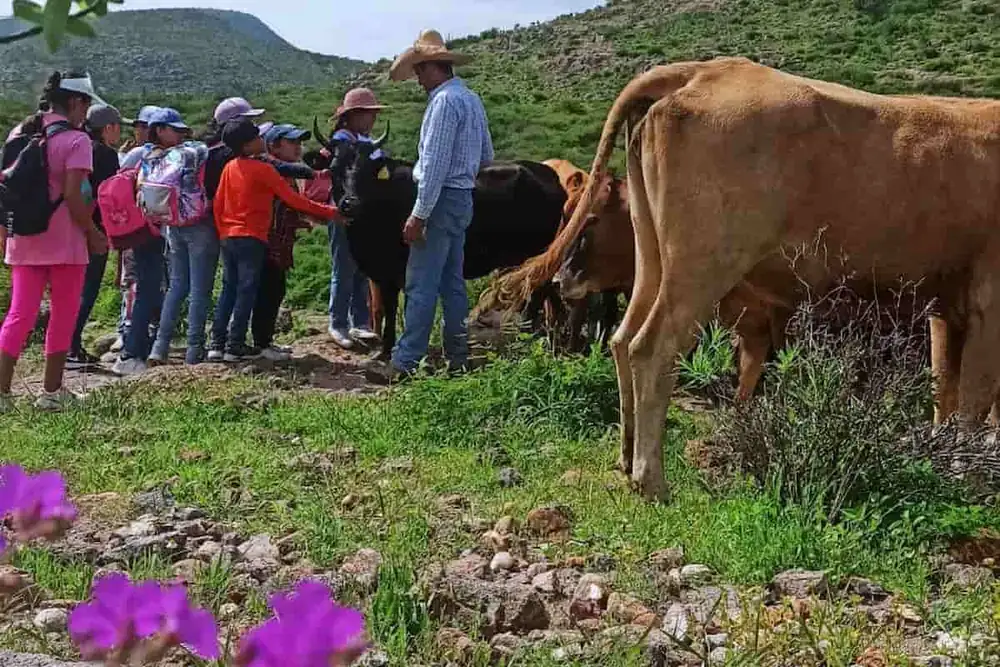
Through exploration walks, they teach children and young people to walk the trails of the area to understand the biodiversity of the area and take records of edible plants.
They also teach children the nixtamalization process and help them understand its great importance in their lives. Mariana Morales hopes that through these workshops, children will maintain this connection to food and its origins.
Garambullo Project: A possible solution for the future
Proyecto Garambullo is an independent space that uses art, research, and cooking to create valuable knowledge. It's a learning initiative that fosters a more sustainable way of life.
For more participatory and community-based research that allows us to preserve the cultural and ecological heritage of the Querétaro semi-desert. The Garambullo Project serves as a reminder to return to what is truly important.
A connection established between the land and the traditions of our community. The opportunity to create identity through nature and cuisine. A cultural project that allows us to return to our roots and delve deeper into the value of our gastronomy, not only to pass it on, but to survive.