14 Italian Cooking Techniques You Need To Memorize
Other flavoring elements commonly added include capers, anchovies, and olives to punch up the salty and savory notes, and raisins, currants, or other fruits to enhance the sweet flavors. Pine nuts can be added for texture, fresh herbs and spices for more dimension, and oil or butter to add richness.
Extra virgin olive oil is considered the highest quality with the most flavor. However, because it's purer and not as processed as other types, it's also the most delicate — it won't withstand high temperatures, so it's best utilized in preparations like salad dressings, drizzled over finished dishes, or for dipping bread. Virgin oil is slightly less flavorful than EVOO, but can still be used in the same way, and is a good option if you're on a budget. Other styles that may be labeled light, or simply as olive oil, are processed to be more neutral in flavor, and have a higher smoke point, making them better suited for cooking.
Within Italy, there are countless unique styles of olive oil, ranging from sweet and fruity to peppery and intense. Just like with wine, try pairing specific olive oils with recipes from the same region, as they are often made to complement one another.
Only use top quality ingredients and seasonal produce
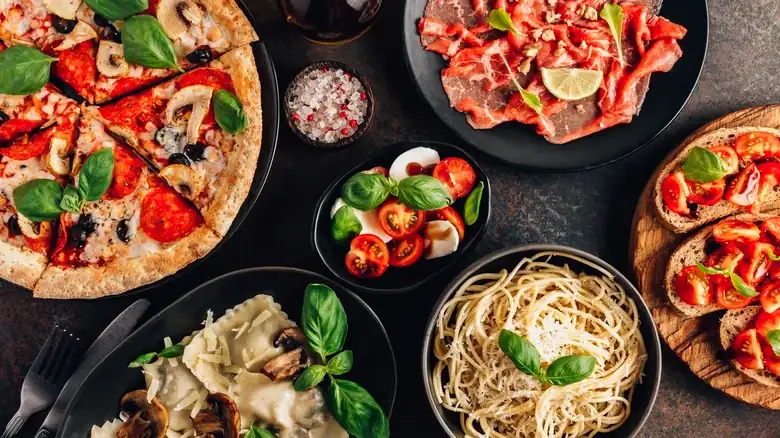
Many classic Italian recipes are simple. Take the Caprese salad, for example, which includes tomato, mozzarella, basil, and olive oil, seasoned with salt and sometimes pepper. It doesn't get much simpler than that. But with these economical ingredients comes a catch — if each element of the Caprese salad isn't in top form, the whole dish can fall apart. That's why when cooking Italian cuisine, a chef must ensure that each ingredient is of the highest quality. For a Caprese, that means ripe, in-season tomatoes, fresh and aromatic basil, rich and authentically crafted buffalo mozzarella, and premium, intensely-flavored olive oil. If you're using mealy, out-of-season tomatoes, old bruised basil leaves, or watery flavorless cheese, it doesn't matter how good the other ingredients are — each one has to bring its best qualities to the plate. This principle applies to any
Season and taste as you cook
Salt is an essential ingredient no matter what cuisine you are cooking, and Italian is no exception. Without salt, a dish can taste one-dimensional and bland; but with the right amount of seasoning, ingredients are able to shine and better express themselves. And since so much of Italian cooking is focused on high-quality ingredients, properly seasoning your Italian dishes with salt is a crucial technique to learn. You'll get the best results if you season your food as you cook, as explained by The Guardian. Including the salt early on in the cooking process leads to more evenly seasoned dishes, as it has a chance to meld with the ingredients over time. Adding salt, and pepper if needed, incrementally to your food and tasting as you go is the best way to achieve the perfect seasoning level. And make sure you're seasoning each element individually, including a
Learn to make pizza
There is perhaps no more iconic Italian dish than pizza. Love for this food transcends regional and national borders, as it has evolved from a Neapolitan specialty to a worldwide sensation. There are many different iterations of pizza found throughout Italy, featuring different styles of crust that can be thick or thin and round or rectangular, with various combinations of sauces and toppings, as Great Italian Chefs points out. Learning how to make pizza from scratch is a skill that can take a lifetime to master, but the basic concept is simple enough: Make a yeasted dough with flour, salt, and water, then shape it, top it, and bake it. Whether you're crafting a thick, Sicilian sfincione or a thin, crispy Romana Tonda pizza, it all starts with the dough. Having a simple pizza dough technique in your arsenal of Italian cooking skills is invaluable. When making a clas
Make pasta from scratch
The process of making homemade pasta may seem intimidating, but it's a skill that can be easily honed with a few simple recipes and a little bit of practice. You could spend your entire life learning about the hundreds of pasta shapes and varieties, but to boil them down to basics, there are three main categories: Long pasta such as spaghetti, short pasta such as penne, and stuffed pasta like ravioli and tortellini, according to Italy Magazine. Flour, water, and optionally eggs are the only ingredients required to make fresh pasta dough. While some more complex shapes of pasta are difficult, if not impossible, to make without special equipment, there are lots of styles that can be crafted with just a flat surface, a rolling pin, and a cutting utensil. Making your own sheets of pasta dough means you can shape and stuff them any way you'd like, expanding your culin
Learn to cook pasta properly
Learning how to cook pasta is a fundamental skill if you want to consider yourself a competent Italian chef. If you're simply following the directions printed on your box of noodles, you may be missing some key concepts and techniques that will elevate your pasta dishes to new levels of flavor and texture. Ensure your pot is large enough to comfortably fit the amount of pasta you're preparing. If the noodles don't have enough water to swim around in, they may stick together and not cook thoroughly or evenly – Eataly recommends four quarts of water for each pound of pasta. The water should be cold to start, with salt liberally added once the water has reached a boil. Once the pasta is added, keep an eye on it, tasting a piece periodically to get a sense of how it's cooking. You don't want it to be hard to bite through, but you don't want it to be mushy either. The per
Pair pasta with the right sauce
The abundance of different shapes, lengths, and styles of pasta isn't just for looks. Certain types of pasta are better suited for specific recipes, and depending on the tastes and textures of a dish, choosing the right pasta can greatly enhance your Italian culinary creations. You don't have to memorize the best uses for hundreds of pasta shapes — there are some simple guidelines for categories of pasta that can help you choose what will work best. As BBC Good Food breaks down, stuffed pasta like ravioli typically doesn't need much of a sauce, since they are already filled with flavorsome ingredients. With long noodles, thinner styles like spaghetti go best with light or creamy accompaniments, while wider long noodles like pappardelle are built for heartier sauces. Shells and tubes are also great with rich, creamy, and meaty sauces as their empty centers can beco
Know the different tomato sauces
At first glance, all red sauces may look the same. But actually, there are countless variations on the classic tomato sauce with very different flavor profiles. Knowing how to make some of the most well-known red sauces for pasta, and understanding what they each bring to the dish, is a great Italian cooking skill to develop. The most fundamental red sauce, simply called pomodoro, showcases the pure flavor of tomatoes. Fresh tomatoes can be used if they're in season — otherwise, a good quality canned tomato is best, as Mia Emilia recommends. Pomodoro sauce should be fresh and bright red, with few other ingredients, as you want the tomato to be the star of the show. Marinara sauce is similar to tomato sauce, but usually has garlic and herbs, like basil and oregano, added to the tomato and olive oil mixture. Variations with more complex flavors include amatric
Use a light hand when dressing pasta with sauce
An important element of crafting the perfect pasta dish is balance. No matter what style of noodles and sauce you're putting together, it's crucial to get the ratio right so that you and your diners can enjoy both parts of the dish, without one ingredient overwhelming the other. It can be tempting to load up your noodles with oceans of sauce, but using a light hand will ultimately give you better results. According to DeLallo, the ideal proportion is 1.5 cups of sauce per pound of pasta. The richer and more intensely flavored the sauce is, the lighter you can go. Cooking the pasta and the sauce together as a final step means that each noodle will be well-dressed and flavorful, whereas if you're dumping the sauce on top of the pasta, you might be tempted to use too much. With just the right amount of sauce evenly distributed, you'll be able to apprec
Get to know soffritto
Many Italian recipes, from soups to stews to braises, start with soffritto. Similar to French cuisine's mirepoix, soffritto is a combination of minced celery, carrot, and onion which is gently browned in olive oil or butter, as La Cucina Italia explains. This humble trio of vegetables, when cooked together in this manner, creates an aromatic and satisfying base upon which the dish's other flavors are built. This simple step adds a surprising amount of depth and complexity to any dish, no matter how basic or sophisticated the recipe. You'll want to make sure the vegetables are chopped uniformly and cooked carefully over low heat to prevent uneven cooking or burning. Once you get the technique down, you can add other ingredients like garlic and herbs for even more flavor. A perfectly cooked soffritto is one secret to a great bolognese, soups like pasta e
Use a mortar and pestle
While it's not the easiest or quickest kitchen technique, using a mortar and pestle is an essential skill to develop when you're learning to cook Italian cuisine. A simple set of tools, a mortar is really just a heavy bowl, in which a pestle is used to grind down ingredients into various textures. Arguably its most famous use is for making pesto – in fact, if you don't make it using a mortar and pestle, it's not actually considered true pesto Genovese, according to La Cucina Italia. From cracking whole spices like peppercorns to making traditional aioli, a mortar and pestle has a variety of uses in addition to being a pesto-making necessity. As Saveur breaks down, there are objective reasons it's superior to using more modern equipment such as electric grinders and food processors. Crushing is better for releasing flavor than chopping or cutting, and it's a gentl
Learn to make risotto
Making risotto can seem like a daunting challenge, but learning to cook it properly is a must for any budding Italian chef. A few simple tricks and proper planning can make this impressive rice dish a relative breeze to prepare, and once you have the basic technique down, you can add your own spins to it with ease. Perhaps the most important key to making risotto is preparation. It's a dish that takes a watchful eye, so having all of your ingredients measured, tempered, and ready to go is critical. Then, as The Guardian discusses, there are steps that must be followed to achieve the proper flavor and texture. The right type of rice is crucial — it must be short-grained, like arborio or carnaroli, in order to absorb the correct amount of liquid and release starch. Speaking of liquid, you want your stock to be heated before you start cooking, or it won't react wi
Learn to cook polenta
On the surface, polenta is an extremely simple dish: Cornmeal mixed into hot water or stock and stirred until it's cooked to a smooth texture. It takes some knowledge and skill in order to make it properly and to utilize its versatility, but once you perfect your polenta technique, you'll find it's a fantastic side dish to have at your disposal. The downside to cooking traditional polenta is time. As the cornmeal is added to the hot liquid, it absorbs slowly and needs to be constantly stirred for at least half an hour. It also tastes rather plain on its own, especially when cooked with water instead of stock, so it needs to be seasoned liberally, as MasterClass explains. But this also means it's a great blank canvas for other flavors — you can make it rich and buttery, salty and savory, spicy, or even sweet. Its texture is versatile as well. It can be served
Get to know agrodolce
Agrodolce literally translates to sour-sweet, and it's a flavor combination that's found in dishes throughout Italy, typically in the form of a condiment, glaze, or relish. Take a sweet element, like honey or sugar, and reduce it with a sour element like vinegar, and you've created agrodolce. Other flavoring elements commonly added include capers, anchovies, and olives to punch up the salty and savory notes, and raisins, currants, or other fruits to enhance the sweet flavors. Pine nuts can be added for texture, fresh herbs and spices for more dimension, and oil or butter to add richness. An agrodolce sauce or relish can add depth of flavor to just about anything, spooned on top of meat or fish or tossed to coat vegetables like cipolline onions or fruit like figs or melon. Agrodolce is almost like a cheat code for creating complex, intense layers of flavor in all o
Learn how to use olive oil
All olive oils are not the same. They can vary based on where they're from, how they're made, and what they're best used for, as MasterClass breaks down. Since olive oil is used extensively in Italian cooking, it's important to get to know the different styles and how to get the most out of this essential ingredient. Extra virgin olive oil is considered the highest quality with the most flavor. However, because it's purer and not as processed as other types, it's also the most delicate — it won't withstand high temperatures, so it's best utilized in preparations like salad dressings, drizzled over finished dishes, or for dipping bread. Virgin oil is slightly less flavorful than EVOO, but can still be used in the same way, and is a good option if you're on a budget. Other styles that may be labeled light, or simply as olive oil, are processed to be more ne