Traditional King Cake: The Best Recipe
Which puff pastry should I choose for a galette that is golden brown and flakes properly?
Ingredients · Servings 8 people
- 2 puff pastry sheets
- 100g butter
- 125g almond flour
- 100 g sucre
- 3 eggs
- 1 handful of almonds
Method · 15 min
- In a mixing bowl, combine the softened butter with the caster sugar and almond flour. Add the two eggs one at a time, mixing well after each addition. For a crunchy texture, add a handful of chopped whole almonds.
- Unroll a sheet of puff pastry onto a baking sheet lined with parchment paper. Using a pastry brush, moisten the edges of the pastry without letting the water spill over the edges.
- Spread the almond cream in the center of the pastry. For those who appreciate tradition, now is the time to add the fève (the lucky charm hidden inside).
- Carefully place a second sheet of puff pastry on top of the first. Press the edges of the galette together with your fingers to ensure they adhere well, then fold them inwards towards the filling to completely enclose it. Press the edges together again with your fingers, then crimp them by making small cuts with the tip of a knife.
- Mix an egg with a teaspoon of milk, then brush the galette with the mixture. Place it in the refrigerator for 30 minutes, then brush it again. Be careful not to brush the edges of the galette, as this will prevent the puff pastry from rising properly.
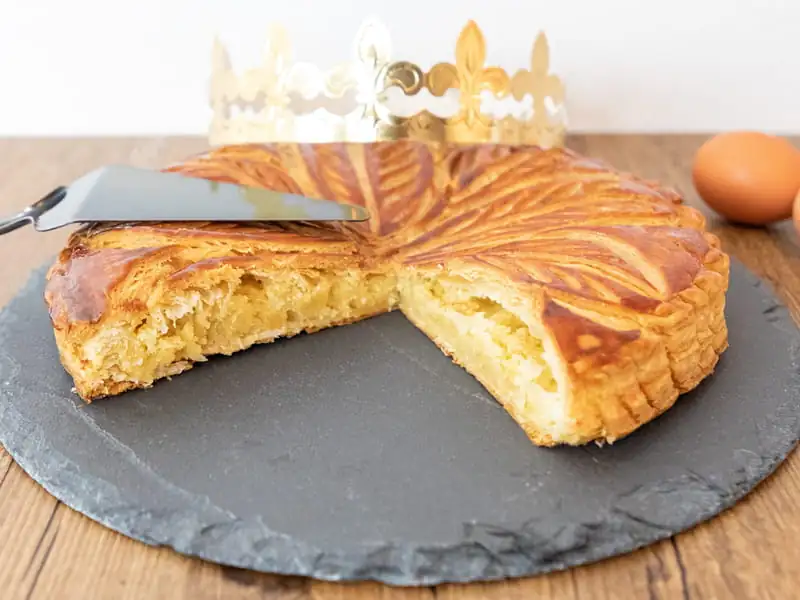
- Using the tip of a knife, draw diagonal lines on the galette, or any other shape you like (wheat ears, crown, etc.). Bake at 240°C for 10 minutes, then reduce the temperature to 180°C for the last 20 minutes of baking.
Choose a puff pastry made with all-butter, which is more stable during baking and ideal for achieving a clean, even flaky texture. If possible, opt for a thick, round pastry sold in rolls in the refrigerated section: it holds the filling better and browns more evenly.
How to choose the ideal location for the bean and prevent it from being visible or tearing the pastry?
Place the bean away from the center, in an area where the cream is slightly thicker, usually 2–3 cm from the edge. Gently press it into the frangipane, without touching the pastry underneath, so that it remains invisible and doesn't weaken the top layer.