What is the culinary scene like in Friedrich Merz's hometown?
Game, forests and feel-good cuisine
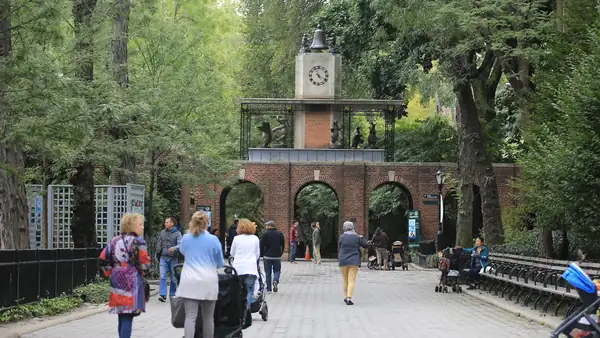
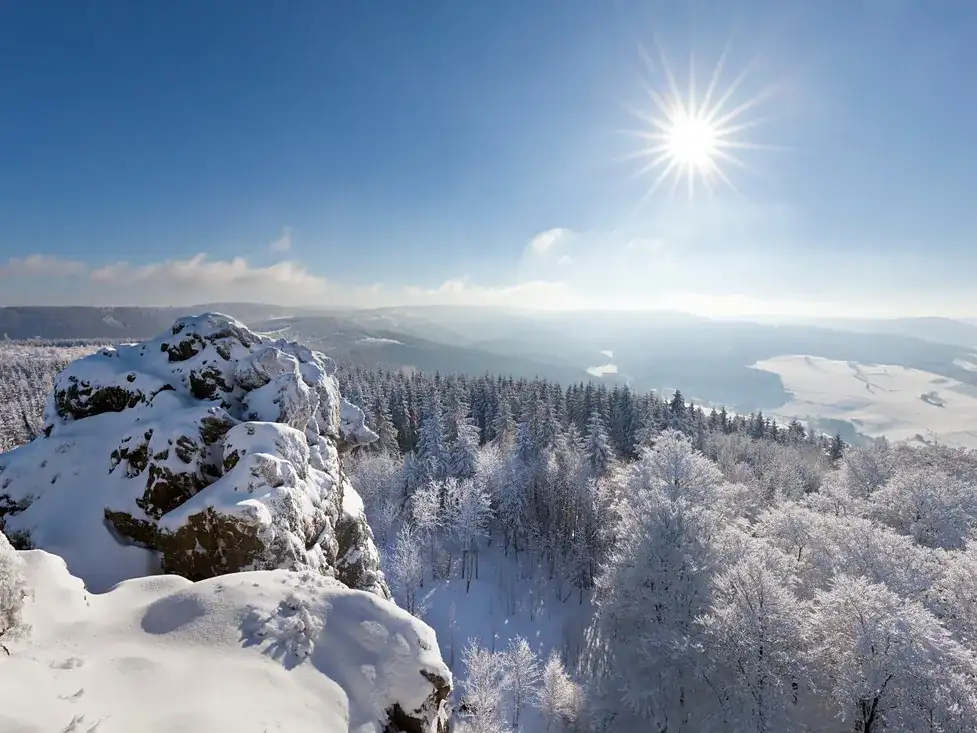
When Felix Weber of the "Hofstube Deimann" restaurant in Schmallenberg receives a message on his phone in the morning, he wakes up faster than his wife sometimes likes. But the anticipation is simply too great for the Sauerland's only Michelin-starred chef to wait – because at that hour he always finds out if the previous night's hunt was successful. Weber has set up a WhatsApp group with the local hunters so they can immediately tell him what they bagged – and what the chef can then use to delight his guests a few days later. Game is king in the Sauerland, the low mountain range region belonging primarily to Westphalia. The forests above Schmallenberg teem with happy deer, stags, and wild boar.
Hofstube and Hotel Deimann
In six courses, the 36-year-old chef serves culinary delights each evening, featuring the finest international products such as Balfegó tuna or wonderfully firm scallops from the specialty supplier Kochstoff. The highlight, however, is always the Sauerland course, for example, saddle of venison with pointed cabbage, blueberries, and an exceptionally rich sauce. It's gourmet cuisine for newcomers: the ingredients are presented with striking visual appeal, and the jus and sauces are rich and pleasing. Everyone feels comfortable here – even those who feel intimidated by fine dining.
This type of haute cuisine fits in here because it doesn't try to ostentatiously – the people of the Sauerland region tend towards modesty anyway. The same applies to the premier hotel in town, the Hotel Deimann. Initially a simple half-timbered manor house, today the hotel is a true wellness oasis. Even Chancellor Friedrich Merz, a proud native of the Sauerland, comes here when he wants to hold important meetings in a dignified setting.
Hotel & Restaurant Seegarten in Sundern
The difference compared to other regions: Here, it's not large chains or unknown investors building chic hotels – rather, local families are investing sustainably in tourism and culinary delights. This also applies to the Hotel & Restaurant "Seegarten" owned by WDR television chef Olaf Baumeister in Sundern, an hour's drive north of Schmallenberg on the western edge of the Sauerland region. The building on the Sorpe Reservoir is eye-catching even from afar, because the glass-walled infinity pool extends spectacularly beyond the hotel roof, allowing bathers to be clearly seen from below, right down to their feet.
Here, too, it was the family inn that made the business famous far beyond the borders of the Sauerland region. And today, Olaf Baumeister ensures that almost every table is occupied with his extravagant regional cuisine. This is due, for example, to his outstanding Sauerland sushi made with salmon trout from the neighboring Sundern district of Allendorf – as well as to his crispy char with pistachio spaghetti, a melt-in-your-mouth delight. The vegetables, herbs, and Wagyu beef come from Tiggeshof, an organic farm in the immediate vicinity. "In the past, nobody grew vegetables in the Sauerland because everyone here lived off Christmas trees; thankfully, that has changed," says Baumeister. After all, the Sauerland has the largest area for Christmas tree cultivation in Germany. "And now we young chefs are starting to interpret the wonderful products that are now available in a slightly lighter way than before. Hopefully, this will soon make Sauerland cuisine more widely known beyond the region."
For years, the trend here was always one of decline: young people left the region, old country inns closed – and with each closure, a piece of the soul of the small, scattered villages and hamlets died. Even in Friedrich Merz's hometown, the Arnsberg district of Niedereimer, a huge sign hangs on the former inn: "For rent, no commission!" But elsewhere, thankfully, this trend has been halted: the Sauerland region is economically strong because many local companies are world market leaders in their respective sectors. Furthermore, day tourism is booming; the allure of the countryside draws visitors from the Rhineland, the Ruhr area, and the Netherlands for extended hikes through nature or to the ski slopes of Winterberg. Thus, good gastronomy here is both: indispensable for guests and economically attractive for hosts.
Southland corner
Max Linneweber also decided to return to his family's inn after years in excellent establishments like "Steinheuers Restaurant" in the Ahr Valley. The "Suerlänner Eck" in Lennestadt is a picture-perfect inn – with wooden tables, deep beamed ceilings, and two beautiful tiled stoves that provide cozy warmth in winter. Max Linneweber works alongside his father, Jörg, in the kitchen: "Our motto is to make everything ourselves," says the younger Linneweber. "We bake our own bread every day, we fill our own Maultaschen (Swabian ravioli), and we make our own pasta; it's always about quality. That's the golden rule for traditional restaurants: the simplest dishes simply have to be good." And they undoubtedly are here: the wild boar sausage made from venison and fatty pork is melt-in-your-mouth tender and aromatic, and the bacon-flavored, onion-stuffed fried potatoes couldn't be better. Guests come from far and wide: during the week, the locals gather for lunch, and on weekends, guests travel from Cologne or Duisburg. “Since the pandemic, people have been longing for traditional cuisine again,” says Jörg Linneweber, “so we can offer a Potthucke without anyone giving us strange looks.” The Potthucke is a potato cake baked crispy in a loaf pan and served with eggs and sour cream – typical of the Sauerland region and true comfort food. “I’m happy to be back home,” says Max Linneweber. “I simply love it here in the countryside. And I didn’t want all the work my parents put into the inn to be for nothing.”
Stoffels House
It is this attitude that harmoniously blends tradition and modernity in the region. Even though the Sauerland is currently experiencing a culinary revival, this by no means implies abandoning tried-and-tested gourmet dishes. At "Haus Stoffels" in the old town of Schmallenberg, an inn dating back to 1691, you will still find the authentic Sauerland "Krüstchen," a schnitzel on toast with creamy mushrooms, as well as blood sausage with sauerkraut and a fantastic sauerbraten with Spätzle – precisely so that no hiker gives up halfway up the mountain.