13 Mistakes People Make With Their Meringue
It is tempting to overbake the pie, especially if you want the meringue to have color, however, liquid forms between the underside of the whipped egg whites and the top of the filling. There might also be pools of fluid atop the meringue.
Some individuals don't even make it to the baking stage, though, because the plethora of moisture prevents the mixture from forming into stiff peaks in the first place. Muggy days influence various baked goods, not exclusively meringue, but delicate egg whites are especially vulnerable. So, you should second-guess baking on humid days and postpone it if possible. Understandably, sometimes you need to make it for a party or event, so you have no choice. When that happens, turn on the AC because it helps reduce humidity.
Moreover, this doesn't apply as much to meringue-topped pie, where you only briefly place it in the oven to brown the top layer. To avoid making this mistake yourself, turn the oven off but leave the baked meringues inside for at least one hour. Don't repeatedly open the oven door because the rush of colder air creates fractures in the dessert to the same degree as if you take the tray out. If you want to be extra safe, prepare them a day ahead and keep them in the oven overnight to dry them out.
Using the wrong type of bowl
Surprisingly, when people use a substandard baking bowl to beat egg whites, it directly affects the finished product. Plastic bowls are the absolute worst type of bowl individuals use, and they likely make this choice in all innocence. Nevertheless, plastic has a reputation for holding onto excess grease and food particles that the meringue absorbs (more on that later). Additionally, you might end up with small amounts of chemicals in your sweet treat that relocate from the bowl, especially if it's scratched. Other people use glass or stainless-steel bowls, which work perfectly fine. However, they're still not the best equipment for meringue because the material doesn't stabilize the egg whites. But amazingly, there is a material that does just that: copper. According to Science Notes, the egg whites draw in some copper ions from the dish, which tightens
Measuring the eggs wrong
One of the major mistakes people make with meringue is that they measure the eggs carelessly, not necessarily on purpose, but because they likely don't realize just how crucial accuracy is with this type of food. For example, many baking recipes, such as brownies or muffins, require a certain number of eggs. While this is a standard practice in baking, avoid measuring the egg whites for meringue in this way because not every egg is the same size. Eggs from the same carton can have 10 to 15 gram weight differences. So, the final quantity of egg whites you use varies greatly; therefore, you might need more or less of the other ingredients to keep the proper ratio. To avoid this, use a kitchen scale to weigh the eggs, or at the very least, use volume measurements. Scales are a good option because you can weigh the egg whites in grams, which is more particular than ounces. I
Not bringing the eggs to room temperature first
Whether you plan to make colorful meringue cookies or rich s'mores meringue pie, you must first bring the eggs to room temperature. It isn't uncommon for folks to shrug off this suggestion because it seems inconvenient. Other times it might just slip their mind, and it's too late for them to do so because they're in a rush. Unfortunately, you make the whole process harder on yourself when you use cold eggs because they don't fluff up as well as room temperature ones. This is true across the board when it comes to baking; it isn't just for meringue. Many cake recipes advise you to let the eggs sit on the counter a bit before you work with them, which results in a light and airy cake. For best results, take them out of the refrigerator an hour before you use them. And, if you are in a pickle and don't have an hour to spare, there is a quick method to making cold eggs
Using egg whites that aren't fresh
Unfortunately, when people use old eggs or pre-packaged pasteurized egg whites, the whites are either unstable or flat. Maybe someone forgot to stop by the grocery store, so they must use eggs that sat in the refrigerator for a while. It is true that old eggs gain volume rather quickly, but their structure is noticeably weaker once they reach the oven. So, it isn't ideal to use them. Another culprit for underwhelming meringue is the cartons of egg whites you find in the grocery store. These products are quite appealing to folks since companies separate the egg whites from the yolk, which saves the home baker time. However, sometimes these egg whites are irksome to work with because they just turn into foam and never amount to anything. Hence, it makes people scramble to find out why they aren't turning into a pillowy and shiny mixture. This instance doesn't h
Not using clean equipment
Exposing egg whites to small amounts of yolks, grease, or water is the meringue mistake people don't know they make. Egg whites don't get along with the fat of any form, whether it be butter, oil, cooking spray, or, yes, fatty egg yolks. They often become foamy, but refuse to become silky and light. Most of these situations come down to the equipment people use. It is already an intricate enough process to make this confection, but it becomes much more troublesome when kitchenware holds residue from past projects. Sometimes, the bowl appears clean to the eye but harbors grease. Other times, people don't wait long enough for their freshly-washed tools to dry, which offsets the moisture ratio in the meringue. Regardless, folks who aren't diligent about using pristine equipment see the repercussions. But, even if you painstakingly clean the baking tools, if you acci
Improperly using the sugar
For individuals who are curious about why their meringue weeps, the answer might lie in the use of sugar because it plays a significant role in the dessert's success. Specifically, how you add the sugar and the type of sugar you use are vital. Some people are used to dumping all the sugar into a recipe when they bake. However, with meringue, that is a huge misstep. Air pockets form in the egg whites as you rapidly mix them. So, when heavy sugar granules crash down onto the delicate mixture, all the much-needed air deflates, which leaves you with a meringue that doesn't rise. When it comes to Italian meringue, drizzle the sugar syrup in a thin, steady stream while you mix the whites; don't overbear the meringue with it, either. Speaking of heavy sugar, people who want to make the best meringue possible are not doing themselves a favor by using regular ol' gran
Skipping on stabilizers
People often assume the sugar alone is enough to stabilize their meringue (and that's where they go wrong). While it's more than possible for it to work when you only use sugar, cream of tartar and other stabilizers are valuable preventive measures. So, when you omit it from a recipe, it opens the door for meringue that seeps liquid once it bakes. It's possible that your stiff peaks look glorious without it, and as soon as they go in the oven, they don't tolerate the heat as much as you thought they would. Unfortunately, the confection might even cave in on itself. Another downside when you skip out on the stabilizer is that the egg whites aren't as voluminous when you beat them. If you don't have cream of tartar, there are other practicable options, like lemon juice, vinegar, or cornstarch, that prevent the meringue from being weak. The best part is that you on
Under or overbeating the eggs
It is tricky for some people to know when it's the right time to stop beating egg whites. It certainly takes practice to become familiar with meringue, which is why some individuals might under whip it and others mix it for too long. Sadly, both damage the dessert. When it comes to undermixed egg whites, they are tough to pipe because of how loose the mixture is. The runny whites don't work because they spread out due to not ever reaching stiff peaks. On the contrary, when people overmix the meringue, the mixture turns lumpy, grainy, or loses its beloved glossy look (or all of the above). They might throw in an extra egg white and hope for the best, but most of the time, it's too late, and the meringue collapses. This is preventable if you understand what a stiff peak looks like. When you whip the whites, take the whisk out to check their consistency occasiona
Improperly applying it to pie filling
When the topping on chocolate or lemon meringue pie doesn't turn out as gorgeous as in the cookbook photos, it is likely because the person who made it didn't correctly place the meringue. One slip up people often make is when they don't seal the edges. What does this mean exactly? If the meringue isn't directly up against the pie crust, it shrinks and moves while you bake it. So, you end up with a topping that has gaps and slides around when you try to slice into it. In addition, when people don't secure the edges, it allows moisture to creep in. Consequently, the excess humidity makes the meringue weep, which is a recipe for disaster. Another way folks unwittingly mess up their meringue pie is by spreading the meringue on after the filling cools too much. Unfortunately, when this happens, the meringue's underside doesn't entirely cook like it would if it was in
Piping meringue rosettes too close together
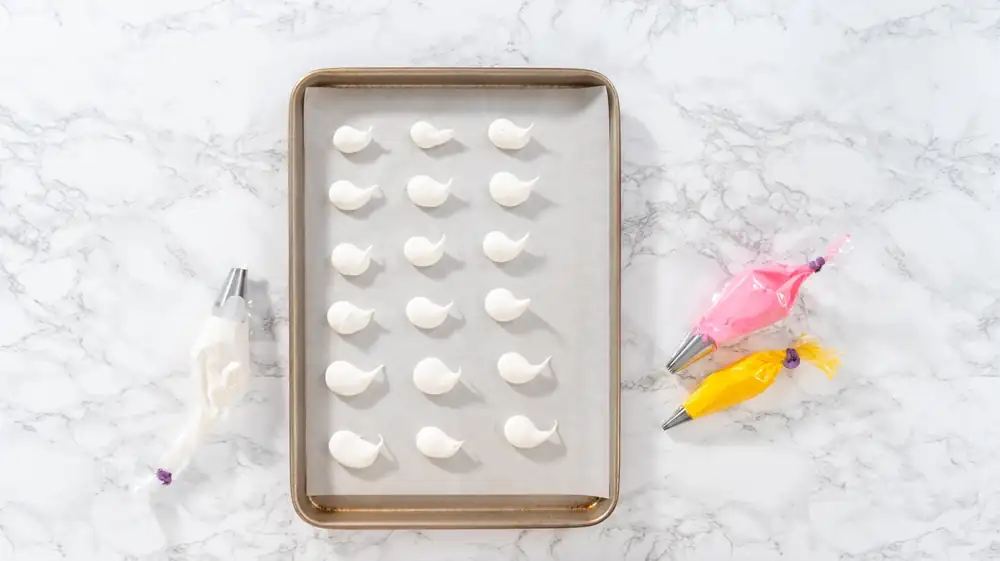
Sometimes, people don't leave enough room on the pan to pipe individual meringue portions. Meringue doesn't spread as much as other sweet treats, like chocolate chip cookies, so folks might assume they don't need space. Nevertheless, they still expand some, so you need to be careful not to line them up too closely. They can become stuck together and become a giant blob if you fail to. Of course, even if you can salvage them, the presentation is ruined because they don't look nearly as uniform as they should. However, the main issue with having tight-knit meringue rosettes is that there is no chance for airflow. The hot air from the oven can't correctly access all sides of the meringue, which means they bake unevenly. Aim for at least an inch of space between each meringue dollop when you make a tray; this means you might need to make multiple batches or use mo
Overbaking the meringue
Home bakers sometimes cook their meringue too long, maybe because they are too worried about underbaking it, or perhaps they don't have much experience with this type of dessert. Whichever the case, its quality declines when the meringue is exposed to heat for too long. With overdone meringue rosettes, tiny sugary water drops form on the surface, which makes them sticky. Also, airy meringues shrivel and become smaller when people fail to turn off the heat in time. Regarding pies with meringue, they pay the price as well. It is tempting to overbake the pie, especially if you want the meringue to have color, however, liquid forms between the underside of the whipped egg whites and the top of the filling. There might also be pools of fluid atop the meringue. This liquid causes separation between the pie's components, which creates an unpleasant texture. In the end, it i
Making meringue on a humid day
A less apparent error that folks make with their meringue is that they choose to make it on a bad day. Meringue does not respond well to humid environments, so when there is more moisture in the air than usual, the sweet treat doesn't turn out. Several things happen to it, with the most bothersome part being that it doesn't correctly set. And if it initially firms up, it softens afterward because it's like a sponge in the way it takes on moisture it comes in contact with. Some individuals don't even make it to the baking stage, though, because the plethora of moisture prevents the mixture from forming into stiff peaks in the first place. Muggy days influence various baked goods, not exclusively meringue, but delicate egg whites are especially vulnerable. So, you should second-guess baking on humid days and postpone it if possible. Understandably, sometimes you ne
Not allowing it to cool in the oven
Once people finish baking their meringue, they sometimes assume they are clear from mishaps. Yet, this isn't precisely the case because if they pull the meringue from the oven and set it on the counter, it negatively affects its texture. The drastic change in temperatures makes the meringue crack, so folks unintentionally destroy the display of the dessert they worked so hard to make. This effect happens specifically with individual meringue drops like toffee almond meringues. Moreover, this doesn't apply as much to meringue-topped pie, where you only briefly place it in the oven to brown the top layer. To avoid making this mistake yourself, turn the oven off but leave the baked meringues inside for at least one hour. Don't repeatedly open the oven door because the rush of colder air creates fractures in the dessert to the same degree as if you take the tra