Östaia de Banchi, review: the two-speed trattoria
It's not every day – not even for us Italians accustomed to the old – that we can drink (well) and eat (unfortunately less well) in a place that has been open since 1528.
The Östaia de Banchi of Genoa was in fact already located, at that time, in the alley adjacent to the square of the same name, home to the city market and the heart of commercial exchanges (*perhaps not everyone knows that: the name Banchi derives from the moneylenders' tables that were destroyed in the event of insolvency, giving rise to the term bankruptcy *).
While waiting to be sold, the barrels of wine were stored in the cool cellar of the nearby inn, which is still part of the premises today.
Environment
The Östaia is in fact spread over two levels: one, underground (the former cellar), which appears to date back to approximately 1100; the other at ground level, "only" five hundred years old, with a partially open kitchen.
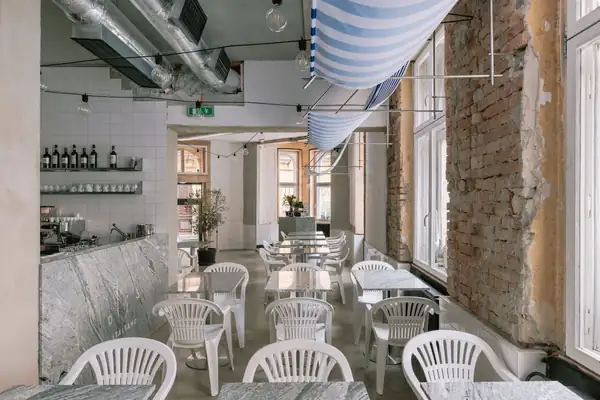
The atmosphere is welcoming, despite the stylistic potpourri that alternates rustic furnishings with industrial elements and pays attention to the solemn beauty of the ancient vaults with a modern floor and some slightly affected touches (like the huge De André quote hanging on the ceiling).
There are about forty seats inside and a dozen outside, in the alley, when the weather permits.
Service and cellar
The service is friendly, knowledgeable, and driven by the winemaking expertise of the young managers.
The winery, mainly focused on Liguria, stands out for its carefully selected and affordable wines (the most expensive bottle doesn't exceed 30 euros) from small artisan winemakers and native rarities that are difficult to find elsewhere, without forgetting natural labels with some triple A references.
The presence of a quality house wine, also available by the glass, and some local craft beers, complete a truly interesting offering.
Kitchen and bill
L'Östaia also looks to the local area in its menu, aspiring to – we quote from the menu – "evoke the ancient flavours of the Genoese and Ligurian traditions".
From this perspective, however, the noble intention remains largely a dead letter: despite high-quality raw materials and an appreciable respect for seasonality, the execution of the dishes is not without stumbles that undermine their success.
A prime example is the disappointing (and very—too—cold) cappon magro. While, in a sober cuisine like Genoese, this dish represents perhaps the only opportunity to show off opulence, playing on color contrasts, dramatic verticality, and shellfish decorations, Östaia's is instead quite basic, both visually and palatably: a simple vegetable tartlet, leccia, and salsa verde, "garnished" with pale pieces of cuttlefish (not a single shrimp, not a single shell!)
Chard meatballs on parmesan fondue are a tasty and well-cooked dish.
The pansoti, generous in shape and thickness, enclose a generous lean filling whose flavor we ignore because it is overwhelmed by a somewhat too aggressive walnut sauce.
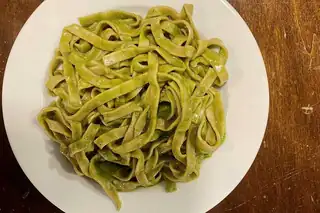
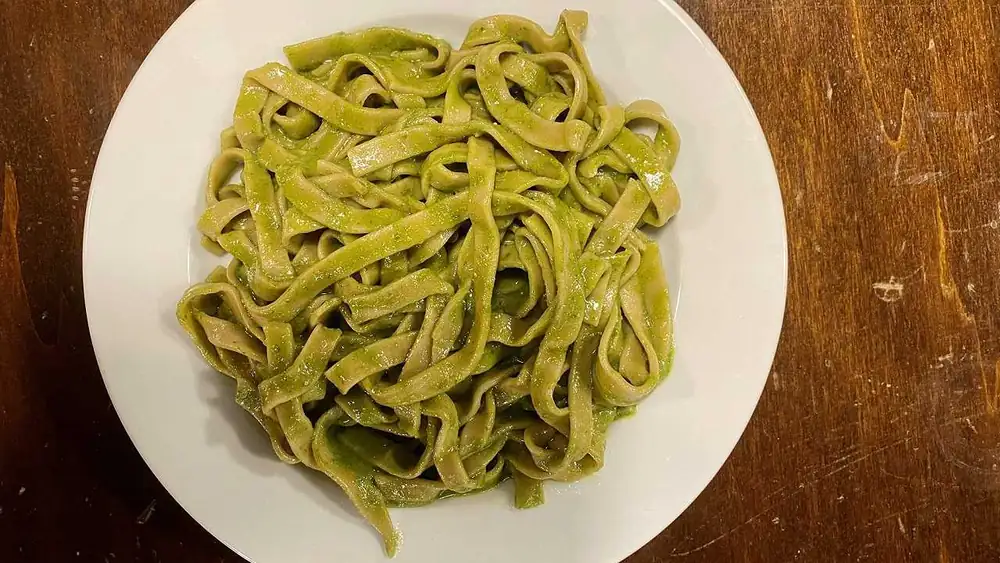
Spirits are lifted, however, by the battolli, thick tagliatelle originating from Valfontanabuona. Cooking them al dente lends a pleasant texture, and the bitterness of the chestnut flour delicately supports a truly masterful emerald-colored pesto (which is always on the menu, great news). Any tentative enthusiasm, however, is dampened by the single-serving sachets of Grana Padano, more suited to a canteen than a tavern craving traditional flavors.
Unfortunately, things aren't going any better with the second courses, and out of three dishes, we can't even save one.
The roast veal is tough and tasteless (but the potatoes and artichokes, it must be said, are crispy and well cooked).
Rabbit fricassee suffers from an unfinished winey nuance that affects the flavor of the sauce and the texture of the meat.
The stuffed squid is revisited, sacrificing its key ingredient—the firm, flavorful filling—instead of diced vegetables scattered here and there, leaving the white rings sadly bereft of their filling. The sweetish tomato sauce they're draped over gives them the final blow.
Hoping for an improvement in the pastry shop, we finally opted for the Prescinsù, a tiramisu with Lagaccio biscuits and prescinsêua (the traditional cow's milk curd) instead of ladyfingers and mascarpone.
A simple, delicious dessert, overshadowed by the strong acidity of the curd, but not enough to revive an unsatisfactory dinner, especially considering the average cost of 35 euros per person (drinks not included).
A real shame, which we hope is the result of an isolated bad night, because such an interesting winery deserves a suitable accompaniment.
Opinion
A two-tiered venue: the wine cellar, with its carefully curated selection of micro-producers (mostly Ligurian, but not exclusively) and natural wines, piques curiosity and takes you on a delightful wine journey off the beaten track. The cuisine follows tradition but, with a few exceptions, disappoints in its execution. You can find better options nearby, and at better prices.
PRO
- Curated wine list featuring a selection of small Ligurian and Italian producers.
- Excellent pesto
- Central location just steps from the Old Port.
AGAINST
- The kitchen is not up to par with the cellar.