What's the point of three identical Berberés in Florence?
After its now-historic opening in the San Frediano neighborhood and its subsequent one a stone's throw from Piazza Santa Croce, Berberè decided to triple its Florentine offerings this spring.
The environment
Not far from the tram stop, Berberè Manifattura Tabacchi is a neighborhood pizzeria where you can enjoy good-quality pizza even outside the historic center, already bustling with restaurants and businesses. This third Florentine location makes the most of Manifattura Tabacchi's large existing spaces, presenting itself spacious and bright, featuring a structure reminiscent of church architecture and paying particular homage to the Basilica of Santa Maria Novella. The pendant lamps, designed specifically for the location by architect Giambattista Ghersi, are a tribute to Pier Luigi Nervi, renowned designer and engineer as well as Manifattura Tabacchi's architect.
The menu
Snacks, salads, etc., and pizzas. The menu at Berberè in Manifattura, like that of the family's other pizzerias, is divided into three parts and is designed to share an experience, as well as good food. It begins with snacks, a selection of appetizers ranging from crostini with Aspra anchovies, butter, and lemon zest, to crostini with Spilinga 'nduja and smoked ricotta, as well as other southern Italian delicacies like Apulian burrata with eggplant and sesame cream, confit cherry tomatoes, carasau bread, and basil, and the ever-present charcuterie platter (Norcia prosciutto, Mora Romagnola mortadella from Zivieri, and Alto Adige speck) served with olives and bread. Then there are the montanarine, with the classic fried dough and topped with tomato sauce, 24-month-aged Parmigiano Reggiano, and basil; or with 'nduja and honey (a must-have sauce for all Berberè) and smoked ricotta; or with Apulian burrata, Aspra anchovies, and salsa verde; or finally with Norcia prosciutto and Apulian burrata. All of them received top marks for their soft dough and perfect crispy exterior.
Completeness is certainly the key word to describe the offerings, with a wide selection of appetizers before the 16 pizzas and 5 desserts, as well as a carefully selected selection of craft beers on tap and in bottles, wines selected from small wineries throughout Italy (including a house wine, something unusual for a pizzeria), and Turin's Mole-Cola instead of the more famous Coke. Manifattura also offers a selection of cocktails, created by the bartenders of Ruggine Bologna.
The pizza
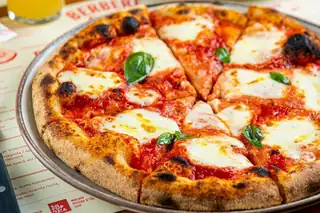
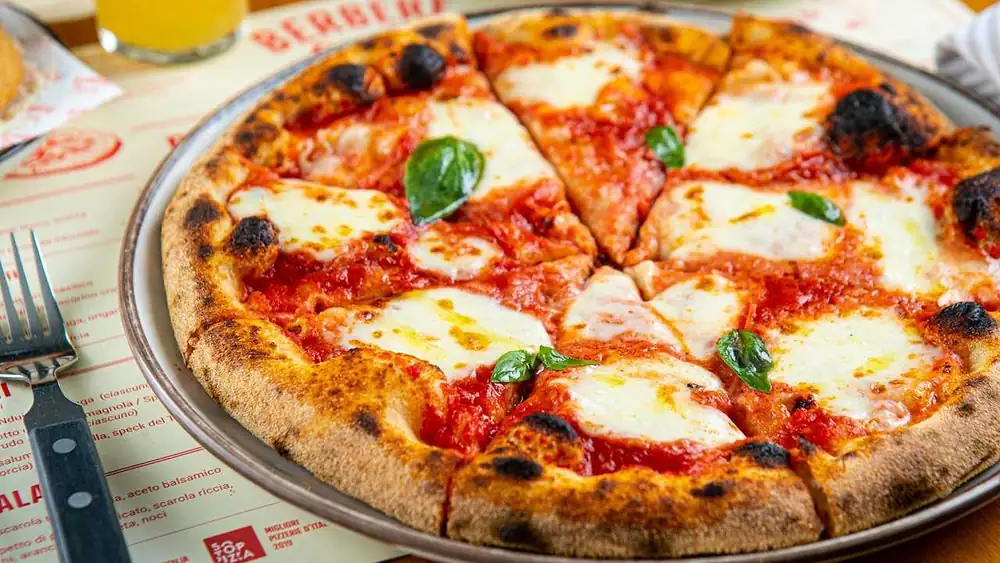
But let's get to the heart of this review. Berberè's pizza has one great advantage: whether you like it or not, the Aloe brothers' leavened products always remain true to their identity. We're talking artisanal pizzas made with organic, stone-ground flour dough, fermented with only live sourdough for 24 hours, topped with seasonal toppings, and served pre-sliced into 8 slices, a true joy to share.
Flavors range from classics like the Margherita (Campania mozzarella, organic tomatoes, basil, and extra virgin olive oil), the Marinara (garlic, organic tomatoes, parsley, and extra virgin olive oil), and the Napoli (Aspra anchovies, Salina capers, Campania mozzarella, organic tomatoes, and oregano), priced at €8.50, €6.50, and €11, respectively. These options then continue with single-ingredient pizzas like the Provola (naturally smoked provola, organic tomatoes, basil, black pepper, and extra virgin olive oil) for €9.50, or the Bufala (La Tenuta Bianca buffalo mozzarella, organic tomatoes, basil, and extra virgin olive oil) for €10.50.
For cured meat lovers, the 'Nduja and Burrata (Puglian burrata, Spilinga 'nduja, Campanian fiordilatte, confit cherry tomatoes, basil) costing €12 and the Diavola (spicy salami, organic tomato, Campanian fiordilatte, parsley) costing €11 are certainly the most interesting, with a harmonious contrast between textures, temperatures, and different ingredients. For something more gourmet, the Crudo and Burrata (Norcia raw ham, Puglian burrata, arugula, Campanian fiordilatte, orange oil) costing €12 is also worth trying. As with other Berberè restaurants, you can also choose – on rotation – between two special doughs, such as one made with starch hydrolysis (without added yeast, by allowing the cracked wheat to ferment spontaneously with hot water) and the special one (indirect dough with sourdough starter, based on various types of grains).
I dessert
It's almost impossible to end a dinner at Berberè without dessert. This is because the collaboration with master pastry chef Luigi Biasetto allows the Aloe brothers' establishments to standardize their dessert offerings (€6), always with excellent results. There's the traditional tiramisu, but also chocolate/pistachio semifreddo or pistachio gianduiotto. The icing on the cake? The homemade Sicilian cannoli, filled with ricotta and chocolate shavings.
PRO
- Respect for one's own identity in a totally different context from the other two Florentine pizzerias.
AGAINST
- There are no particular twists or novelties compared to the other two Berberè.