Ca' Apollonio Heritage, review: the strangely non-starred restaurant that's truly sustainable
We told you about Ca' Apollonio Heritage a few months ago when the restaurant, located in Romano d'Ezzelino, in the Vicenza province, was the first in Veneto to be recognized as a "sustainable restaurant" according to the international CER (Care's Ethical Restaurant) certification, which measures a restaurant's sustainability using a series of parameters. Spurred by interest, we went to try it out
The context
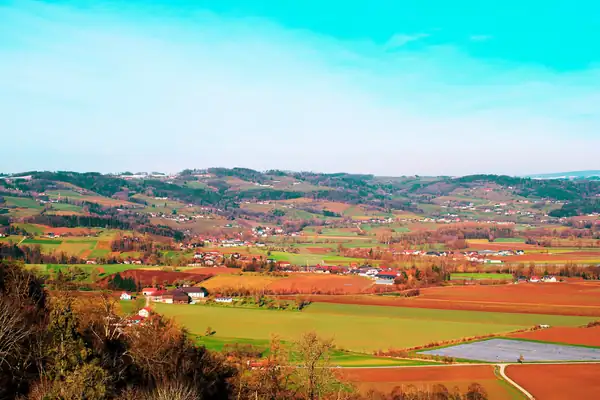
The restaurant is located within a renovated 16th-century historic residence and is part of a larger complex. This includes, in addition to the restaurant (which includes a bistro and a fine-dining restaurant), an organic farm, 18 hectares of PIWI-resistant vines, a one-hectare vegetable garden, fruit orchards, olive groves, cereals, monumental trees, and honey-producing hedges. In addition to its restaurant and agricultural offerings, Ca' Apollonio also offers hospitality, making it the first boutique hotel in the Veneto region to comply with the "CasaClima R" and "CasaClima Hotel" protocols.
The entrance to the villa already gives you a sense of the underlying concept: to offer a refined, understated experience that transcends the latest trends in quiet luxury, offering guests a variety of options without feeling intimidated. The bistro is accessible both in terms of space and furnishings, as well as in terms of its offerings and prices. The entrance to the "Gourmet" restaurant, as it's called, is rightly hidden from immediate view. It is accessed dramatically, yet entirely free of theatricality or affectation, after walking through a short corridor and through a glass door.
There are two rooms: a main one, with windows overlooking the park, and a more intimate interior. The colors are true to simplicity: beige and gray, in different shades, are used without dulling the light, but rather to enhance certain furnishings, such as the wood (such as the large table in the second room) or the ceiling with period frescoes. Details to note: the presence of tablecloths and fresh flowers on the table, which immediately evoke Flemish still lifes.
The kitchen
Self-described as the "cuisine of 50 steps" (between the table and the gardens), Ca' Apollonio's cuisine offers a true agricultural palette, never confusing diners with references to bucolic settings where possessive adjectives abound ("our garden"), nor boasting about what isn't there. Here, the garden is clearly there, covering one hectare, and when the dining room presents dishes using possessive adjectives ("our bread"), it's not only because the produce is self-produced, but also because the raw materials (80%) come from the garden. The kitchen is entrusted to Alessio Longhini, an Asiago native who worked with Norbert Nierderkofler and whose move to the Stube Gourmet at the Hotel Europa in Asiago saw the restaurant awarded a Michelin star.
The menu features two tasting menus: Familiarità, which includes the chef's most iconic dishes (six courses, €110), and Concoppia, a more instinctive menu (nine courses, €160). Both menus offer the option of pairing, with particularly interesting pairings, not just wine-related (tea and cider, for example). The dining room is managed with skill and professionalism, without being cold.
The dishes
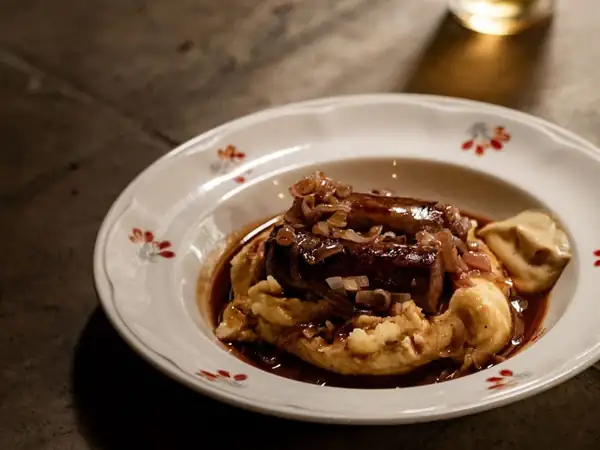
The Familiarità menu opens with the customary welcome, combining aesthetic refinement and indulgence, the latter masterfully represented by a raspberry and hazelnut chocolate rocher filled with chicken liver pâté, which could easily be found throughout the menu and extended to dessert. The bread service is impressive: not only because it's presented as a course within the menu, giving it a significance that goes beyond the bulky whole loaves, not only because it's served sliced, dosed exactly as one would a dish, but above all because it's presented almost like a "vertical" and with an anti-waste approach: the slices are accompanied by an "ice cream" and kvass, a nod to Eastern Europe. The true signature dish comes with Il Giardino, a seasonal dish in which—in this case—all of autumn speaks, in a hymn to vegetables featuring pumpkin, seeds, dried fruit, and vegetables in various textures and colors. All this is meticulously crafted and visually captivating. The meagre speck is bold and original, with the smoking giving the meat its consistency, and fresh notes supported by the cucumber.
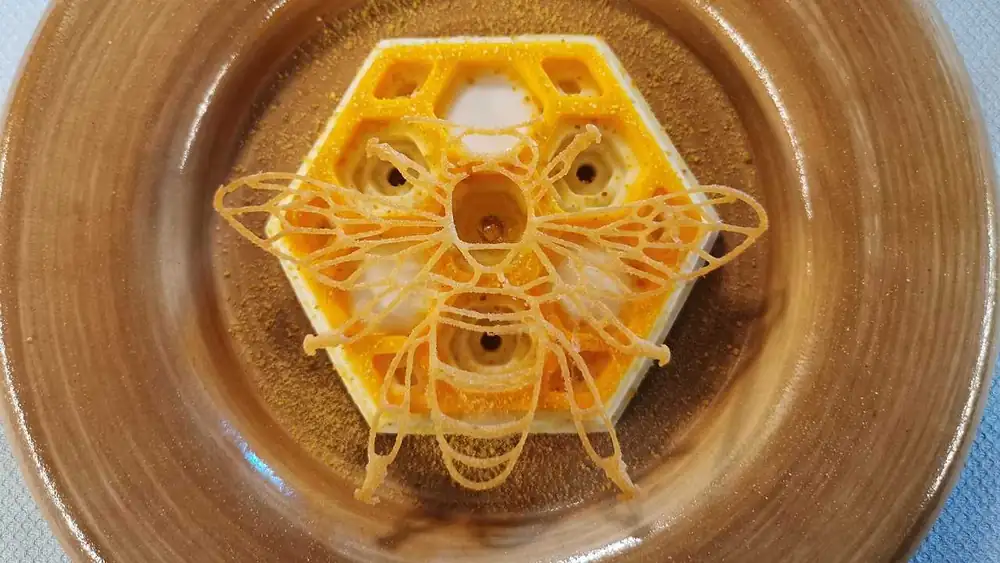
The risotto with friggitello and fermented currants is both aesthetically pleasing and flavorful: the advice is to push it a little further, allowing your palate to light up just as much as your eyes do when faced with the orange and purple hues. The cod (in a revisited pil-pil version) is exquisitely elegant, beautifully contrasted by the salty lemon and crunchy Swiss chard. The common thread of zero waste continues: here is a fritter filled with creamed cod and, most importantly, a taste of its tripe, happily showcasing the hand that created the risotto we tasted years ago. Finally, two desserts are a testament to both craftsmanship and vision. The first is a meringue curl filled with fermented plum cream (the contrast between sweetness and acidity is perfect) and the second, the Bee, a beehive cell which contains, in a variation of panna cotta, kefir and honey, without other sugars and with a bee that looks like lace, a true hymn to biodiversity and to those who make it possible.
Our hope for Ca' Apollonio is that the cuisine will further consolidate itself and that the vision behind the project will be understood (perhaps even by the Michelin Guide inspectors, who didn't even honor it with a "green star" for sustainability), realizing that sustainability is not form but substance, and that vegetable gardens and vines are not a simulacrum used to impress, but spaces and tools for work.
Opinion
Ca' Apollonio Heritage is the gastronomic expression of a broader hospitality project, the result of the restoration of a 16th-century Venetian villa combined with the desire to create an organic farm, with hectares of PIWI vineyards, as well as an organic vegetable garden and fruit orchards. The cuisine reflects this philosophy, using mostly self-produced ingredients: while the emphasis on seasonality is obvious, the emphasis on genuine, not superficial, sustainability is much less so. The dishes are compelling and the result of a long-term vision.
PRO
- Aesthetics taken care of down to the smallest details
AGAINST
- The serving times for the courses were a little relaxed.