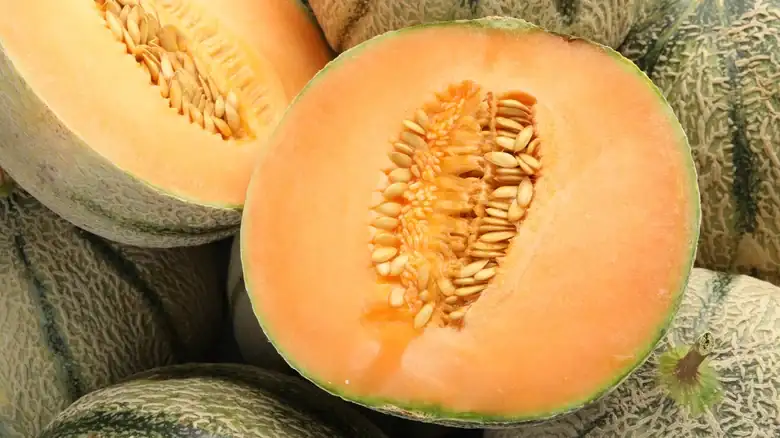
12 Mistakes Everyone Makes When Buying Cantaloupe
Technicalities aside, cantaloupes are sweet, tropical, and earthy, with a refreshing texture that's as satisfying as ice cream. These muskmelons also help boost the immune system with plenty of essential nutrients, vitamins, and minerals.
Whether you enjoy endlessly snacking on cubed cantaloupe, dicing it into salsa, or puréeing it for sorbet, you'll first have to ensure you're picking a good one at the outdoor stall or supermarket. An underripe cantaloupe is underwhelmingly crisp and flavorless, while an overripe one is uncomfortably mushy. To score a perfectly ripe muskmelon, you'll have to avoid some common mistakes, use sensory cues, and understand the basics of cantaloupes.
You skipped the stem check
In the world of melons, cantaloupes stick out as somewhat of an outlier. Unlike watermelons or honeydew, cantaloupes are climacteric fruits, meaning they'll continue to ripen after plucking them from the vine. This post-harvest ripening happens thanks to a plant hormone called ethylene, which climacterics both produce and are sensitive to. Although many modern cantaloupe farmers favor cultivars that ripen less after harvesting — for longer shipping and storage capabilities — the fact that cantaloupes are climacteric gives you a little more freedom when choosing the perfect specimen. Even if it's still a bit green at the grocery store checkout, chances are it'll sweeten up in no time at home. Nevertheless, for the best pick, you're missing out if you're not giving the cantaloupe's stem a thorough once-over. Not unlike our own belly buttons, cantaloupes also have inn
Ignoring how the cantaloupe feels
Another feature unique to cantaloupes is their rough skin. Maybe you've run your fingers across this thick and bumpy rind for some sensory entertainment without realizing it can tell you a lot about the quality of the fruit inside. While still on the vine, the muskmelon swells and pushes out against its exterior, forming cracks on the surface under the pressure of growing pains. The rind promptly fills in these cracks with a substance called suberin, which acts as a protective scab that keeps the goodness of the fruit in, and humidity, mold, or bacteria out. As the cantaloupe matures, this surface netting becomes more pronounced, creating waxy ridges that ultimately stretch to both ends. Before picking your cantaloupe from the display, check that the fruit has a prominent webbing all around, indicating that it was left to grow to its intended size. Avoid any w
Your cantaloupe has no smell
Don't feel ashamed for sniffing the cantaloupes in the produce section. Testing their aroma is one of the easiest ways to tell if the fruit is ready to take home, or if you're better off taking a whiff of the next one. Just like peaches, part of the cantaloupe's natural ripening process includes becoming more aromatic as it gets juicier and sweeter. A ripe cantaloupe should smell just how you'd imagine it tastes — floral, tangy, and a little musky. Paired with its honey-like sweetness, the fruit's earthy and woody undertones — or musk — make for an addicting flavor combo, made even better by sprinkling cantaloupe with black pepper, a dash of salt, or some Tajín seasoning. Luckily for your pride, you won't have to shove your snout into the cantaloupe crate to discern if they're aromatic enough. Hold the melon's blossom-end (opposite the stem) close to your nose and its
Choosing a cantaloupe with a green rind
Thanks to a cantaloupe's dense webbing, the actual color of its rind can be tricky to discern at first glance. Its color says a lot about how it will taste, though, and just like you wouldn't peel open a bright green banana, a cantaloupe with a green rind needs time to ripen before it reaches peak flavor. Cutting into the melon too early will not only completely disrupt its natural ripening process, but it'll probably leave you with some pretty bland fruit, too. If you're trying to pick a cantaloupe that will be good to eat as soon as possible, inspect the color in between the brown netting. Farmers and gardeners often harvest the fruit when it's maturing from dark green to light green or yellow, meaning you should check for even brighter undertones that evidence further ripening. Beige or golden hues, for example, indicate a solid choice. Scan the selection to se
You're buying out of season
One reason cantaloupes sometimes get a bad rap is for their lackluster flavor when you eat them at the wrong time of year. Just compare the summertime cantaloupe you eagerly buy from pop-up parking lot vendors, to the diced melon you actively avoid at buffets in January. Luckily, most grocery stores won't even offer whole cantaloupes outside of the prime growing season, eliminating temptation to pick up a subpar fruit. For the absolute best muskmelons, you should limit your purchases to late spring to early autumn, with the juiciest specimens popping up from June to September. This window could be even shorter for folks from cooler, more northern climates. Cantaloupe vines are sensitive to cold snaps or frosts, thriving instead in summery, sun-soaked terrains with loose, well-draining soil. The plant also requires bee pollination to produce fruits, meaning it
Failing to weigh cantaloupes side by side
Maybe gardeners aren't hauling their prized cantaloupes to competitions the way they would with watermelons or pumpkins, but that doesn't mean a cantaloupe's weight doesn't matter. (And just for the heck of it, Guinness World Records weighed in the world's heaviest cantaloupe at almost 70 pounds from Spain in 2023.) Thankfully for your lower back, most of the muskmelons you'll pick up at the farmer's market or grocery stores are medium-sized and weigh 3 to 4 pounds. More importantly, though, a good one should always feel heavy for its size. Essentially, water equals weight, so a cantaloupe that surprises you with its heaviness is more likely to be bursting with ripe fruit and juiciness. When you're debating between two – and they both check all the other good signs off of the list — go for the heavier one. A lightweight may not have fully bulked up on the vin
Ignoring the sound when you give it a knock
You're appreciating the cantaloupes in the produce aisle for their color, weight, and smell, but are you really listening to what they have to tell you? In all seriousness, using auditory cues can give you some additional clues on your muskmelon's integrity. While more delicate fruits like peaches will bruise if you look at them the wrong way, firm and meaty cantaloupe can handle — and will even respond to — a few solid knocks. Rap your knuckles against the side and listen for the deep, dull thud of a drum. Due to increased water output in the flesh of a ripe cantaloupe, a low whack can signal a juicier pick. Avoid any that answer back with a high, hollow sound, since they're probably lacking maximum juiciness. Another overlooked auditory trick for checking the ripeness of cantaloupe is shaking it back and forth. If you don't hear anything, you're probably in th
You grabbed honeydew
What's more shocking than cutting into a cantaloupe and meeting the grassy green flesh of a honeydew melon? The difference between watermelon and cantaloupe is strikingly clear, but to the untrained (or careless) eye, a cantaloupe and honeydew can look pretty similar. While both melons belong to the same cucumis melo species, they have distinct nutritional and flavor profiles that diversify their kitchen applications. These large fruits are rich in antioxidants and anti-inflammatory properties, but cantaloupe boasts more vitamins C, A, and beta-carotene –– the pigment responsible for its bright orange flesh. A cantaloupe is denser and meatier, not quite as sweet but with a high water content that makes for refreshing granitas by blending the pulp with sugar and ice. Honeydew is equally juicy but much sweeter, delivering a creamier flavor that's almost as coolin
Buying cantaloupe at the big-box supermarket
Some of the best cantaloupe you'll ever taste comes from roadside stands, open-air markets, or the back of the farmer's pickup set up in a parking lot. These farm-fresh melons are typically left to vine-ripen as long as possible, and they make it into your hands much sooner than what you'll find at the supermarket. Not only do they pack more flavor, but locally-sourced cantaloupes also represent a more eco-friendly choice. The U.S. produces up to 1.5 billion pounds of cantaloupes per year, occupying some 60,000 acres of land (via Penn State ). According to Impactful Ninja – an environmental advocacy group — although commercial cantaloupes don't require the use of as many pesticides, they do take up excessive amounts of water and monocultural farming land. Farm-fresh melons drastically reduce transportation-related environmental impacts, and also pose less risk for
You're not checking for soft spots
Aesthetically, there's no denying that the tough, cracked skin of a cantaloupe makes them one of the uglier fruits in the produce aisle. It doesn't help that supermarkets often discard other fruits with imperfections, leaving only the most attractive pieces on display next to the melons. While you shouldn't skip over cantaloupes for looking a little rough around the edges, there are moments when its appearance should give you some pause. Most cantaloupes grow on vines that trail on the ground, putting them in constant contact with any diseases or bacteria in the soil, not to mention the risk of a critter sneaking into the patch to sample some fruit. The muskmelons have a protective rind for these very reasons, but it's not a guaranteed fail-safe. Unsightly holes, cracks that didn't fill in, bruises, or moldy patches are all direct pathways for infections to
You're unaware of potential risks
Unlike other types of produce where we eat their skins, cantaloupes can give a false sense of security since we cut away the rind and only eat the fruit inside. The very rind that's meant to act as a shield, however, is also a magnet for pathogens, causing cantaloupes to end up in frequent food recalls. This textured skin provides easy grooves for bacteria to fester, especially if the fruit lingers in puddles after rainstorms. Given the additional pressures of lengthy transportation, crowded storage, or imperfections in the rind, these infections can spread and potentially perforate the cantaloupe's flesh. Similar to poultry and egg recalls, salmonella is the main culprit when a batch of muskmelons start making consumers ill. In 2023, a massive salmonella outbreak in cantaloupes could be traced back to just three brands, but spread across 40 states, affe
Buying too many
Cantaloupe is not an ideal fruit for stocking up. Unless you're hosting a cantaloupe feast, muskmelons are best enjoyed by buying one or two, then slicing into them within the next couple of days (if you can hold off that long). A ripe cantaloupe has a considerably short shelf-life, and can quickly go from perfectly soft to overripe and mealy. While you can definitely dice and freeze them, their lower acidity levels mean cantaloupes are far from ideal for canning and storing over the winter. When you do buy more than you can eat right away, at least choose them at varying levels of ripeness. A whole cantaloupe can be left to mature on the countertop for a few days, but once it starts smelling noticeably strong or sweet, stick it in the fridge for up to two weeks. Cubed cantaloupe has more careful storage conditions, and should ideally only be kept in the fridge fo