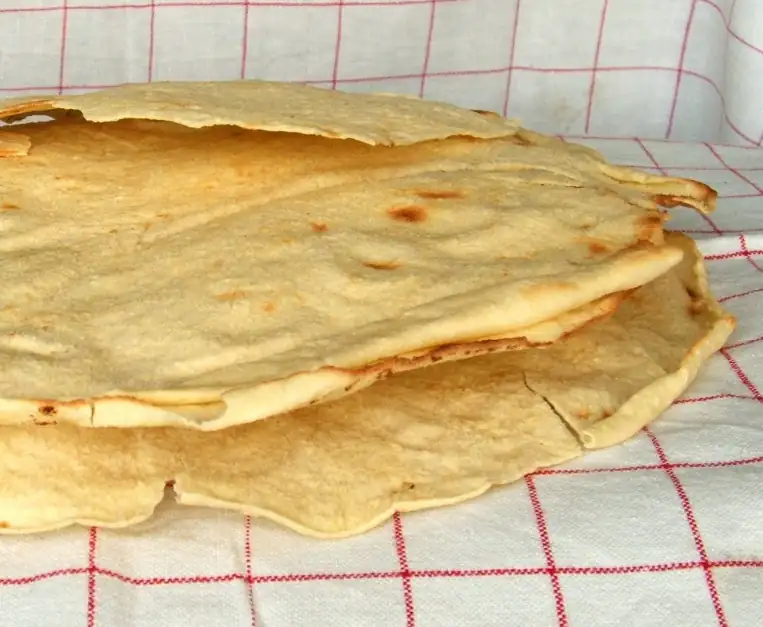
All types of Sardinian bread, an incredible variety
If you truly want to understand Sardinia, don't start from the sea. Start with bread. Because few food cultures in Europe have built such a profound, structural, and identifying relationship with a seemingly simple food.
The island's agro-pastoral culture transformed breadmaking into an empirical science. Every gesture was codified, every shape fulfilled a precise function. Sardinia, more than just producing bread types, developed a true bread grammar, with regional, seasonal, and social variations.
Within this grammar, flatbreads occupy a central place, the technological heart of island baking. Carasau, guttiau, pistoccu, frattau, lentu, spianata, zichi, cicci: these aren't decorative variations, they're evolutionary solutions. Each thickness, each degree of cooking, each name tells a concrete story of a need for preservation, transport, and sharing.
Differences between carasau bread and guttiau bread
Carasau and guttiau are often confused, especially outside Sardinia, but they actually represent two different moments in the same story. Carasau bread is the matrix, the source code. Guttiau is a gastronomic interpretation of it, born later.
Carasau was born as a functional bread. Typical of the Barbagia region, where the transhumance required weeks of migration away from the villages, it needed to be light, durable, and non-perishable. The solution is a double baking process that transforms the dough into a very thin, crispy, moisture-free sheet. It's no coincidence that it's called "music paper": it's closer to a support than a food in the modern sense of the word. It keeps for months, can be broken by hand, eaten dry, rehydrated, cooked again, and transformed into a dish.
Guttiau arrives later, and is already a sign of abundance. It's carasau that stops being just a bread for survival and becomes a bread for pleasure. It's seasoned with extra virgin olive oil and salt before the second toasting. It's the bread of celebrations, occasions, moments when food is no longer just nourishment but a social language. The dough is identical—carasau and guittau are the same bread, but carasau is thin and crispy, while guttiau is made by basting the carasau sheets with extra virgin olive oil and salt and gently heating them, making it more flavorful and delicious, perfect for appetizers and snacks.
The main types of Sardinian bread
Sardinia is a land rich in diversity, with many unique features. An incredible island, often underrated, especially when it comes to gastronomy. Even its bread alone is a reminder of how wrong we are to not take this land seriously enough, because very few regions can boast so many varieties of bread, all delicious.
Carasau bread
It's probably the best-known, but by no means the only one. It's the iconic product of inland Sardinia and one of the oldest Mediterranean breads still in use. Its production is a masterpiece of food engineering. The leavened dough is rolled out into discs, quickly baked in a very hot oven until it puffs up like a balloon, then cut in half and returned to the oven for the "carasadura," the second baking process that dries it completely. The result is a sheet of dough about a millimeter thick, crumbly, light, and able to last for months without spoiling. Originally created for shepherds, it has now become a signature product exported worldwide.
The Bread Guttiau
As mentioned, it's a variation of carasau. Not a separate type, but a transformation. It's created when pane lentu, or the bread after its first baking, is seasoned with oil and salt and then toasted again. Traditionally, it was heated over the embers of a fireplace to restore its crispness and enriched with what was once a precious commodity: oil.
Pistoccu bread
Typical of Ogliastra, it differs from carasau in that it is thicker, about three or four millimeters. It's also a twice-baked bread, but more substantial and less fragile. For this reason, it's often eaten soaked, rehydrated, almost as a neutral base on which to build a meal. It's the bread of the eastern mountainous areas, where preservation was important, but so was the ability to transform bread into a hot dish.
The frattau bread
It's not technically a type of bread, but it's one of the most famous uses of carasau. It's a humble dish from the pastoral tradition: layers of soaked carasau bread, tomato sauce, pecorino cheese, and egg. It's born from the reuse of breadcrumbs, from the philosophy of not wasting anything. It's the perfect example of how in Sardinia, bread is never just bread, but the cornerstone of the cuisine.
Slow Bread
Also called modde or fino, it's carasau before the second baking. It's soft, elastic, and perishable. It was eaten immediately, like a sort of piadina or pita, stuffed, or used as a base for baked goods. It's the fresh version of a bread we know best in its dried form.
The esplanade
Originating in the Ozieri area, it's a leavened flatbread that puffs up during baking, creating a central pocket. It's more similar to pita or pita bread than carasau. It has a thin crumb, a springy texture, and is designed to be stuffed. It's a direct testament to the ancient ties between Sardinia and the eastern Mediterranean.
The zichi
Typical of Logudoro and Mejlogu, these are large, thin, circular loaves sold puffed up like pillows. They can be eaten soft or dry and broken into pieces. Traditionally, they were also used as a substitute for pasta in first courses, demonstrating once again that bread in Sardinia has never been just a side dish.
In cicci
Also called Desulo bread, these are smaller, golden-brown sheets of bread, about a centimeter thick. They belong to the same family as flatbreads but have a slightly firmer texture, designed for everyday consumption.