Pasta casserole with cauliflower
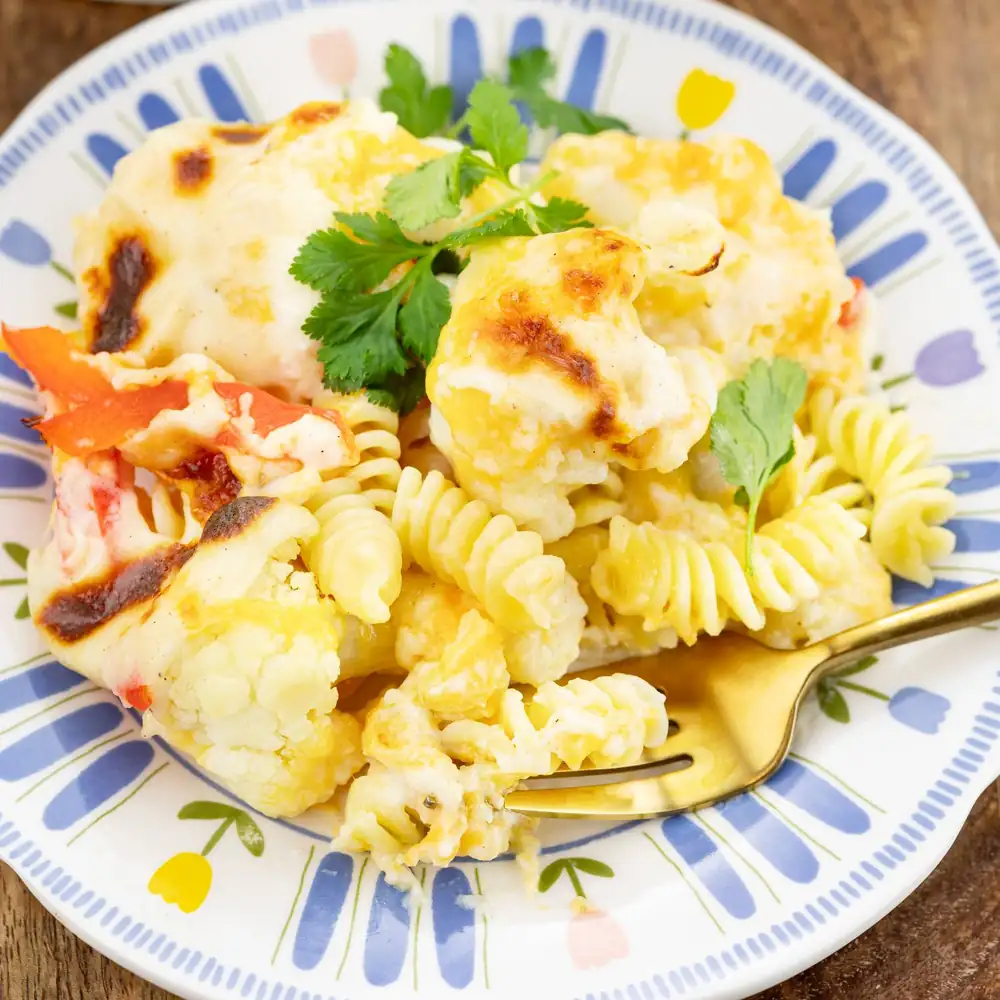
Cauliflower pasta casserole, my favorite cauliflower in a béchamel sauce with pasta, is a great idea for an oven-baked dinner. I recommend this recipe to everyone.
- Preparation time: 1 hour
- Number of servings: about 1800 g In 100 g of dish:
- Energy value 117 kcal
- Carbohydrates 13 g
- Including sugars 2 g
- Protein 5 g Fats 5 g
- Diet: low-sugar, vegetarian.
- pasta e.g. fusilli or penne 200 g - weight before cooking
- large cauliflower 800 g cooked florets
- cheddar cheese 130g
- red pepper 100 g
- wheat flour, e.g. all-purpose 30 g
- butter 40 g
- milk 300 ml
- salt 1/4 teaspoon
- a large pinch of nutmeg
Pasta casserole with cauliflower
To make this shepherd's pie, I used a deep ovenproof dish with internal dimensions of 18 x 26 cm. You can also use any other ovenproof dish with a capacity of about 1800-2000 ml.
Before you start making your casserole, I recommend reading the entire recipe first to prepare yourself for the next steps. You'll also find many interesting tips and substitutes for many ingredients.
Cook the pasta. Pour water into a pot and bring to a boil. To cook 200 grams of pasta, you'll need up to 1200 ml of water. Add salt only when it begins to boil. Add a level tablespoon of salt (not listed in the ingredients). Place the pasta in the pot and cook until al dente. I usually cook the pasta a minute longer than the manufacturer recommends on the package. The cooked pasta should be springy but soft. Transfer the pasta to a colander and immediately into a bowl. Reserve about half a cup of the pasta cooking water. You should only add this water to the béchamel sauce if the sauce becomes too thick. It's best to add 1 to 2 tablespoons at a time at the end of cooking, stirring until you achieve a smooth, creamy sauce. My cooked pasta weighed about 420 grams.
Tip: You can also make the sauce at the same time. However, you can use penne, rigatoni, or bow-shaped pasta. Remember that a larger dish will result in a thinner casserole and cook faster, while a deeper dish will allow the flavors to infuse better and keep the interior deliciously creamy.
Cut the florets from a large cauliflower and divide them into medium-sized pieces. Then, cook them in a pot of salted water until tender. Once cooked, drain the florets and arrange them on plates with the pasta. Top with very thinly sliced red bell pepper strips, about 100g.
Tip: To properly cook cauliflower florets, place them in lightly salted boiling water and cook over medium heat. Smaller florets will take about 5–6 minutes, and larger ones will take 7–9 minutes. Test their tenderness with a fork. They should be soft but still firm enough to hold together.
Start preheating the oven: 200°C (top-bottom).
Place 40g of butter in a small saucepan and heat slowly over low heat until completely melted and hot. Immediately add 30g of wheat flour (e.g., all-purpose or cake flour) and stir vigorously with a whisk or spoon until a smooth roux forms. Heat for about 1 minute, stirring constantly to remove the raw flavor of the flour but not to discolor it. Then gradually pour in the milk (removed from the refrigerator earlier), stirring constantly to prevent lumps from forming. First, add about 50ml, mixing thoroughly, then add the rest, until you've added a total of 300ml of milk. When the sauce is smooth, season with a pinch of nutmeg and 1/4 teaspoon of salt. From this point, slowly stir the mixture until the béchamel is smooth and begins to thicken noticeably. It will be thin at first, but after a few minutes it will take on the consistency of a thinner pudding. This can take up to 10 minutes, depending on the heat setting. If the sauce is too thick, add a little milk and heat briefly. If it's too thin, simmer for a moment longer, stirring constantly. When you reach the desired consistency, remove the pot from the heat.
Tip: If you'd like to skip the béchamel sauce, you can top the casserole with cream. Simply pour 200-300 ml of 30% whipping cream on top, or, instead, an equal amount of 18% whipping cream for soups and sauces. I recommend lightly seasoning the dish with salt and, if desired, a pinch of sweet paprika.
Grate about 130 grams of cheddar cheese and put it on the pasta and cauliflower florets with peppers, then pour the just-cooked béchamel sauce over the entire casserole.
Uncover the baking dish and place it in an oven preheated to 200 degrees Celsius (400 degrees Fahrenheit). Select the middle rack with the top/bottom heat setting (if you have a small oven with top heating elements, place the dish on the lower rack). Use convection mode to set the oven to 175 degrees Celsius (350 degrees Fahrenheit). Bake the cauliflower casserole for about 20 minutes. If the casserole isn't browning on top by the end of baking, you can turn on the top grill for a few minutes or move the baking dish to the next level.
Tip: Cheddar can be substituted with other cheeses. A bold Gruyère or a milder Emmental would work well, introducing a slightly sweet Swiss accent. Regular Gouda or Edam are very safe, widely available options with a relatively neutral flavor. You can also combine aged Parmesan with firm mozzarella, achieving the perfect balance between stringiness and sharp flavor.
Baked cauliflower with pasta in béchamel sauce is best served still hot, straight from the oven, for example with parsley or cilantro.
If not all of it is eaten on the day of baking, place the cooled casserole in an airtight container and keep it in a cool place for a maximum of two or three days. Slowly reheating it in a preheated oven allows it to regain its original temperature and maintain the desired crispness. Microwave cooking is also a great option, saving the day during quick meal breaks at work. A night in the refrigerator allows the flavors of the individual vegetables and spices to blend even more intensely.
Enjoy your meal.