Pepe, Spanish cuisine without formulas
Cosmopolitan Mexico City offers a myriad of culinary options encompassing all kinds of cuisines: Thai, Japanese, Chinese, Arabic, traditional Mexican, fusion, and of course, Spanish.
Between classic and contemporary
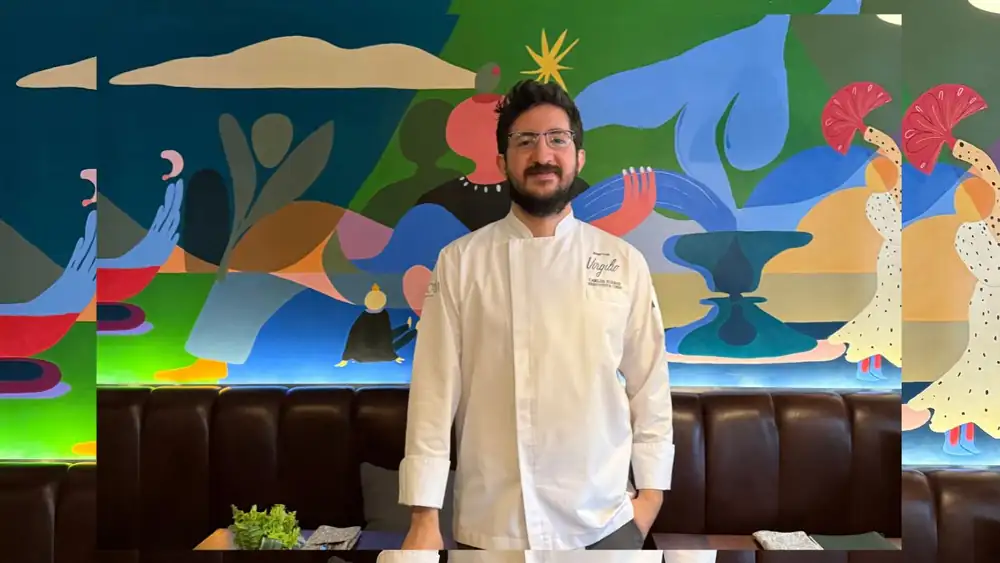
For Carlos, it's clear he wants to escape formality and offer a relaxed yet high-quality experience, with dishes that are technically sound but unpretentious. In his style of cooking, the product is key; it's no surprise that the state of gastronomy in the capital has led many chefs to break down barriers, and while they may have a preference for a particular cuisine or technique, they make use of local ingredients, resulting in an interesting culinary fusion. This is the case with Carlos.
Another distinctive feature is their commitment to putting a twist on classic Spanish dishes, both in terms of preparation and presentation. For example, their version of Calçots is a reinterpretation of grilled leeks served with romesco sauce and muhammara sauce—made with peppers and walnuts—and topped with a crunchy walnut garnish. Another must-try appetizer is the piquillo peppers stuffed with brisket that has been smoked for 18 hours, presented in a sauce made with the peppers themselves and accompanied by caramelized onions, olive slices, parsley, and vinaigrette.
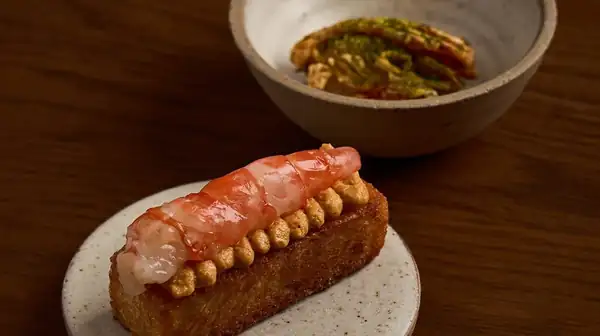
The tomato bread is another surprise, designed to create a feast of flavors and textures. Chef Carlos aims to present a playful dish that, while reminiscent of the traditional version, also boasts its own unique qualities: a crab filling seasoned with clarified butter and lemon juice; a twist on the traditional shape, with the bread arranged in a curve—like a taco—rather than flat; and finally, a topping of cheese, which adds salt and fat. Lemon zest and yuzu aioli are added to the tomato base.
To understand Pepe Mesa Española's culinary offerings, another must-try dish is the mussels. Inspired by mussels in white wine and chistorra sausage in cider, it's prepared with a sofrito of bell pepper, onion, and garlic, to which grated green apple is added to "give a touch of sweetness while balancing the acidity." The chistorra is sautéed in the same broth, as are the mussels, to which potato wedges—homemade style—are also added, and finally, cider. The result is a comforting bite, where two favorites make a perfect pairing.
Once the main courses began, a dish inspired by a festive occasion stood out, and one that, in the chef's own words, has already become a favorite among diners at Pepe Mesa Española: lamb with apple and ginger. This dish offers different layers of flavors and textures, perfectly conveying the chef's message: you can play with classics without sacrificing technique. The leg of lamb is cooked at a low temperature for 24 hours, then pressed to form a solid block, which is then seared at a high temperature to achieve a crispy exterior and a tender interior. The result is a smooth touch provided by a purée of apple, butter, ginger, and orange zest. Finally, a reduction of the lamb's cooking juices is added, along with coconut, white vinegar, and soy sauce. For this, the chef employs an Asian technique that aims to "define the flavors of the stocks, while the meat's flavor loses intensity and becomes more refined." The circle is completed with artichoke hearts sautéed in green oil and butter.
Rice dishes are a must. Continuing down the path of reinterpretation, the menu features a creamy rice with mole, a fusion of Mexican and Spanish cuisines. “This dish originated during a special event celebrating the launch of Gran Ricardo de Monte Xanic; we wanted to create a dish that represented both Mexican and Spanish culinary cultures. We liked it so much that we decided to add it to the menu.” The protein in this dish is pancetta, and the rice is prepared with red wine.
For the sweet part, there is the Manchego cheese cheesecake which is "tropicalized with guava", the rice pudding croquettes accompanied by a cinnamon custard and cookie powder, or the fritters.
Liquid proposal
At Pepe Mesa Española, the playful approach to classic cocktails extends to the mixology, making it an extension of the menu. A prime example is their Torito, inspired by a classic beer cocktail, made with sherry, rosé vermouth, and light cherry foam. This refreshing drink features a subtle flavor from the beer foam, creating a perfect balance. The wine list offers international labels, with a focus on Spanish and Mexican wines.
Casual atmosphere
The building that houses the Kimpton Virgilio dates back to the 1940s and is protected by the INBA (National Institute of Fine Arts) as a heritage site. Inside, natural light is prioritized, so the Pepe Mesa Española lounge emphasizes its large windows, and although blue tones predominate, they also highlight the green of the plants, with the mural at the back adding vibrant colors. Another space is the hotel's central courtyard, where time seems to stand still and the green of the flora also contributes to the tranquil atmosphere.
Pepe Mesa Española, and specifically the proposal of chef Carlos Juárez, is a clear example of the new generation of chefs who are inspired by international cuisines and have decided to apply their knowledge by using local products, thus generating an interesting fusion between culinary cultures, based on creative ideas, with dishes that require extensive mastery of techniques and knowledge as well as constant exploration of the use of ingredients, but which when they reach the table are shown without pretensions, of a simplicity that is only achieved through good execution.
Pepe Mesa Española
Anatole France 79, Polanco III Secc, Miguel Hidalgo, 11550, CDMX.