How to steam cook without a steamer: easy methods at home
Steaming is an accessible cooking technique that only requires water, heat, and height. Make sure to keep the food above the water for efficient cooking.
Steaming without a steamer is a practical alternative for preparing food at home with simple utensils. This method helps preserve the texture and flavor of vegetables, fish, or dumplings, as long as the ingredients are kept elevated and do not come into direct contact with the water.
How to steam cook with a pot and colander
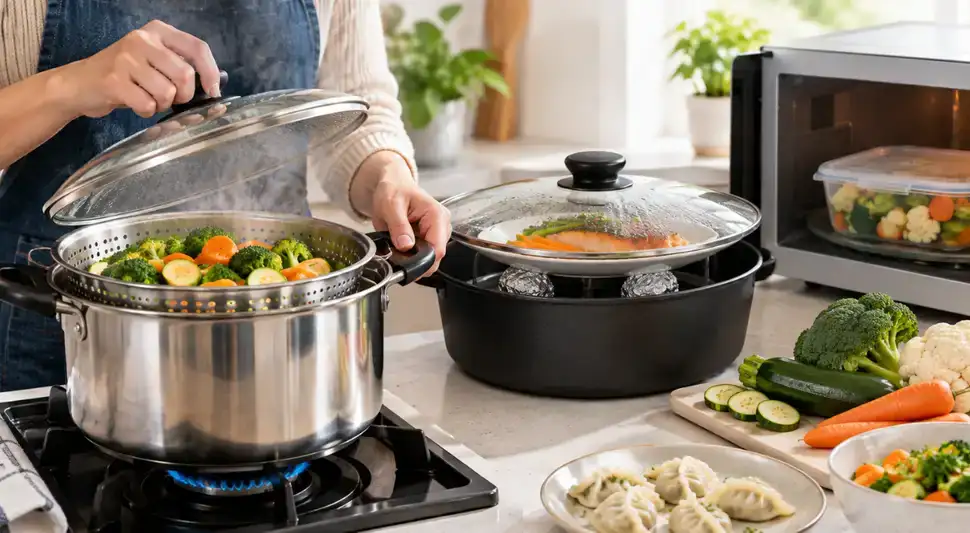
One of the most practical alternatives is to use a pot, a metal colander, and a lid. Place two or three fingers of water in the bottom and bring it to a gentle boil. Then, place the colander with the food inside, making sure it doesn't touch the water, and cover.
This system works very well with broccoli, cauliflower, carrots, zucchini, green beans, or potatoes cut into small pieces. For even cooking, it's best to cut the food into similar sizes and not overfill the colander.
It's also important to keep the lid closed during cooking. Every time it's lifted, some of the steam escapes and the process can take longer.
How to steam cook using a plate as a support
If you don't have a metal colander, you can place a heatproof plate inside a large pot and elevate it on a stable stand. A homemade option is to use three large balls of aluminum foil at the bottom and place the plate on top.
Add water without covering the food, place the food on the plate, and cover the pot. The steam will circulate underneath and cook the food without it coming into direct contact with the liquid.
This method can be used for vegetables, thin fish fillets, dumplings, or gyozas. However, make sure the dish can withstand high temperatures and is completely stable before turning on the heat.
How to steam cook in a microwave
To quickly prepare vegetables, the microwave offers another option. Place the chopped vegetables in a microwave-safe container, add one or two tablespoons of water, and cover with a suitable lid or microwave-safe plastic wrap, leaving a small opening for steam to escape.
Start with just a few minutes and check the texture before continuing. Broccoli, cauliflower, zucchini, and thin carrots usually cook well.
In all methods, avoid submerging the food and maintain a gentle boil. For chicken, thick cuts of meat, or large fish, it's best to check the internal temperature with a kitchen thermometer to ensure proper cooking.