Chia seeds: The natural shield for your brain, heart, and gut, recommended by nutritionists
Two nutrition specialists ranked chia seeds above other seeds due to their combination of fiber, plant-based omega-3 fatty acids, and minerals. We reviewed the proven benefits and how to consume them correctly.
Chia seeds: why two specialists recommend them for brain, heart, and gut
Of all the seeds you can add to water, oats, or yogurt, two nutrition specialists agreed on one choice: chia.
The reason has nothing to do with miraculous properties. Two tablespoons contain about 10 grams of fiber, as well as protein, unsaturated fats, and minerals. However, some of the claims circulating about this seed need some clarification.
Which seed is recommended?
The answer is chia seeds. In an article published by Real Simple, specialists Carrie Gabriel and Kat Garcia-Benson chose them as their top recommendation for supplementing a diet focused on gut, cardiovascular, and brain health. Flaxseed came in second.
Both hold the RD professional credential, used in the United States to identify registered dietitians. In Mexico, we can refer to them, in a way that is understandable to the audience, as nutrition specialists.
Furthermore, chia is not an ingredient foreign to our country. The National Autonomous University of Mexico identifies Mexico as the place of origin of Salvia hispanica, the scientific name for this seed used since Mesoamerican times.
What do two tablespoons of chia seeds provide?
A serving of approximately two tablespoons—about 28 grams—provides around:
- 130 calories
- 10 grams of fiber
- 5 grams of protein
- 9 grams of fat, mostly unsaturated
The amounts may vary slightly between products. These two tablespoons serve as a reference to understand their nutritional profile, not as a mandatory serving for everyone.
Why can chia seeds benefit the gut?
The main benefit of chia seeds for the gut is their fiber content. This helps increase stool volume and can promote bowel regularity. When the seeds come into contact with liquids, they form a gel called mucilage, which retains water and modifies the consistency of preparations.
Some of its fiber can also be used by gut bacteria. However, suddenly increasing your intake can cause gas, bloating, or discomfort, especially in people who don't usually eat much fiber.
It is recommended to incorporate it gradually and accompany it with plenty of liquid.
What is the relationship between chia seeds and the heart?
Chia provides fiber and ALA, a plant-based omega-3 fatty acid that the body needs to obtain through food.
Some studies have found possible modest changes in certain cardiovascular indicators. However, the results are not consistent: a 2024 meta-analysis reported potential benefits in some indicators, while another review published the same year found no significant changes in most of the markers analyzed.
Therefore, the correct formulation is that chia can be part of a heart-healthy eating pattern, but should not be presented as a treatment capable of lowering cholesterol or blood pressure on its own.
Does chia help improve memory?
There is not enough evidence to say that eating chia seeds directly improves memory or prevents diseases like dementia or Alzheimer's.
The connection to the brain stems primarily from its ALA, antioxidant, and magnesium content. These nutrients are involved in various bodily functions, but that doesn't mean a serving of chia seeds alone will produce cognitive improvement.
Furthermore, the ALA in seeds is not equivalent to the DHA found in fish and shellfish. The body can convert some ALA into EPA and DHA, but only in small amounts, according to the U.S. National Institutes of Health.
Chia seeds can contribute to a varied diet, but it would not be correct to promise that it "takes care of memory" as a proven effect.
Is it necessary to soak chia seeds before eating them?
Not always. Chia seeds can be added directly to moist preparations like yogurt, oatmeal, smoothies, or puddings, where they will have the opportunity to absorb liquid. If you plan to drink them with water, it's best to mix them well and wait for them to hydrate and form their characteristic gel.
What you should avoid is swallowing a spoonful of completely dry chia seeds and then drinking water. Chia absorbs liquid and swells rapidly.
The American College of Gastroenterology documented a rare case of esophageal obstruction after consuming dried chia seeds. This risk warrants special attention in people who have difficulty swallowing or other esophageal problems.
To learn about the differences between preparations, you can also check whether it is better to consume ground or soaked chia seeds.
How much chia can you consume?
There is no universal amount that everyone should eat daily. The two tablespoons mentioned serve to illustrate its nutritional value, but they are not a prescription.
If you don't usually eat much fiber, start with a smaller amount, see how your digestion responds, and make sure to drink plenty of fluids. People with difficulty swallowing should consult a healthcare professional before incorporating fiber into their diet regularly.
Practical ways to add chia to your diet
Chia seeds have a mild flavor and can be incorporated into sweet or savory dishes:
- Mix it with water and wait for it to hydrate before drinking it.
- Add it to yogurt or oatmeal, and let it absorb some of the moisture.
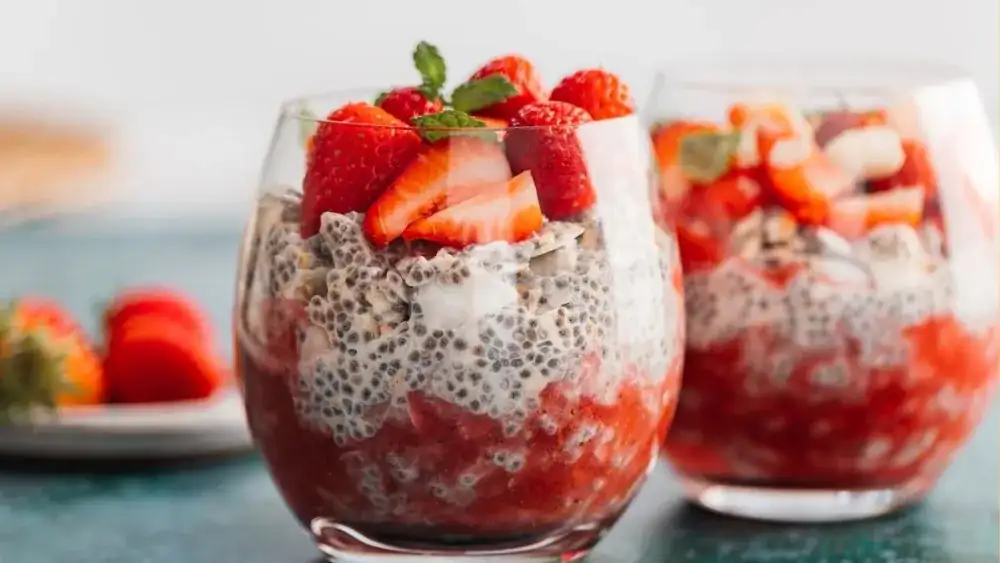
- Prepare a chia pudding and let it rest in the refrigerator.
- Add it to smoothies, fruit drinks, or dressings.
- Use it in breads, pancakes, oatmeal bars and other preparations.
You can also explore these 18 chia seed recipes to use it beyond lemon water.
Chia or flaxseed?
Both seeds provide fiber and ALA, so there is no single winner for all people and preparations.
Chia seeds can be eaten whole and work especially well when mixed with liquids. Flaxseed is usually best utilized when ground, as its outer shell can hinder the release of some of its components.
The choice may depend on the flavor, texture, recipe, and digestive tolerance. It's even possible to alternate them instead of always relying on just one.
Chia seeds are notable for their high fiber, unsaturated fat, protein, and mineral content in a small serving. Their true value lies in how easily they can be incorporated into various meals, not in attributing miraculous properties to them or expecting them to single-handedly compensate for an unbalanced diet.