Ángel León's marine fantasy on Netflix
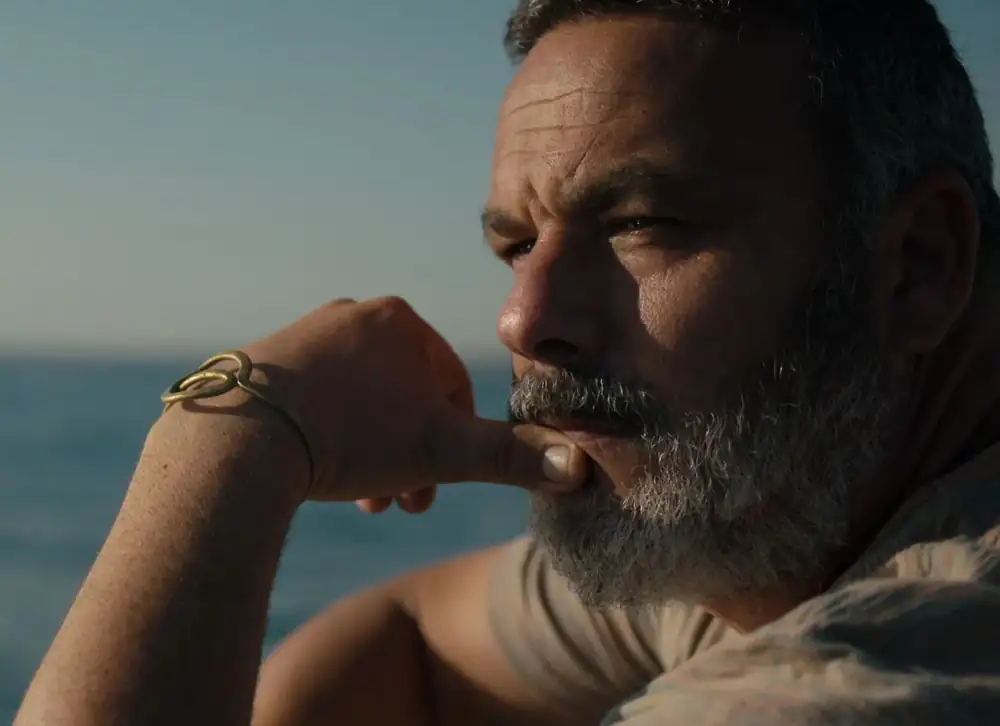
Ángel León has faced many obstacles in his life. He was a poor student who didn't know what to do, and was later diagnosed with attention deficit disorder. But he fell in love with the sea, fishing with his father, and later with cooking.
“I don’t like the word creativity; I prefer the word fantasy,” he says. And indeed, only this innovator could have thought of incorporating plankton into the human diet—the first Novel Food created by a Spaniard in 2014—creating edible iodine bubbles, turning seawater into salt that heats and cooks, serving sea light in a glass, or transforming discarded fish into seafood charcuterie. “They’ve called me crazy, but that’s not a bad thing; crazy people are the ones who change the world.”
He, who looks at nature with a hunger, has a thorn in his side. When he and Juan Martín, a biologist at Aponiente*** (El Puerto de Santa María, Cádiz), discovered the "cereal of the sea" (zostera), similar in texture to rice, he dreamed of feeding communities with water scarcity, since it grows in saline environments and is a great source of protein. But when he has tried to move forward with this project, he has "always been met with a no." "It has cost me tears," he admits. Although he hasn't given up.
The documentary also, of course, discusses Aponiente. According to Benjamín Lana, director of Madrid Fusión (where he presents a surprising new concept at each edition), León brought something never before seen from the sea to an Andalusia that hadn't fully embraced the haute cuisine revolution that began in the Basque Country. José Andrés also participates, highlighting the Cádiz-born chef's leadership in a groundbreaking marine cuisine that aims to save oceans and seas.
Do not cook the usual fish
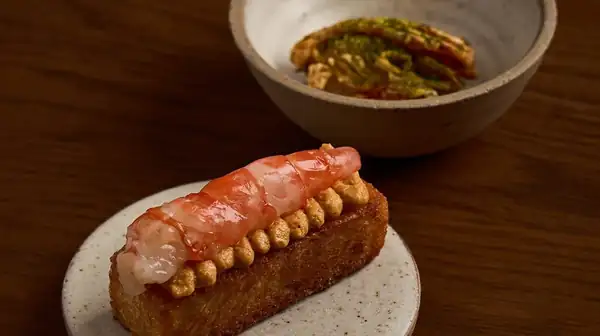
Because Ángel León, after training in Spain and France, took a sabbatical year during which he experienced firsthand the trawling industry and the waste it generates with bycatch. That's why, when he opened Aponiente—initially in a small space—he decided he didn't want to "cook pretty fish, prawns, or lobsters, but rather the fish that nobody wanted." Little by little, and although it took some convincing to win over customers—"seafood charcuterie was Aponiente's salvation"—the restaurant transformed into a place "where land ceases to exist."
In 2015, he took a giant, risky step. He moved Aponiente from Puerto Escondido Street—where his Taberna del Chef del Mar, a restaurant run by his wife, Marta Girón, is now located—to an old tidal mill surrounded by marshes. The goal was not only to improve conditions for staff and diners, but also to regenerate the environment and showcase it to the world, as he explained in this interview.
Because, as José Andrés reminds us in this episode, his character León's obsession "isn't just feeding the restaurant, but the world." And the protagonist confirms it: "I'm going to show the world that the sea is humanity's solution, and I'm not going to stop. I'm going to die discovering maybe five percent of what's in the sea; for me, it's a life project."
In addition to the captain of Aponiente, this Netflix season is dedicated to Kwane Onwuachi (Tatiana, New York), Norma Lisman and Saquib Keval (Masala y Maíz, Mexico City) and Chutatip Suntaranon (Kalaya, Philadelphia).
This Netflix series has showcased the work of more than 40 chefs from around the world, including Spaniards Jordi Roca and Albert Adrià.