The history of appetizers from ancient feasts to high gastronomy
Historical roots: the introduction to the feast
The tradition of appetizers leading up to the table has its roots in the ancient Mediterranean. Greek feasts often began with smaller plates of snails, sea urchins, or pickled vegetables to whet the appetite.
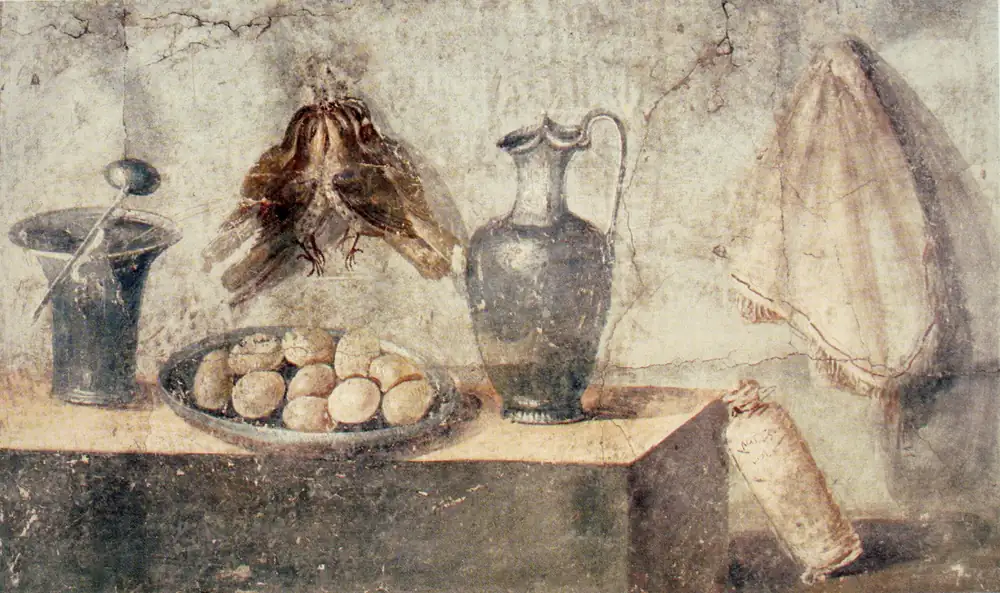
Among the Romans, this role was filled by gustatio, which figuratively also means tasting and savoring: olives, cheese, eggs, vegetables and fish were placed on the table before the main courses as an introduction to the long feast.
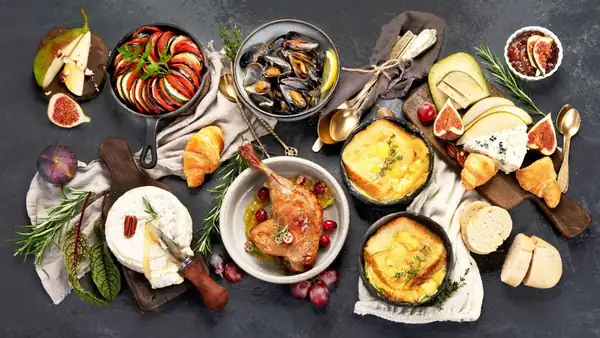
In Renaissance Italy, antipasto had a distinct role at the beginning of the meal. Cold cuts, cheeses, and marinated vegetables arrived on the table, not only introducing the meal but also becoming part of the social presence associated with the meal.
However, the structure of meals remained loose for centuries, and the order and role of the courses did not become uniform. The feasts of medieval Europe were not yet composed of separate courses, but spectacular, almost theatrical compositions of entremets appeared in the French courts. In the 19th century, with the spread of service à la russe, the dishes arrived on the table one after the other, and the appetizer formally became a separate course.
French cuisine further refined this structure. By the 18th and 19th centuries, hors d'oeuvres, small, tasty bites of one or two bites, had become an elegant introduction to dinner and an integral part of the dramaturgy of fine dining.
Appetizers in cuisines of the world
Although the appetizer as a stand-alone course is primarily associated with Western menus, smaller items that introduce a meal are present in many cuisines around the world. In Italy, it is antipasto, in Spain, it is tapas, in the Middle East, it is meze, in China, it is dim sum, and in Russia, it is zakuszki, all of which fulfill this role, in different forms and contexts.
In many cases, these items not only serve to introduce the meal, but also provide its entire structure: the emphasis is not on the successive courses, but on the shared, long-lasting form of eating.
The beginning of modern hospitality
In the 20th century, the role of appetizers increased with the spread of cocktail parties and urban restaurant culture. Canapés – small, basic snacks – as well as other hand-held items and shareable plates became essential elements of hospitality. On some occasions, these forms proved to be sufficient in themselves: the offer of standing receptions was often based exclusively on such appetizers.
In modern gastronomy, the appetizer is a flexible category. It can be a light introduction or a more prominent course, its role is determined by the occasion and the structure of the menu.
The emergence of the amuse-bouche can also be linked to the same period. The non-orderable appetizer sent by the chef became decisive during the nouvelle cuisine era, when haute gastronomy turned towards cleaner, more precise compositions. The amuse-bouche is the first statement of the kitchen: it indicates the style in a single bite and introduces the mindset of the menu.
The appetizer is no longer just a means of whetting the appetite. Tradition, technique, and intention are condensed into a single bite – and it is often the first to tell the story of what will happen at the table.