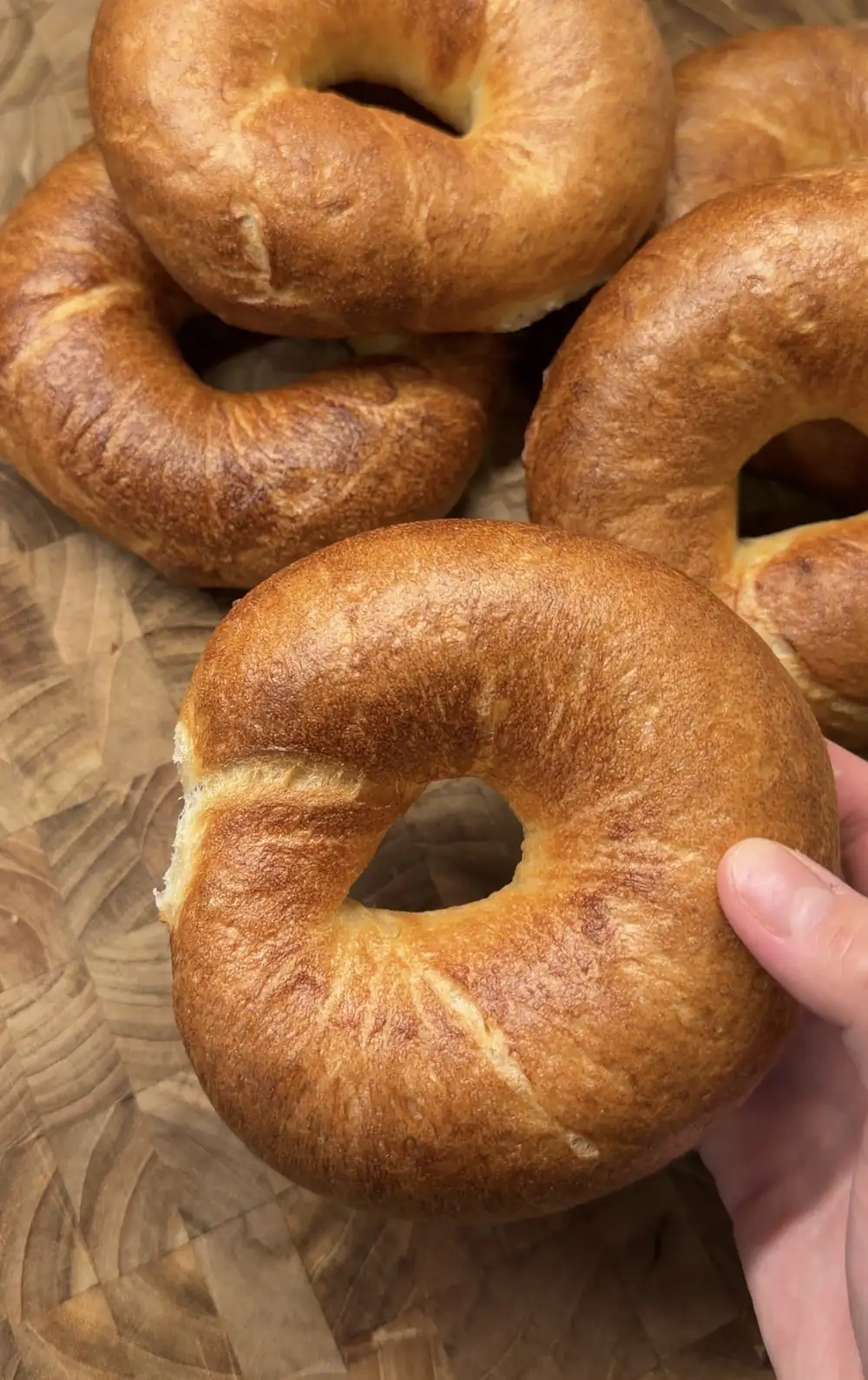
New York Style Bagels
My kind of bagel has a glossy, chewy crust, a soft interior, and a flavor that comes from time and barley malt syrup. This recipe makes 12 bagels using a low hydration dough, barley malt syrup in both the dough and the boiling water, an overnight cold proof, and a bake directly on a hot stone or steel that gives you that signature crust. These are still a work in progress, but I wanted to share my
- 1000 g bread flour
- 580 g water
- 25 g barley malt syrup
- 10 g sugar
- 20 g salt
- 3 g instant yeast
- water (enough to fill wide pot)
- 3 tbsp barley malt syrup (optional)
- parchment paper (I like this reusable nonstick one)
- bagel board (if you don't have, use options below)
- 3/4 cup boiling water (for steam (don't need if using bagel board))
- tray with lava rocks or cast iron skillet (for steam (don't need if using bagel board))
- everything bagel seasoning, sesame seeds, poppy seeds, flaky salt
- Mix: Dissolve barley malt syrup in water in mixer bowl. Add bread flour, sugar, salt, and yeast. Knead on low until combined then medium until smooth, stiff, and passing the windowpane test.
- First rest: Shape into a taut ball, cover, and rest 1 hour.
- Divide: Degas and divide into 12 pieces of 135 g each. Roll into smooth tight balls pinching seams closed. Bench rest 10 minutes covered then 5 minutes uncovered.
- Shape: Roll each ball into a log. Twist ends in opposite directions then bring together and roll seam firmly closed with palm of hand. Seal completely.
- Float test: Place on a tray or dough container. Cover and rest at room temperature until bagels float when dropped in water. (around 30 min)
- Cold proof: Cover tightly and refrigerate overnight — 36 hours optimal, minimum overnight.
- Preheat: Preheat oven to highest temp with baking stone or steel and lava rocks or cast iron for 45-60 minutes.
- Boil: Bring a wide pot of water to a boil. Add barley malt syrup if using. Boil bagels 15-20 seconds per side. Drain on a wire rack. Add toppings immediately while surface is wet.
- Transfer: Place on parchment paper and slide onto hot stone using a peel.
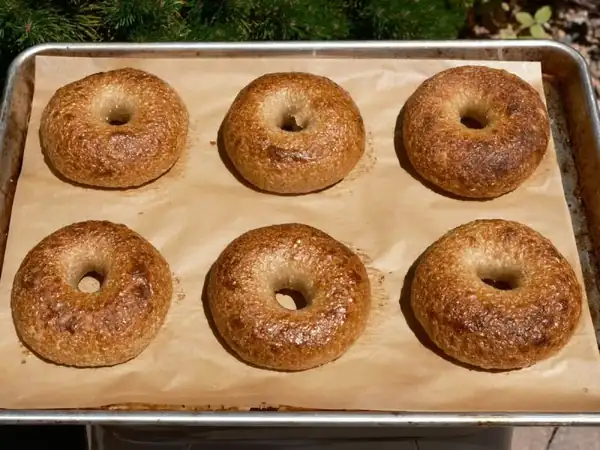
- Steam and bake: Pour ¾ cup boiling water over lava rocks immediately. Bake 6 minutes with steam. Open door to release steam. Lower to 475°F and bake 10 more minutes until deeply golden and glossy.
- Cool: Cool on wire rack 15-20 minutes before cutting.
Why You’ll Love This Recipe
Real bagel chew — low hydration dough and the boiling step give you that dense satisfying chew that you just cannot get from a soft enriched dough.
Barley malt syrup — in the dough and optionally in the boiling water gives bagels their distinctive flavor and glossy crust.
Overnight cold proof — more flavor, better texture, and easier to work with than same-day bagels.
Baked directly on stone or steel — the bottom crust gets crispy and the bagels bake more evenly than on a sheet pan.
New York Style Bagels: The Recipe That Requires Patience
Bagels are one of those things where the shortcuts show up immediately in the final product. Skipping the boil gives you bread rolls. Under-baking gives you pale soft bagels that go stale in an hour. The process exists for a reason and every step is doing something specific. This recipe is the result of testing different hydrations, malt amounts, boiling times, and baking methods to land on something that genuinely tastes like a real bagel: dense, chewy, glossy, and deeply flavored.
Bagel Dough
For Boiling
Water, enough to fill a wide pot.
2-3 tbsp barley malt syrup, optional but recommended
For Baking
Parchment paper
¾ cup boiling water, for steam
Lava rocks or cast iron skillet.
Optional Toppings
Everything bagel seasoning
Sesame seeds
Poppy seeds
Flaky salt
Dried onion or garlic
Barley Malt Syrup
This is the ingredient that separates a real bagel from everything else. Barley malt syrup adds a subtle fermented grain sweetness and depth of flavor that sugar alone cannot replicate. It’s what gives New York bagels their distinctive taste. It also contributes to the glossy deep brown crust when added to the boiling water. It’s thick and sticky and a little annoying to measure but it is worth tracking down. Most natural grocery stores carry it or you can order it online.
The Dough
At 58% hydration this is a significantly stiffer dough than almost anything else you’ll make and that stiffness is intentional. The low water content is what gives bagels their signature dense chewy texture. It will feel tight and stiff compared to bread doughs you’re used to and that’s correct. Knead until smooth and passing the windowpane test.
Shaping
Shaping bagels the right way matters more than most people realize. The roll-and-twist method (rolling each ball into a log, twisting the ends in opposite directions to create tension, then rolling the seam closed) builds the internal structure that gives the bagel its tight even crumb and helps it hold its shape through boiling and baking. A loosely shaped bagel will puff and spread into something that looks more like a roll than a bagel. Take your time with this step and make sure every seam is sealed completely.
The Cold Proof
Once the bagels pass the float test they go into the fridge overnight. The cold proof slows fermentation down dramatically and develops flavor over time, the longer you can give them the better. 36 hours is optimal for the deepest flavor but even overnight gives you significantly better results than same-day baking. The cold also firms the bagels up which makes them much easier to handle and drop into the boiling water without losing their shape.
How To Make New York Style Bagels
Mix the wet ingredients: In your mixer bowl combine water and barley malt syrup and mix until the syrup is dissolved.
Add dry ingredients: Add bread flour, sugar, salt, and instant yeast to the bowl. Attach the dough hook and knead on low speed until everything comes together into a shaggy dough with no dry spots. Increase to medium speed and knead until the dough is smooth, stiff, and passes the windowpane test.
First rest: Shape into a smooth taut ball, cover, and rest at room temperature for 1 hour.
Divide: Degas the dough and divide into 12 equal pieces of 135 g each. Roll each into a smooth tight ball, pinching any seams closed on the bottom. Cover and bench rest for 10 minutes covered then 5 minutes uncovered — the uncovered rest helps the surface dry slightly so the dough doesn’t stick during shaping.
Rest and float test: Place shaped bagels on a lightly floured tray or dough container. Cover and rest at room temperature until they pass the float test — drop one into a bowl of water and it should float. If it sinks give it more time and test again.
Cold proof: Once the bagels float cover tightly and refrigerate overnight — 36 hours is optimal for best flavor but you can bake as early as the next morning. The cold firms them up and develops flavor.
Preheat: Preheat your oven to its highest temperature with your baking stone or steel and lava rocks or cast iron on the bottom rack. Preheat for at least 45-60 minutes.
Boil: Fill a wide pot with water and bring to a boil. Add 2-3 tbsp barley malt syrup if using. Working in batches drop the cold bagels into the boiling water and boil for 15-20 seconds per side. Remove with a slotted spoon and place on a wire rack to drain. If adding toppings dip the wet bagels into your toppings immediately after draining while the surface is still sticky.
Transfer to stone: Place boiled bagels on parchment paper and use a bread or pizza peel to slide them directly onto the hot baking stone or steel.
Bake with steam: Skip this step if you are using a bagel board. Have ¾ cup boiling water ready. Pour immediately over the lava rocks or into the cast iron to create steam and close the oven door. Bake for 6 minutes with steam. Open the door briefly to release steam then lower to 475°F and finish baking for 10 more minutes until deeply golden brown and glossy.
Cool: Transfer to a wire rack and cool for at least 15-20 minutes before cutting.
Storage & Reheating
Storage Bagels are best the day they’re baked. Store at room temperature in a paper bag or uncovered for up to 1 day.
Freezing Bagels freeze extremely well. Slice before freezing and freeze in an airtight bag for up to 1 month. Toast directly from frozen for the best result.