Aiô: a surprise in the heart of São Paulo
It's not easy to surprise a diner in São Paulo: this city, the largest in the Americas, has everything imaginable. Traditional cuisine and fine dining; botecos, sandwich shops, and cocktail bars; and an endless array of culinary traditions brought by the great waves of immigration that have populated Brazil over the last 150 years. But Aiô, a Mandarin word that expresses surprise, manages to do ju
To understand Aiô, you first have to talk about Mapu, the iconic food truck born in 2017, the brainchild of Taiwanese Jasmine Chen and her son Duilio Lin. This place, fueled by endless steamed baos, became a symbol of street food in São Paulo. It was so successful that, two years later, Mapu brought on partners (chefs Caiô Yokota and Víctor Valadão) and moved to a location in the chic Vila Mariana neighborhood. “Our first experience with Taiwanese cuisine was in that food truck, and we were captivated. We realized that those flavors could be well-received in São Paulo’s culinary scene,” Caiô and Víctor explain.
A before and after
The arrival of this duo to the Mapu kitchen marked a turning point for the restaurant, adding the vast experience they brought from some of the best establishments in Brazil and the world. In particular, they came from Tuju, the two-Michelin-starred restaurant in São Paulo run by Iván Ralston, where they both worked in the kitchen. To prepare for Mapu's culinary journey, these chefs embarked together on an initiatory trip to Taiwan, visiting cities such as Taipei, Kaohsiung, Tainan, Taichung, Yilan, Keelung, and Chiayi. "We got to know the island intimately, from north to south, and were amazed by its food, customs, and traditions," they explain.
All this introduction is necessary to understand the new Aiô, a restaurant opened in mid-2023 by Duilio, Caiô, and Victor. It allows us to understand, first, why Aiô is a Taiwanese restaurant, even though its chefs aren't from Taiwan. And, more importantly, it explains how these chefs approach their menu, with that curiosity, nonchalance, and eagerness to experiment that is so often the hallmark of the best fine dining.
Located in Vila Mariana—a neighborhood in the south-central part of the city, now considered one of the best places to live in São Paulo outside the city's main tourist areas—the restaurant appears small from the street: a glass facade, ostensibly designed to emulate the streets of Taiwan (though it doesn't quite fit), reveals a bar with stools that serves as the reception area. But inside, the restaurant expands towards the back, adding dining rooms, an outdoor patio, and an open kitchen where chefs work with woks, rice cookers, steamers, and fryers, in a flurry of activity capable of feeding around 100 people per night. The atmosphere is informal, somewhat noisy, with a price tag reasonable for the local culinary scene, ranging from $40 to $60 per person. It's not a restaurant targeting tourists or luxury; rather, it's firmly rooted in São Paulo, catering to local diners eager to try less-visited flavors.
Challenges to the palate
Beyond the enormous influence of Japanese cuisine in Brazil (São Paulo is home to the world's second-largest Japanese community after Japan itself), Taiwanese gastronomy continues to present challenges to the local palate, both for its combination of sour, sweet, and spicy flavors, and for the texture of some of its signature dishes. “The large Japanese presence in Brazil is positive for our cuisine, with Brazilians becoming involved in a culture that is not their own, discovering products like soy sauce and scallions, and embracing raw dishes and techniques like steaming.
At the same time, it presents a challenge: to demonstrate that not all Asian cuisines are the same; that it's not about comparing Taiwan to Japan, but about differentiating and appreciating the beauty and nuances of each cuisine,” says Caiô. “The most difficult thing for locals is the diversity of textures we use, in addition to the specific temperatures and flavors in some of our dishes. Brazilians aren't always used to eating foods with 'Q' textures, a chewy texture that Taiwanese people love. Not everyone likes chicken feet or pig ears (which, although used in traditional local dishes like feijoada, are cooked until they almost fall apart). As for temperatures, many Taiwanese dishes are eaten cold, often without any caramelization, which also contrasts with Brazilian culture, where meats, garlic, and onions are always stir-fried and caramelized.” But we believe that by introducing these textures and dishes in an appealing way, with hospitality and technique, we can showcase the true value of what we do, allowing more people to enjoy them. In fact, it's already happening,” he continues.
Short menu
The brief menu, with just eleven savory and three sweet options, features more or less traditional dishes, adding nuances and the chefs' whims. There's no separation between appetizers and main courses: as in most Asian restaurants, it's ideal to order several things to share, like a feast. Start, for example, with the turnip cake, a classic Taiwanese dim sum, garnished with fragrant slices of cheiro pepper; the addictive fried fish bao; a small and delicate variety of oysters cultivated in Florianópolis; and the xian bing, dumplings brimming with broth, a difficult technique they pull off flawlessly. To drink, try a Kinmen, a short cocktail made with fino sherry, shiso, honey, Sauvignon Blanc, lemon, and peach bitters, part of the cocktail menu designed by Maurício Barbosa (also a former Tuju chef), a key figure at the restaurant.
One of Aiô's most celebrated dishes is its tomato salad, made with beef heart and other flavorful, ripe tomatoes, dressed with chili oil, refried beans, and Taiwanese black vinegar. It seems simple, but the combination is very effective. This is complemented by sticky rice with an elastic texture, served with pork and squid; the catch of the day, cooked to perfection; and a less surprising but delicious char sui made from the loin (a very fatty cut of pork), slow-cooked and served with small pancakes to wrap at the table (similar to Peking duck). For dessert, a cheesecake serves as a bridge between Brazil and Taiwan, featuring textures of guava, star anise, and tapioca pearls. All the presentations are visually appealing without being over the top, the flavors are delightful, and there's a carefully considered element of challenge.
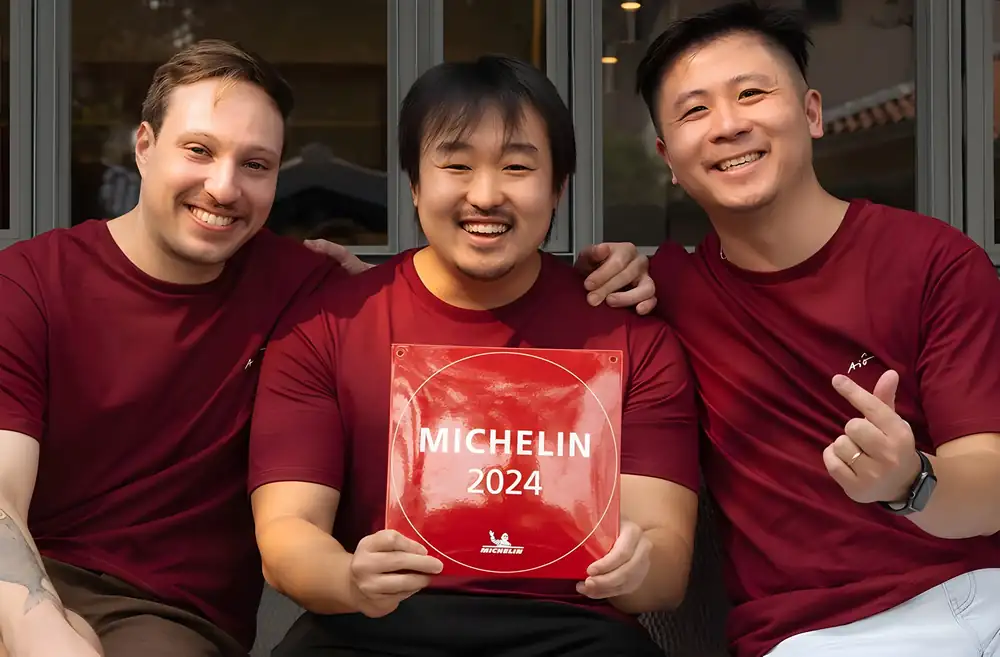
With less than two years under its belt, Aiô is already making waves in São Paulo's culinary scene. Collaborative kitchens featuring award-winning chefs, pop-up restaurants, recognition in local media, and its inclusion among Michelin's 2024 recommendations clearly demonstrate this. But, as always, the most important factor is the response from its customers, who fill reservations night after night, genuinely eager to be surprised.