Spreadable cheeses: what are the main ones and how to best use them in the kitchen?
Spreadable cheeses have carved out a prominent place for themselves in the broad category of dairy products. Their velvety texture and generally delicate, often even neutral, flavor make them easy to pair, adapting to both savory and sweet recipes.
What are spreadable cheeses: all the characteristics
Spreadable cheeses are dairy products characterized by a soft, creamy, and easily workable consistency, so much so that they can be spread with a knife or spatula without losing their structure. In this guide, we'll refer to them generically as "spreadable cheeses" for convenience and common culinary use, but from a product and scientific perspective, there are some exceptions. A prime example is mascarpone: it's not technically a cheese (made from milk coagulation), but a derivative obtained from the acid-thermal coagulation of cream (cream). Similarly, many industrial cream cheeses or ricotta-based preparations use technological processes and ingredients other than traditional curd, yet they share the same creaminess and palatability as fresh cheeses.
In any case, these products have become very common in everyday cooking, where they are used both as an ingredient in sweet and savory dishes and simply as a spread on bread. Behind their apparent simplicity, however, lies a production process in which acidification, whey separation, curd treatment, and temperature control play a fundamental role.
From a compositional standpoint, a spreadable cheese is primarily composed of water, fat, proteins, and mineral salts, in proportions that can vary significantly depending on the type. Unlike hard or semi-hard cheeses, in which the reduction of water and subsequent aging allows for a compact structure, spreadable cheeses maintain a relatively high level of moisture. It is precisely this higher water content, along with the particular organization of proteins and fats, that contributes to the soft, creamy consistency. The natural spreadability of these cheeses, however, depends not only on the amount of water: it is also achieved by the balance between different milk components and the transformations that occur during processing.
Milk proteins, especially caseins, are crucial to the process. In milk, these proteins are organized into structures called micelles, which can change when the milk is acidified. Lowering the pH causes a progressive destabilization of the casein micelles, leading to the formation of a protein mass, the curd. In fresh and spreadable cheeses, this transformation is exploited to achieve a structure that retains a significant amount of water. Milk fat also plays a significant role in the product's taste. Fat globules, distributed throughout the protein matrix, influence the creaminess, smoothness, and mouthfeel of the cheese. A higher fat content generally makes the product richer and more velvety, while reducing it requires careful control of the structure to prevent the cheese from becoming excessively compact, dry, or lacking in creaminess. Spreadability therefore depends on the interaction between water, proteins, and fats, but also on the size of the particles and the way the mass is processed. For this reason, two products with apparently similar ingredients can have very different consistencies.
From a sensory perspective, a good spreadable cheese generally has a homogeneous, smooth texture, free of unwanted lumps. The consistency should be soft enough to be easily spreadable, yet firm enough to retain its shape and not be excessively runny. Flavor varies depending on the type of product and the production process, but a slightly acidic note is common, which may be accompanied by sweeter, lactic notes, determined by the milk composition and the presence of fat. Another important characteristic is color, which generally ranges from white to creamy white: it depends primarily on the milk composition, the amount of fat, and the processing method. Flavored spreadable cheeses also exist, in which ingredients such as herbs, spices, vegetables, or other flavorings are added to the dairy base, modifying its typical flavor.
What are the most famous spreadable cheeses?
The spreadable cheese category encompasses products with diverse composition, production, and organoleptic characteristics. In Italy, where the dairy tradition is strong, many excellent spreadable cheeses are found. One of the most well-known is certainly mascarpone, a fresh, creamy cheese that can truly be considered a spreadable cheese, although it has a much richer, denser consistency than conventional industrial spreadable cheeses. Mascarpone is characterized by a high fat content, a delicate flavor, and a rich, velvety texture. It is best known for its use in desserts, especially tiramisu, but can also be used in savory dishes.
Stracchino and crescenza are also very popular and beloved, two fresh, soft cheeses deeply rooted in the daily diet of Italians. Although they belong to the same family of products, they have some differences: crescenza has a higher water content, giving it a particularly fluid and yielding consistency, while traditional stracchino maintains a more defined soft texture. Both are used primarily in savory dishes, particularly as a filling for quiches and focaccia, but also in creamy pasta dishes and delicious appetizers. Among Italian spreads, robiola also stands out, a fresh, soft cheese with a very soft and creamy texture that makes it easy to spread on bread. Typical of Northern Italy, it comes in many varieties and is primarily known for its creaminess and delicate flavor, best enjoyed like stracchino or crescenza.
Also worth mentioning is squacquerone, a fresh, very soft and extremely creamy cheese, ideal for spreading. It's a typical product of Emilia-Romagna (particularly the Romagna region and part of Bologna) and is so creamy and rich in water that it has no rind and tends to yield and expand relative to its container (hence the dialect name, which derives from "squacquerare," meaning to let go). Its flavor is sweet and delicate, with a slight acidic note, and it's traditionally spread on the classic piadina romagnola, often paired with arugula and prosciutto.
Alongside these specialties are industrial spreadable cheeses, specifically produced for a uniform consistency, long shelf life, and ease of use. The most famous of all is Philadelphia, the celebrated spreadable cheese (or cream cheese, in English) created in the United States in 1872 but now widespread and beloved throughout the world. It is highly versatile, has an extremely neutral flavor in its basic, unflavored form, and is used in both savory recipes (such as appetizers and pasta dishes) and desserts (such as cheesecake).
Spreadable cheeses properly speaking (derived directly from the milk curd through acid or rennet coagulation):
Spreadable cheeses properly speaking
Growth
Stracchino
Casatella Trevigiana DOP
Philadelphia e Cream Cheese
Ligurian Prescinseula
Fresh Tomino
Ligurian cheese
Quark
Labneh
Strachitunt (fresh)
Very fresh primo sale
Cambozola and Bresse Bleu (fresh varieties)
Spreadable dairy products and derivatives (obtained from the processing of whey, cream or by acid-thermal coagulation, not comparable to traditional cheeses):
Mascarpone
Chocolate chip
Manteca/burrino (the soft inner part)
Coconut flower
How to use spreadable cheeses in cooking
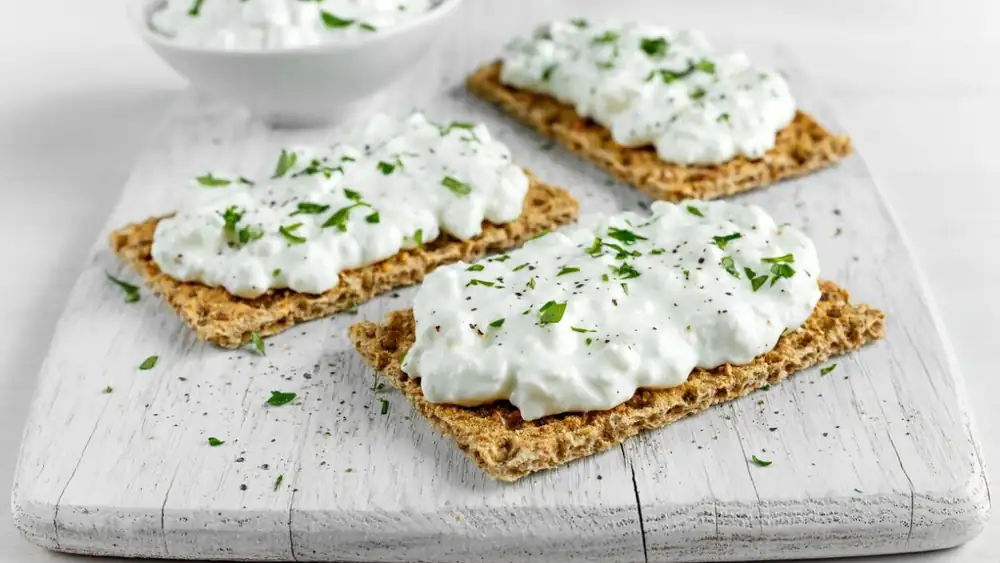
The success of spreadable cheeses largely stems from their versatility: their soft consistency makes them suitable for eating directly, but also for incorporating into numerous preparations. One of the simplest uses is as a spread on bread, crostini, crackers, flatbreads, and toast. In this case, the cheese can be used plain or combined with herbs, spices, vegetables, olives, salmon, ham, or other ingredients. It is particularly suitable for appetizers, aperitifs, and canapés because it can be easily flavored and evenly distributed.
Spreadable cheeses are also widely used in savory sauces and creams. They can be diluted with milk, cream, pasta cooking water, or broth, resulting in a more fluid sauce. This makes them the basis for sauces paired with pasta, gnocchi, rice, vegetables, meat, or fish. Their use allows for a creamy consistency without the need for more elaborate preparations. For this reason, a particularly effective application is in pasta dishes. A spreadable cheese can be incorporated directly into pasta, where the heat and moisture promote the formation of a cream. It can be paired with vegetables such as zucchini, spinach, squash, and broccoli, but also with mushrooms, salmon, speck, ham, dried tomatoes, or nuts. In this case, it primarily serves a structural function: it binds the ingredients together and makes the sauce softer and more enveloping. The same principle applies to risottos and grains: added towards the end of cooking, the spreadable cheese contributes to the creaminess, making the dish creamier.
Another great application is fillings. Spreadable cheeses can be used to fill flatbreads, rolls, sandwiches, and focaccia, as well as crepes, vol-au-vents, and savory pastries. Their consistency allows them to be easily incorporated with other ingredients, creating smooth and easily workable fillings. They are also essential in the preparation of savory pies, quiches, and flans. They can be mixed with eggs, vegetables, cured meats, fish, or other cheeses to create creamy fillings. In these preparations, the cheese contributes both flavor and texture, helping to keep the filling soft.
Spreadable cheeses can also be used to accompany meat and fish. They can be used to stuff roulades and rolls, or transformed into sauces to serve with chicken, turkey, veal, and other meats. They pair particularly well with fish, especially salmon, trout, and shrimp, especially in cold dishes, tartare, and appetizers. Spreadable cheeses are also widely used in baked goods. They can be incorporated into dough or used as a filling for pizzas, focaccias, rustici, and baked goods: one of the most famous examples is focaccia di Recco, whose original filling calls for a soft, slightly acidic fresh cheese (such as traditional prescinseula or very fresh stracchini specifically designed for melting).
Their role in pastry making is equally important. Cream cheese, for example, is one of the key ingredients in traditional New York cheesecake, but various types of spreadable cheese are also used to make the no-bake berry cheesecake. Mascarpone, thanks to its rich texture, is also used in numerous desserts, from creams to tiramisu, from tarts (try the mascarpone and jam tart) to ice cream.
Furthermore, spreadable cheeses, when mixed with powdered sugar, butter, cream, or chocolate, can become creams thick enough to be used with a piping bag, ideal for decorating cakes or desserts like cupcakes. They can also be used in the preparation of puddings, mousses, and no-bake desserts: their structure allows for the incorporation of air through mixing or combining with whipped cream, while the high moisture content contributes to a smooth consistency.