The International Plan for Spanish Gastronomy elevates the promotion of the sector to a matter of national importance
“Today is the most important day Spanish gastronomy has ever experienced. It is a historic day.” Ferran Adrià’s words summarize the enthusiasm with which the sector has received the International Plan that transforms gastronomy—from farm to table, encompassing industry, training, research, tourism, and cultural aspects—into a matter of national importance. Three ministries, coordinated by the Mini
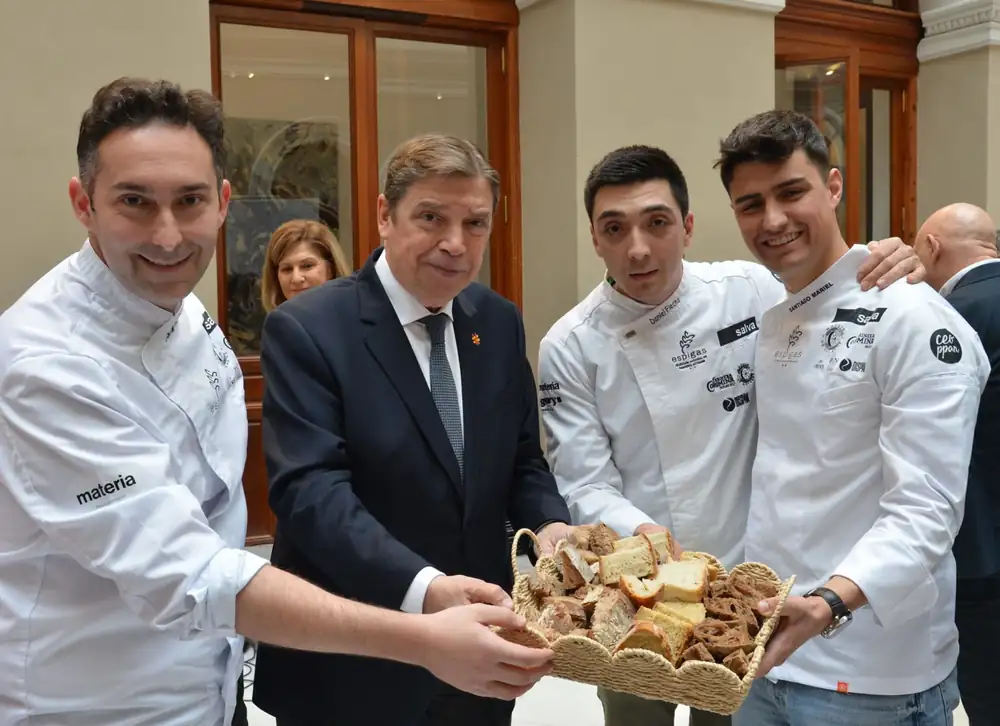
The Minister of Agriculture, Fisheries and Food, Luis Planas, presided over the presentation of a plan developed in collaboration with ICEX and Turespaña, whose aim, he said, is "to transform Spain's current gastronomic recognition into global leadership." Planas indicated that "this pioneering plan is not a finished project, but rather a living document that we must all build together." The presentation at the Ministry's headquarters in Madrid was attended by prominent representatives from the culinary world, production, the agri-food industry, and academic research, because, as the Minister emphasized, "gastronomy today is an academic discipline."
The welcoming remarks were delivered by José Miguel Herrero, Director General of the Food Industry at the Ministry of Agriculture, Fisheries and Food (MAPA), who emphasized that “in Spain, eating is much more than just food. It's cultural identity, it's well-being, and it's also economic.” Herrero explained that the focus throughout the tour had been “listening to every link in the chain: agriculture, schools, industry, hospitality…” He stressed the importance of connecting the various stakeholders. “Spanish talent is fragmented; the challenge is to connect it and build a network.”
Spain is not starting from scratch. In addition to the international recognition of its renowned chefs and restaurants, the country is the world's seventh-largest exporter of agri-food products and the fourth-largest in the EU. Given the multifaceted implications of gastronomy, the plan has been developed in collaboration with the Spanish Institute for Foreign Trade (ICEX), under the Ministry of Economy, Trade and Business, and Turespaña (Ministry of Industry and Tourism). Elisa Carbonell, CEO of ICEX, explained that "Spain has been known in the export market for the 'triple B': good, beautiful, and cheap, but at ICEX we are working internationally to move up the ladder and compete also in the realm of excellence and value." For Miguel Ángel Sanz Castedo, Director General of Turespaña, "in the tourism sector, gastronomy can be the lever that propels us from 'triple B' to 'triple A,' and that is why we believe we must fully commit to this plan."
Luis Suárez de Lezo, president of the Royal Academy of Gastronomy, an institution that also collaborated on the project, expressed his satisfaction that “from the beginning, at the Academy we have believed that gastronomy should be a matter of national importance.” Also among the group of representatives from the sector at the presentation was Rocío Hervella Durántez, CEO of Prosol, a leading European soluble coffee company based in Venta de Baños, a town in Palencia with fewer than 7,000 inhabitants. Hervella emphasized the importance of linking the agri-food industry to the plan and highlighted its potential benefits for rural areas. “Forty percent of the food industry is located in municipalities with fewer than 40,000 inhabitants. Gastronomy is key to creating an offering in these municipalities that combines culture, tourism, and industry. For me, this plan can be summed up in one word: opportunity,” she said.
Also speaking on behalf of the rural sector, in this case as a restaurateur, was Miguel Caño, chef of the Nublo restaurant (Haro, La Rioja), for whom the plan is “necessary, because it will help us build a network and showcase our potential.” Caño explained that “most of the visitors we receive in La Rioja come from countries outside the EU: the United States, Japan, China, Australia… La Rioja is ahead of Tuscany and Napa Valley as a wine destination,” he said.
Esther Merino Velasco, beverage developer at the Alchemist restaurant (Copenhagen) and also a representative of the advisory team, emphasized the importance of collaboration. “In Spain, we have a lot of talent and also the support of institutions, but sometimes we struggle to connect, and there are other countries that have managed to build those bridges between the hospitality industry, educational institutions, and research centers so that they truly integrate,” she said.
Ferran Adrià, who expressed his enthusiasm for the plan and paid tribute to those who, “fifty years ago, began to project Spanish gastronomy to the world,” emphasized that the plan is fundamentally a roadmap “for hard work.” “In Spain, we have talent and ability, but there are things we fall short of. Our academic system has failed us, and that's why in recent years I've poured all my efforts into the MACC; we lack the ability to market ourselves and the ability to communicate,” he explained.
As a roadmap, the International Gastronomy Plan is summarized in ten measures structured into four sections. The first, dedicated to training, aims to strengthen Spain's position as a leading destination for culinary and hospitality training, with scholarships, partnerships with universities, and enhanced training programs; the organization of a major annual Gastronomic Creativity Meeting; and the creation of an international network of Spanish gastronomy professionals worldwide to connect and create synergies among professionals from different fields.
In the area of international presence and markets, the integrated promotion of Spanish products will be encouraged. “The goal is for our products not only to be known and associated with Spanish gastronomy, but also to be introduced into the culinary world of other cuisines,” explained Elisa Carbonell. Specific programs will also be launched to identify and promote business models related to gastronomy and to guide, advise, and support agri-food companies for success in the international market.
In Tourism, the measures are aimed at building tourist loyalty as both consumers and influencers, and ensuring that gastronomy is prominently featured as an attraction at visitor reception points, from airports and train stations to information offices and public spaces, with images of products and renowned chefs, among other things. Regarding Culture and Heritage, Minister Planas announced that the candidacy of tapas as an Intangible Cultural Heritage of Humanity by UNESCO will be reactivated.
The approach to gastronomy as a national brand entails consolidating a unified narrative framework for all Spanish gastronomic activities abroad, respecting territorial diversity and emphasizing storytelling, excellence, quality, and history. It also includes integrating gastronomy into diplomacy and the State's foreign policy, and promoting gastronomy as an aspect of identity, lifestyle, and values through promotional campaigns.
Minister Luis Planas closed the event by emphasizing the importance of collaboration between the public and private sectors for the plan's success. "This is an opportunity to consolidate gastronomy as a fundamental asset and requires a collective effort. Gastronomy is a key element of the great, innovative, and sustainable country that we want Spain to be," he concluded.