The Problem With National Dishes
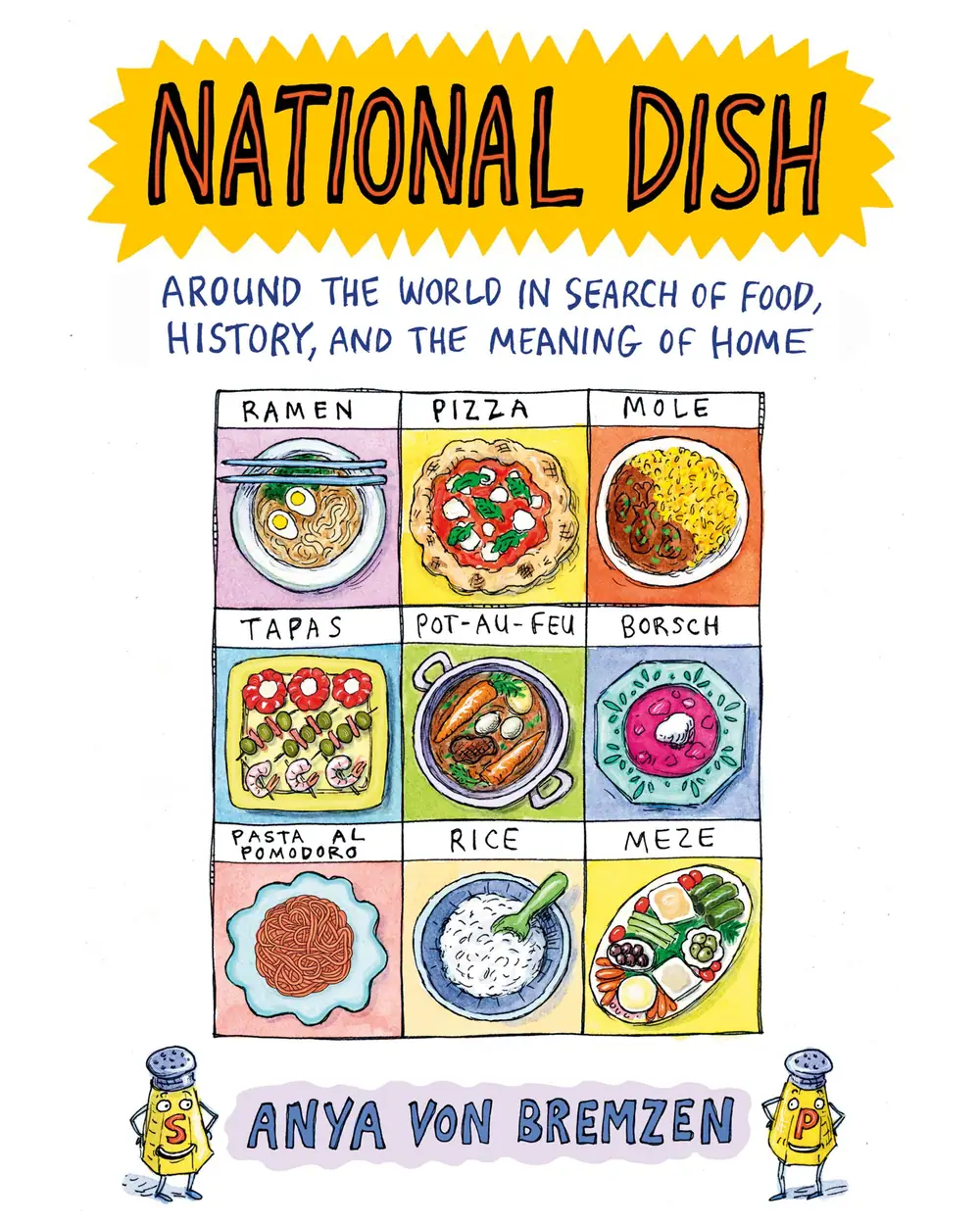
Those are fighting words if, say, you’re a chef specializing in “authentic” Japanese curry, an Italian American exalting the primordial Italian-ness of pizza, or a food writer (cough) publishing recipes for Thai this or French that. On a whirlwind tour of six cities—there’s Parisian pot-au-feu in one chapter, pizza in …
“products of a late-capitalist cultural logic that treats identities, belonging, heritage, and origin myths as commodities subject to the rule of the marketplace.”
In Oaxaca, kernels of maize “glimmer like multihued amber.” In Seville, tapas are “little road signs or historical plaques, couched in the language of the plate, marking the long epic national narratives of power and politics.” Von Bremzen is no newcomer to the intersection of food and national identity. My first book, Please to the Table: The Russian Cookbook , was about all the different cuisines that belonged to an empire.
I hate to say it now, but the book had a sort of imperial perspective, with “Russian” in the title. Later I did this book called Greatest Dishes: Around the World in 80 Recipes , which had me researching iconic foods like pizza, risotto. Mole—and that got me thinking, gee, there’s so much material here, but in a cookbook you can only do so much.
The subtitle of National Dish is, “Around the world in search of food, history, and the meaning of home.” Did you find the meaning of home? The book wasn’t about me, but it did make me reflect on my childhood in the USSR.
For me it was this whole story about pizza Margherita—how the dish got its name from a queen who cleared a pizza to be named after her … The claim is repeated in every academic source, yet it turns out, it’s fakelore. For instance, people think Japanese curries from Sapporo and Hokkaido and whatnot are old, but they didn’t exist before the 1980s.
So, instead of “he appropriated my mofongo,” maybe it’s, “there is racial injustice in the food sector.” National identities change all the time. When most dishes were invented, current borders didn’t exist—so how can you really claim something is from Syria or Lebanon or Turkey when it was eaten under the Ottoman Empire? The philosopher Kwame Anthony Appiah explains that when you treat culture like corporate property that belongs to someone, you’re not acknowledging the fluidity and complexity of cultural exchange.
That a dish like pizza can be eaten everywhere, with new iterations being created all the time, and yet many claim it’s from a specific place. When you start reading about this stuff, you see how recent borders are, and how histories are appropriated and mythologized for the purpose of commercial and political interests.
But regardless of the actual history of a dish, what’s more weighty is how people feel about it. One of the most fascinating passages was about cucina povera, and how we get it all wrong.
There’s this whole myth that peasant cuisine was wholesome and wonderful, but when we look at what people actually ate in Italy or France, for example, we find horror stories of scarcity, hunger, and bleak gruels. So when you realize Japan has some of the best French, Italian, and hybrid food you can imagine, it’s hard to check the “authenticity” box.
That’s where the cultural appropriation question comes in: What do you do when a country like Japan wants people around the world to appropriate its food? I want people to understand that identity is transactional, complicated, and really weighty, and that food is a part of that.
- Who: Von Bremzen · National Dish