Forests, a precious, strategic and undervalued resource to defeat global hunger and poverty
As hundreds of millions of people continue to suffer from hunger and the world's population prepares to grow by nearly a billion people in the next 25 years, forests represent an often-overlooked strategic resource for global food security.
The study analyzes the link between forests and food and nutritional security through a methodology based on a review of the scientific literature and the synthesis of available data, with the aim of systematically assessing the contribution of forest ecosystems to human nutrition.
To estimate the number of forest food species consumed in different regions of the world, the authors used data from the International Union for Conservation of Nature (IUCN) Red List, selecting previously assessed species present in forest ecosystems and recognized as being used for human consumption. Because it was not possible to collect comparable and comprehensive information on wild foods for all countries, the report supplemented the available data with expert consultations and an extensive review of the scientific and technical literature.
Regarding the role of forests in food preparation, the main source used was the World Health Organization (WHO) Household Energy Database, which includes over 1,600 representative household surveys conducted in 171 countries between 1960 and 2022 and consulted by the authors in February 2024. The country case studies were constructed through interviews with key stakeholders, identified with the support of governments and FAO national offices, based on a questionnaire focused on the six recommendations adopted by the Committee on World Food Security (CFS) in 2017 to strengthen the contribution of sustainable forest management to food and nutrition security and promote the right to adequate food. The interviews were supported by additional literature and document reviews suggested by the stakeholders themselves and other parties involved in the research process.
According to the report "The State of Food Security and Nutrition in the World" 2026 (SOFI), published by FAO, IFAD, UNICEF, WFP-World Food Programme, and WHO, 645 million people suffered from chronic hunger in 2025, while the contribution of forests to food security remains poorly considered in national statistics and policy frameworks. Yet over 5 billion people depend, directly or indirectly, on forests for their livelihoods.
In the report, FAO Director-General Qu Dongyu emphasizes that “integrating forests into national, regional and global strategies is essential to building more efficient, inclusive, resilient and sustainable agri-food systems, remembering that the conservation and sustainable management of forests are crucial to feeding people, sustaining the planet and improving the well-being of present and future generations.”
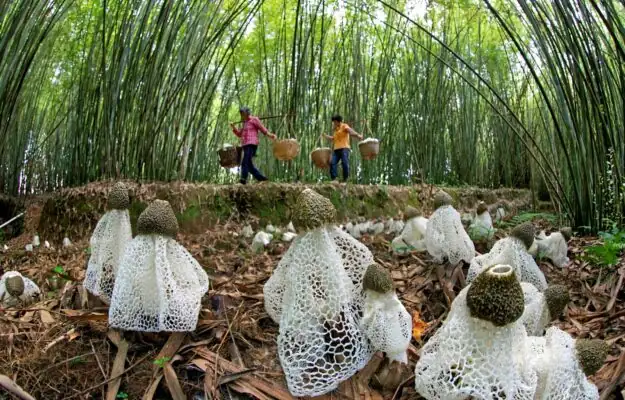
Forests provide a wide range of nutritionally valuable foods, including wild fruits, nuts, seeds, tubers, mushrooms, edible insects, fish, and bushmeat. Over 50,000 wild species are used by humans for food, medicine, and other purposes, and at least 10,000 are consumed directly as food. In some forest-dependent communities, forest foods provide up to 80% of daily protein needs and nearly half of the food consumed. Fruits, seeds, and nuts provide vitamins, minerals, calories, oils, and proteins, while roots, tubers, and mushrooms are important sources of carbohydrates and micronutrients. Wild leaves also provide vitamin A, calcium, iron, and protein, which are often lacking in the diets of vulnerable communities.
The role of forests, however, goes beyond nutrition. More than one billion people use medicinal plants harvested from forest ecosystems, and in 2022, 1.8 billion people (23%) depended on firewood for cooking, while 410 million used wood fuels to boil water and make food safe. Forests also generate income and employment, accounting for up to 20% of rural household income in some areas and serving as a safety net during food and economic crises. Support for agriculture is also crucial, through water conservation, improved soil fertility, erosion protection, mitigation of extreme weather events, and protection of pollinators. The report highlights that pollinators supported by forest ecosystems are important for 35% of global agricultural production. Furthermore, forested watersheds provide freshwater to over 85% of the world's major cities and support agriculture, livestock farming, and fisheries through essential ecosystem services such as water regulation, nutrient recycling, pest control, pollination, and biodiversity conservation.
Despite these benefits, the world's forests continue to decline: over the past decade, an average of 10.9 million hectares of forest have been lost each year, and global deforestation has maintained a similar rate between 2015 and 2025. This phenomenon impoverishes biodiversity, weakens ecosystem services, and ultimately compromises agricultural productivity and access to nutritious foods. The regional evidence collected in the report shows how the contribution of forests varies across the world. In Africa, where 58.9% of the population experienced moderate or severe food insecurity in 2024, numerous studies confirm that forest foods improve diet quality, and in some communities, bushmeat provides up to 80% of the protein consumed. A study cited by the FAO also highlights that children living in areas with greater tree cover tend to have more varied and nutritious diets. Asia is home to the largest concentration of wild forest species used for food, and over a billion people live in conditions of food or nutritional insecurity, while populations living near forests often display greater dietary diversity. In the Americas, and particularly in the Amazon, fish represents 44% of food consumed by weight and 78% of protein intake, along with bushmeat, Brazil nuts, and açaí berries (small purple fruits native to the Amazon rainforest, produced by the Euterpe oleracea palm). In Europe, a survey conducted in 28 countries found that 90% of citizens consume at least one forest-based food every year, and over a third eat game meat. Finally, in Oceania, forest foods continue to play an important role in the food traditions and nutritional security of indigenous populations.
The document also analyzes progress made in implementing the 2017 Committee on World Food Security recommendations through case studies in China, the Dominican Republic, Morocco, Turkey, and Uruguay, but highlights several outstanding critical issues: the loss of forests and biodiversity, the lack of statistical data on forest foods, the poor integration of forestry and food policies, the progressive erosion of traditional knowledge, and land rights that are often unclear or insufficiently protected.
To address these challenges, FAO offers 12 recommendations, including adopting integrated policies tailored to local contexts, strengthening regulatory frameworks, diversifying production systems, promoting sustainable forest management, increasing public investment, using diversified financing sources, strengthening information and research systems, supporting technological innovation, enhancing agroforestry systems, strengthening the rights of local communities, and increasing the participation of women and civil society in decision-making processes. The report's final message is clear: forests are not just ecosystems to be protected, but a strategic component of global food systems, indispensable for ensuring food, health, water, income, and climate resilience for billions of people.