¿El huerto, un lujo del siglo XXI?
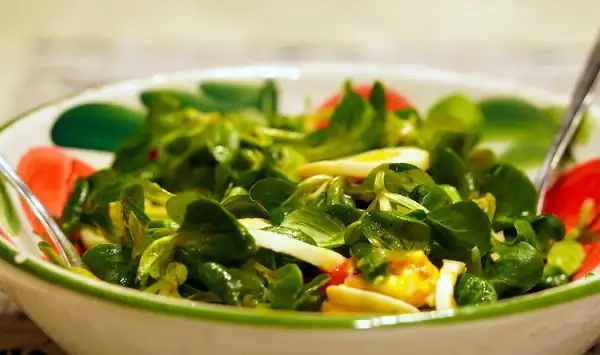
Ignacio "Coco" Montes coloca finas láminas de remolacha fucsia, calabacín, guisantes tiernos y flores en un plato, todo a la sombra de un árbol. Los acaba de recoger del huerto que rodea esta cocina improvisada al aire libre. Los enumera como si fuera necesario y los presenta crudos y sin aderezar.
Ignacio "Coco" Montes arranges slivers of fuchsia beetroot, zucchini, half-naked snow peas, and flowers on a plate, all under the shade of a tree. He has just picked them from the vegetable garden surrounding this makeshift outdoor kitchen. He lists them as if it were necessary and presents them raw and unseasoned. "Pure, unadulterated nature," he tells me. At the Ana María estate of the Marbella Club hotel, they've taken the farm-to-table concept seriously, and there's barely a trace of distance between the two.
The dish is the first appetizer in a series of collaborative culinary events organized at the hotel to promote the community garden project they are developing on the 50,000 square meters of gardens adjacent to their facilities and to raise funds for the environmental research and regeneration work of the city's Arboretum Foundation. "You can achieve a lot by thinking about business and the planet at the same time," says the foundation's founder, Alejandro Orioli, who is also an environmentalist and gardener.
In a place like this, where blue usually reigns supreme, today everything is green. Leaves, stems, skins, grains, and fruits fill a panorama punctuated only by the red of strawberries and the dozens of tomato varieties just beginning to bloom, and by the purples of the last eggplants and cabbages of spring. All of this will be part of the menu created by Madrid native Pabú and Andrés Ruiz, the hotel's wellness chef. There will be a refreshing tomato soup, a salad of snow peas, red cabbage, and apple, a course of buttery chocolate pepper, and grilled strawberries with pistachios and tiny seasonal spring onions. A lush, almost raw artichoke will appear, along with broad beans as tender as a baby dozing atop a deliciously smoked eggplant, and grilled asparagus.
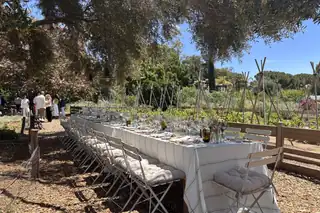
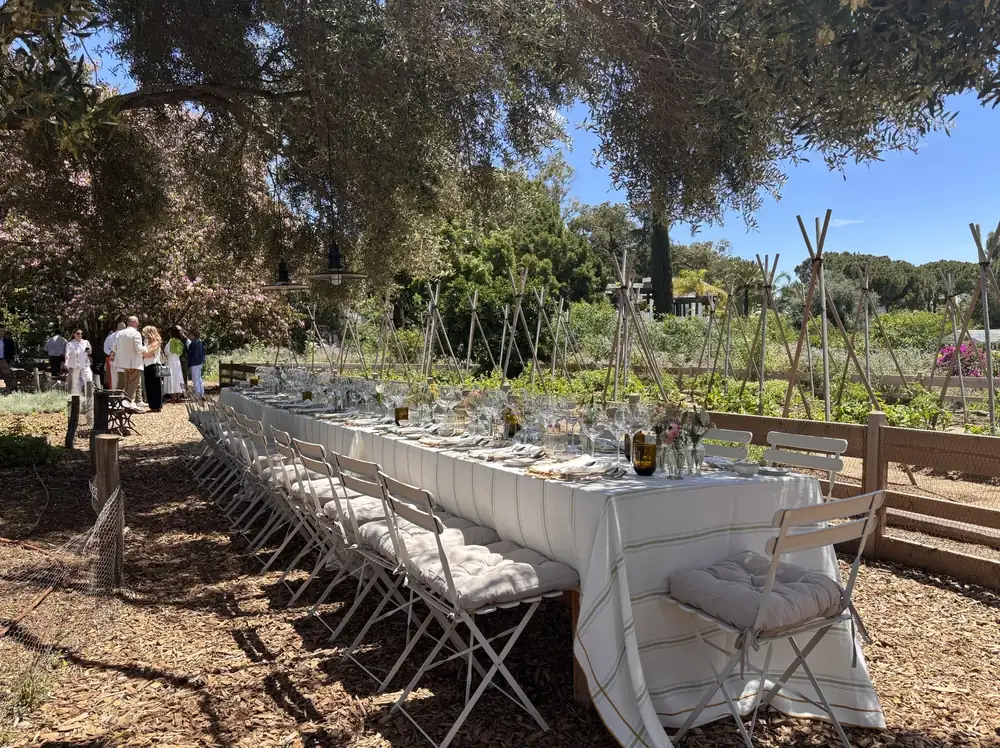
They're only cooking with fire. Both teams, the ones from here and the ones from there, work under a pergola overlooking a communal outdoor table straight out of a Jane Austen novel. Ruiz is humble and relinquishes his culinary credit as easily as taking off a jacket. He hands it over to Montes, who, given his policy of creating micro-seasonal cuisine, is the perfect person to inaugurate these sessions, which will also include Iago Pazos (Abastos 2.0), Iris Jordán (Ansils), and Jesús Segura (Casas Colgadas), one for each season.
The Von Bismarck Gardens
Ruiz creates the menu for El Olivar, the restaurant in this unique setting, based on the produce from the garden. We are on the former estate of the Von Bismark family. After taking several wrong turns, which doesn't matter because everything here is beautiful, we entered through the pool of the former, illustrious residents, now occupied by the occasional foreign guest basking in the sun.
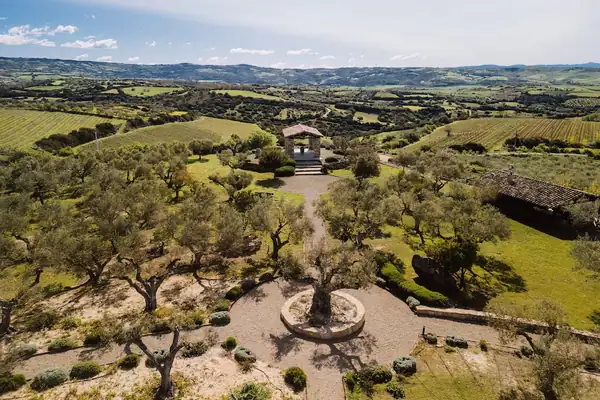
A dirt path winds through the plots designed by Louis Albert de Broglie, known as "The Gardener Prince" and the last owner of the Parisian taxidermy shop Deyrolle. Jennica Arazi, the current owner of the Marbella Club, commissioned him because of his commitment to the environment and his work in recovering nearly extinct tomato varieties in the gardens of her palace in the Loire Valley.
Orioli, from Arboretum, has been responsible for bringing them to life, cultivating and maintaining them, and transforming these gardens into a rich, vibrant, and fragrant organic larder. Annually, they boast over 300 varieties of fruits and vegetables that supply the kitchens of this hotel, which has just celebrated its 70th anniversary. These are complemented by the vegetable garden being funded by this event, where true long-term land regeneration is taking place, located less than 20 kilometers away.
At the table we share with fortunate regulars, vegetables continue to arrive like jewels. Montes's influence from Passard's restaurant in Paris is evident. Occasionally, we glimpse rabbits among the bushes, and Orioli is out in the fields gathering flowers that, just minutes later, appear on the plates served to us. Ángel González, recently ranked fifth best sommelier in Spain according to the Top 100 Sommeliers list, pairs them with wines that are also organic or, failing that, biodynamic. He serves us a rosé champagne from Maison Franck Bonville, a 2024 Forlong 100% Palomino, a superb 2023 Viña Corrales Saca fino from Jerez, a magnificent 2018 Matallana the color of a tile at sunset… It seems a selection chosen with sentimentality. It's no wonder, then, that González has a poet's name.
The luxury of nature
The entire menu is sensitive to time and the environment. Even the final meat dishes draw on the Crestellina mountain range, near the town of Casares in Málaga province, and consist of a Payoya kid goat prepared in two stages, which has been roasting over the fire since we arrived: the first stage features its legs in beurre blanc; the second, its ribs. “There’s no fish on the menu because it’s not the best season” Montes explains, “and the fantastic thing about this food is that it disappears today. We follow the season day by day. This goes beyond farm to table.”
“We want to educate the local community about sustainability projects and organic farming” Orioli explains during one of his visits to the diners, “to drive positive transformation, to make us ask ourselves what kind of people we want to be.” The truth is, here, under the branches of a tree swaying to the rhythm of the Mediterranean breeze, handling these glasses and silver cutlery, it's easier to consider it. Even to believe that yes, we can be better. Is nature now only accessible to a select few? Is a vegetable garden, the creative use of its fruits, the new luxury of the 21st century?
At the end, we were given a questionnaire to measure the carbon footprint generated by organizing this event. It asked where we came from and what means of transport we used. In the kitchen, we generated a mere 9.8 kilos of compostable waste. The goat bones, for example, already amounted to 2 kilos. Leaves and peels from the main ingredients were used to prepare stocks and sauces. “We used 156 liters of drinking water, 0.2 kg of paper, 0.8 kg of plastic, and 1 glass bottle” Orioli listed. There are still calculations to be done.
With its labyrinths, its glass-enclosed greenhouses, and even its cabinet of curiosities in a former guesthouse, the Ana María estate seems like a mirage. It transports us to another era when simply reaching up and eating fruit was an everyday gesture. Now it's an exceptional one.
However, like all mirages, this oasis will have an expiration date. “It’s an ephemeral project that will last five years” we’re told by the Marbella Club. The temporary nature of it isn’t just about what the vegetable garden produces. “The goal is for the estate to be integrated into the hotel, so they aren’t separate spaces as they are now. This will happen in different phases. The vegetable garden is the first; then will come an incubator for different plant varieties, a glamping experience, and perhaps a new villa.” They assure us, however, that the focus will remain on nature, sustainability, and biodiversity. With the last glass of Málaga Muscatel that Ángel served us still in our hands, we cross our fingers that this will be the case.