Germans’ All-time Favorite Easter Dishes
Easter has its origins in Jewish traditions, namely in the Jewish Passover. The Easter bunny and Easter eggs were introduced as symbols of fertility from pagan traditions. The Easter bunny gained its actual recognition in the 19th century as a result of mass-produced chocolate and toy bunnies.
The Christian context for Easter is the resurrection of Jesus, who, per to biblical testimony, was crucified on the Friday before Passover. Ever since 325 AD, the Christian Easter has been celebrated on the Sunday after the first full moon of spring.
The history of the Easter candle goes back to the 4th century and is linked to the pagan tradition of burnt offerings. In the creation of the symbol of the Easter candle, this idea was adopted and extended to the resurrection of Christ. In some German regions it is lit on Holy Saturday, while in other places it is lit on the evening of Easter Sunday or on the morning of Easter Monday.
In Saxony-Anhalt , Easter eggs used to be brought to the children by the Easter fox. Evidence of this can be found in popular literature up to around the 20th century.
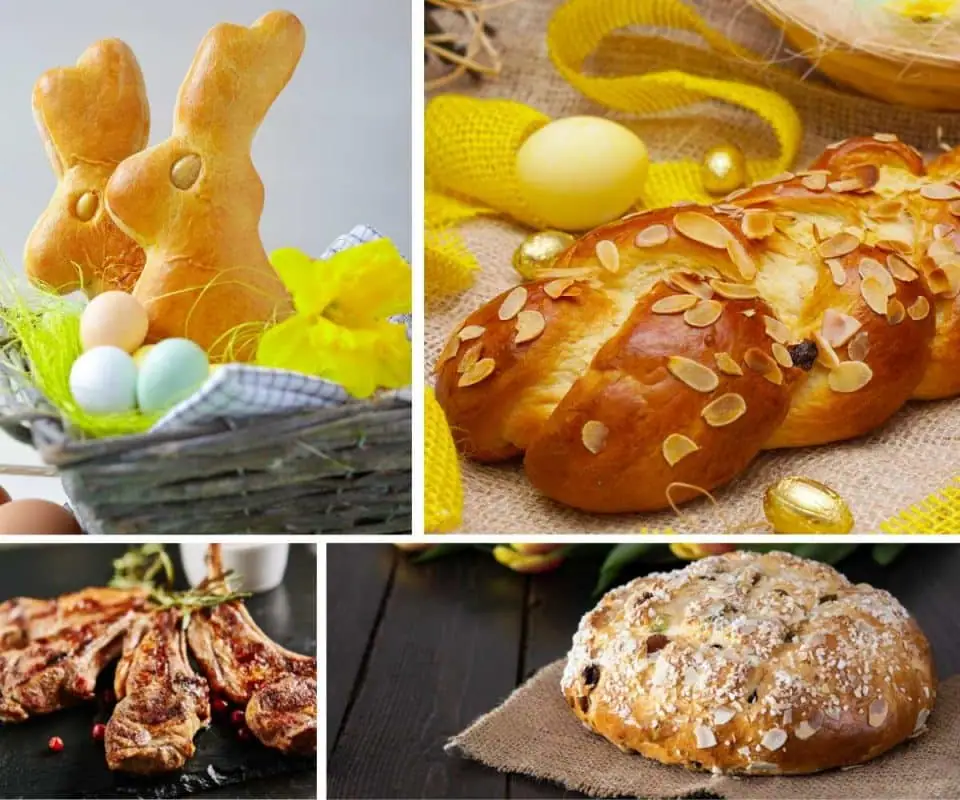
The tradition is also known as Karfreitagsratschen (Good Friday rattling.) Popular dishes traditionally prepared for Easter in Germany On Good Friday, which was originally a day of fasting, meat is still completely excluded from meals in many places. Holy Saturday is the day of the burial rest and is used to prepare for Easter Sunday. On this day, tasty delicacies are baked, such as Osterzopf (Easter plait), Osterfladen (Easter cake) made of yeast dough, Osterhase (Easter bunny) made of sponge mixture, and Osterlamm (Easter lamb), which are all served on Easter Sunday.
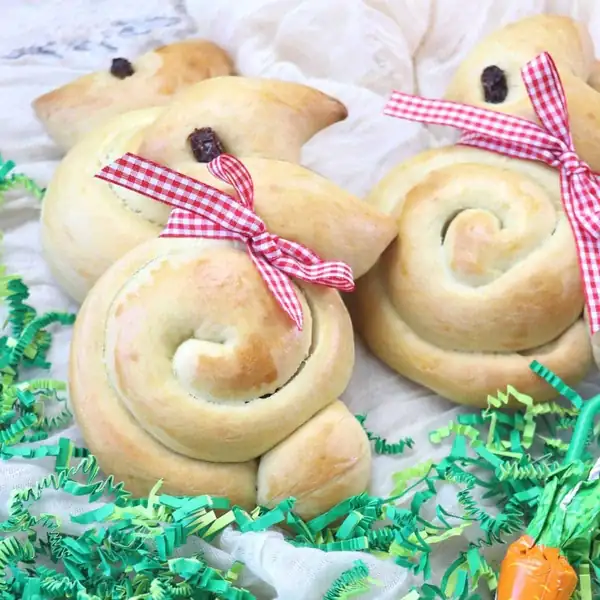
The first method that comes close to the Easter cake we know today appeared at the end of the 16th century, in 1598, in the first printed cookbook written by Anna Wecker from Basel, Switzerland. It was not until the end of the 19th century that the Easter cake appeared in common cookery books. Osterhasen (Easter Bunny) In addition to the classic Easter lamb, the Easter bunny made of sponge cake is simply part of Easter.
At Easter, the Easter bunny brings the eggs, as is generally known today. Indeed, the egg hunt itself was already known in the 16th century, but originally, it was not the Easter bunny who brought the eggs.
In Tyrol the Easter hen, and in Thuringia the cuckoo, depending on the region, many different animals became the focus of attention during the Easter holidays: in Bavaria it was the fox and the cock, in Switzerland the stork. Rabbits are the first animals to have their offspring in spring and are consequently considered a symbol of fertility.
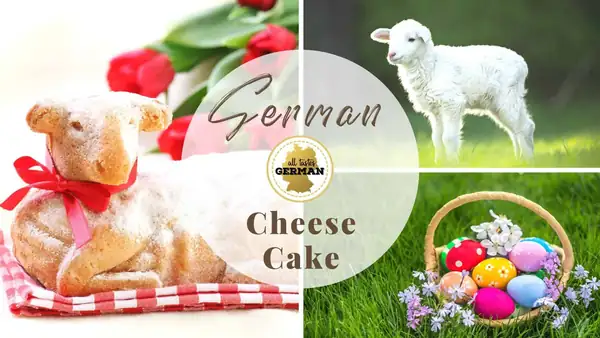
Osterlamm (Easter Lamb) For many families, Easter lamb is the traditional dish for Easter Sunday. With the Easter lamb, the Jews commemorate the exodus of the Israelites from Egypt some 3,000 years ago.
- Who: Easter · Easter Sunday · View Recipe · Holy Saturday