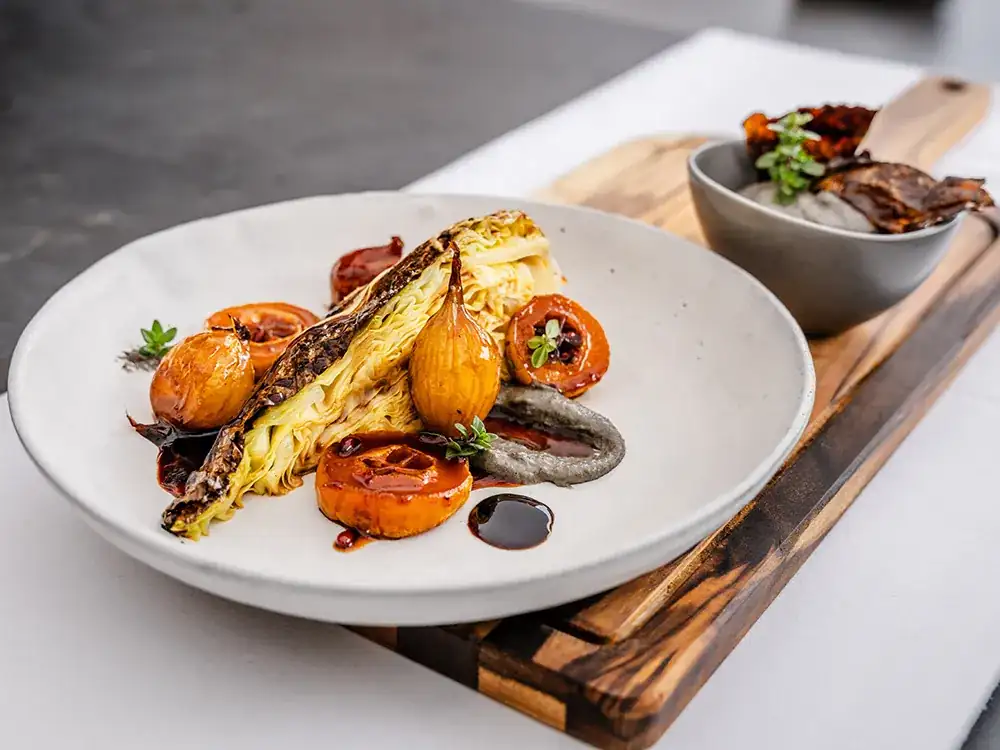
Grilled pointed cabbage with quince and Jerusalem artichoke puree
About Matthias Gfrörer's quince recipe
- 2 Spitzkohlköpfe
- 3 bay leaves
- 6 small quinces
- 1.2 liters of clear or naturally cloudy apple juice
- 1 tbsp sea salt
- 200 ml Obstetric
- 200 g sugar
- 15 small white young onions or shallots
- 1 tbsp coarse mustard
- 2 tablespoons of raw cane sugar
- 3 tablespoons of salt
- 300 ml clear apple juice
- 300 ml fruit vinegar plus some extra for seasoning
- 600 ml vegetable stock
- 1/2 a head of garlic
- 7 washed, brushed Jerusalem artichoke tubers
- 1 tsp sea salt
- 100g soft butter
- 200 ml vegetable stock
- 100 ml almond oil
- grated nutmeg
- freshly ground black pepper
- 10 ml of alternative balsamic vinegar
- Lemon thyme leaves
- Preheat oven to 220 °C (convection) or heat charcoal grill with lid.
- Cook the pointed cabbages in an uncovered roasting pan or on a grill with the lid closed for 25–30 minutes, until tender and well browned. At the same time, grill the Jerusalem artichoke tubers and half a head of garlic for 15 minutes, until tender. Quarter the pointed cabbages, keep warm if necessary, and remove any outer leaves.
- Meanwhile, peel and quarter the quince, removing the cores. Place the quince quarters in 200 ml of apple juice. Bring the cores, peels, 1 liter of apple juice, and fruit vinegar to a boil with sugar, sea salt, and bay leaves and simmer for 10 minutes. Then add the quince fillets and let them simmer gently for 30 minutes, or until tender. Tip: Once cooled, they will keep (like the onions) in a canning jar for weeks.
- Peel the onions and bring to a boil with apple juice, fruit vinegar, vegetable stock, salt, sugar, and mustard. Simmer gently for 30 minutes. Season to taste with salt, pepper, and a little more fruit vinegar.
- Cook the onions and quince separately in the stock until they are caramelized and the marinades are syrupy.
- For the Jerusalem artichoke purée, roughly chop the tubers and blend them in a food processor with pepper, sea salt, half a grilled and squeezed garlic bulb, vegetable stock, almond oil, and softened butter until smooth. Note: The purée will turn grey!
- Arrange the quartered pointed cabbages, add the quince and onions in their reduction, and glaze the remaining ingredients with the syrup. Add the purée, season with salt, pepper, and nutmeg. Garnish with lemon thyme leaves and aged balsamic vinegar.
Therefore, Gfrörer has developed a recipe that combines the stone fruit with products that are in season at the same time: pointed cabbage and tender white onions.
Flavor symbiosis: sweet, fruity, spicy, hot
In this vegetarian dish, grilled pointed cabbage acts as a sparring partner, providing the necessary dose of umami and a savory roasted aroma. "The pickled quince and the juicy young onions also allow you to easily extend the taste of late summer into autumn."
In a preserving jar, they keep for weeks and also add a visual boost to the kitchen. The chef's dish offers a complex flavor spectrum, ranging from sweet and delicate to fruity, spicy, and sharp. "A wonderful symbiosis on the palate," promises Gfrörer. He also recommends game: venison, wild boar, or red deer – these pair wonderfully with quince.
- Make a stock from the cores and peels, in which the quince quarters are cooked until soft – just like in our recipe above.
- Harmonious flavor complements are provided by aromas from Indian-Ayurvedic cuisine, such as ginger and chili, but also basil. Sauté the fruit segments in butter.
When are quinces in season?
Quinces are in season from September to November.
How can I tell if quinces are ripe?
Quinces are perfectly ripe when they smell enticing.
Can I eat quince raw?
Quinces are usually rock-hard, so they are difficult to eat raw. Only a few varieties have flesh that can be enjoyed raw. Their taste is similar to that of native apples.
When are quinces cooked?
The quince is cooked when it's soft like a boiled potato. "It's much more forgiving than an apple, as it doesn't overcook as quickly," says Gfrörer.
Where do quinces come from?
Quinces, which have been cultivated for 4,000 years, originated in the Caucasus. Most of the fruit in our markets comes from Turkey.
Where do quinces grow in Germany?
Since 2009, the private "Quince Project" on Weinheimer Bergstraße has cultivated 650 trees with over 60 different varieties; in addition, they harvest fruit from traditional orchards. All the fruit is picked by hand and processed into chutney, mustard, brandies, liqueurs, or vinegars.
Visiting Matthias Gfrörer
Concept: Matthias Gfrörer has developed a unique and highly sustainable style with his creative vegetable-based cuisine (fish and meat are served separately), using the best seasonal produce from the affiliated organic farm, Gut Wulksfelde. Cuisine: The dynamic chef is constantly evolving himself and his restaurant – with numerous events and the expansion to include a deli, ice cream parlor, and animal encounter area. In the large restaurant with its open kitchen, dishes such as homemade mozzarella served as a Caprese salad (with tomatoes and basil) (€12/€24), Breton artichoke with three different dips (€23), and Niçoise à la carte with roasted potato sticks and olive tapenade (€14/€26) are offered. Drinks: The wine list features around 200 bottles, many from certified organic winemakers. Atmosphere: In the large, bright restaurant, guests are seated at wooden tables and on benches surrounding the room. A popular venue for celebrations, it attracts many regular customers. A summer terrace is also available.