13 Fermented Foods And Sneaky Ways You Can Cook With Them
Other considerations include using a dry wine for savory dishes and sweet wines in baking, choosing tannic wines (like a chianti) for use when braising high-protein foods, and carefully selecting whether you opt for white or red wine in a recipe.
“It is traditionally produced through the introduction of kefir”
While leftover sourdough starter can be incorporated into a myriad of baked goods including pretzels, bagels, biscuits, scones, and brownies, there are some even more unusual ways to use up your slightly stale sourdough bread. Per TrueSourdough.com , more clever sourdough hacks include turning it into breadcrumbs which can be used to thicken sauces for a tangy flavor, substituting it for plain bread crumbs as the batter for fried chicken, or turning it into a streusel topping for muffins and cakes.
In addition to being a nutritionally dense food, loaded with manganese, vitamin K, and probiotics, miso is an incredibly versatile ingredient. While typically thought of as ideal in savory applications, miso can be the key secret ingredient to sweet dishes like banana bread . The saltiness of the miso helps to contrast the sweetness of the ripe bananas, elevating the humble banana bread into something extraordinary.
Kefir
Kefir is a fermented milk beverage that has been consumed by nomadic tribes throughout parts of Eurasia north of the Caucasus Mountains for centuries. Its name comes from the Turkish "keyif," which translates to "feeling good." It is traditionally produced through the introduction of kefir "grains," which promote lacto-fermentation in the milk. According to WebMD, kefir can contain up to 30 distinct strains of probiotics and is particularly rich in magnesium. While you can obtain kefir in a number of delicious flavors from a myriad of different brands, it can be an amazing ingredient to incorporate into baking, particularly as a substitute for buttermilk. Like buttermilk, kefir has one superpower: its acid content (via America's Test Kitchen ). When baking soda is exposed to an acidic liquid like kefir, it produces carbon dioxide, causing your baked goods to becom
Kombucha
Tea has long been fermented by numerous cultures from China to Italy. Known as kombucha, this unique carbonated beverage develops its bubbles through the incorporation of sugar and a culture known as a SCOBY, or Symbiotic Culture of Bacteria and Yeast, into the tea. As the liquid ferments, a small percentage of alcohol is produced, approximately 0.5%, along with an abundant quantity of those health-promoting probiotics which make fermented foods and beverages so nutritious (via WebMD ). Like with kefir, many manufacturers have gotten into the kombucha business, selling flavors like Cosmic Cranberry and Mystic Mango. However, kombucha can be a particularly expensive habit to develop at up to $5.00 for a 16-ounce bottle. But if you'd like to incorporate kombucha into your daily routine, there are some clever ways to do so. Our favorite involves using it as a substit
Apple cider vinegar
For centuries, vinegar has been a staple of the diets and lifestyles of cultures across the globe (via Freedom of Health ). Its antibacterial, anti-microbial, and antiseptic qualities are widely recognized as integral to good health. Apple cider vinegar in particular has seen a resurgence in popularity as a health food fad in recent years, partly thanks to a trend toward the incorporation of natural medicinal remedies and largely because of its utility. Its production is simple. The fruit is crushed and is left to sit for weeks as it naturally ferments, turning it into alcohol. This apple wine is then strained, and the alcohol is allowed to ferment for another few weeks until it is converted into vinegar by the bacteria and enzymes known as the "mother." If you've ever opened a bottle of wine that has "turned," this is essentially what has occurred in the bottle. As f
Sauerkraut
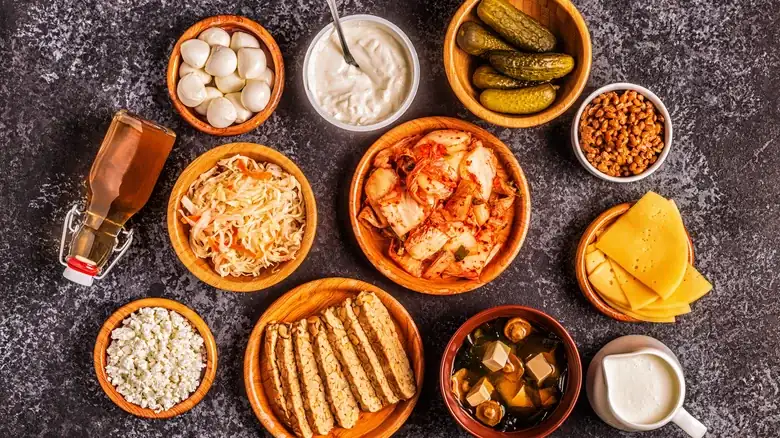
While the fermented cabbage known as sauerkraut may bring up fond memories of beer and brats consumed during Oktoberfest, the origins of this incredibly healthful condiment actually date back more than 2,000 years to China (via Healthline ). Indeed, the Chinese recognized the utility of fermentation as a means of prolonging the shelf life of vegetables, like cabbage. The Chinese weren't the only ones, as ancient Romans also pickled cabbage in salt and vinegar. And sauerkraut was commonly consumed by seafaring individuals beginning in the 18th century, as a way of warding off the scourge of scurvy. Pungent aroma aside, as Healthline notes, sauerkraut's superpower lies in its nutritional punch. Like other fermented foods, it is loaded with probiotics. However, cabbage is also rich in antioxidants and vitamin K, which has been known to not only promote cardiovascu
Yogurt
According to BC Dairy, the earliest known specimens of yogurt date back 7,000 years to Mesopotamia. Recovered Neolithic-period amphorae indicate that milk was being stored in these earthenware containers for safekeeping. It is likely that bacteria permeated these samples, resulting in the fermentation of the milk and the accidental invention of yogurt. Yogurt today is produced by the introduction of yogurt cultures into milk, which causes lactic fermentation (via Healthline ). The resulting thickened, tangy product is chock-full of probiotics, calcium, vitamin B12, phosphorus, magnesium, and potassium. As far as using yogurt in cooking, the possibilities are practically endless. Sure, it's great in dips, marinades, sauces, and even as a leavening agent for your baked goods, but where we really love using it is as a supplement to cheese in an ultra-creamy homem
Tempeh
Plant-based protein options are becoming more and more popular, even among non-vegetarians, as people are discovering not only the environmental impact of reducing meat consumption but also the potential health benefits (via WebMD ). This is why tempeh is having a bit of a renaissance. A fermented product typically made with soybeans, although occasionally produced using other legumes, tempeh originated centuries ago in Indonesia. It is considered a complete protein (meaning it contains all nine essential amino acids needed by your body), is high in a myriad of vitamins and minerals, is loaded with probiotics, and is replete with isoflavones, which have been shown to have cancer-fighting properties. Even though tofu is also made with soybeans, namely soy milk, it is not considered to be as healthy as tempeh, which has twice as much protein per ounce. Tempeh is
Kimchi
Per WebMD, kimchi has been produced in South Korea for over 2,000 years. This fermented vegetable slaw is historically brined in a combination of garlic, ginger, chili, and fish sauce in a cool pit where the pace of fermentation can be carefully monitored. Beyond being a natural way of preserving otherwise perishable vegetables, kimchi is loaded with vitamins, minerals, probiotics, and antioxidants. It is no wonder that it is considered the national dish of South Korea. Adding kimchi to almost any dish can infuse it with a spicy hit of flavor, but it is particularly popular as a garnish on things like Asian noodle dishes, stir fries, and soups. Some of the more unusual uses that we love include adding it to mashed potatoes, putting it in your grilled cheese sandwich, using it as a pizza topping, and incorporating it into your scrambled eggs. And if you really wan
Pickles
The process of pickling in an acidic brine can be traced back as far as 4,000 years ago to ancient Mesopotamia, when cucumbers were preserved both for health reasons and to prolong shelf life (via History ). However, making pickles by soaking them in an acidic brine is not the same as fermenting pickles, and this distinction can influence their flavor and their nutritional profiles, per WebstaurantStore. Typically, fermented pickles are produced using an anaerobic method, meaning there is little to no oxygen present in the fermentation process, which inhibits the fermented food from spoiling. According to Healthline, fermented pickles are so desirable because they are replete with probiotics, anticancer properties, and anti-inflammatory features and can assist with insulin resistance. And lest you think the only food that can be turned into a pickle is the lowly cucu
Natto
Natto, or fermented soybeans, have long been a staple of Japanese culture, per Healthline. This product has been described as being slimy, stringy, sticky, nutty, foul smelling, and an acquired taste. While this may not seem like something you'd want to add to your culinary routine, it's popular in Japan for a reason. When consumed properly, it is a nutritional powerhouse, rife with probiotics, vitamins, minerals, and fiber. It also contains fewer antinutrients compared with unfermented soy products like tofu. Typically the process of producing natto involves boiling the soybeans, inoculating them with the B. subtilis bacteria, and then allowing them to ferment in Styrofoam boxes. The Japanese usually consume natto as part of a healthy breakfast, although it can be eaten at any time of the day, garnished with soy sauce or mustard and served over rice. Because of
Cottage cheese
Like kefir and yogurt, cottage cheese is a fermented dairy product that confers a myriad of nutritional benefits when consumed as part of a healthy diet (via Healthline ). The key is to find cottage cheese that contains active probiotic cultures, such as Nancy's Organic or Breakstone's LiveActive. Cottage cheese also comes in various curd sizes ranging from small to large, which is strictly a personal preference contingent on the mouthfeel you enjoy. Additionally, it can be found in low-fat, low-sodium, and lactose-free iterations. In culinary circles, cottage cheese has grown in popularity, appearing on restaurant menus across the country. Because of its distinct slightly sour yet creamy flavor, it can be a great alternative to cheeses like ricotta, fresh mozzarella, or crème fraîche in virtually any recipe. However, where we love it the most is in pancakes and
Wine
One of the most quintessential examples of a fermented food item is wine. Its origins date back to early Neolithic China between 7000 and 6600 B.C. (via ThoughtCo. ). Its production has since spread to virtually every corner of the globe, with wine cultivation and consumption being an integral part of the cultural identities of many populations. According to WebMD, while wine can have adverse effects in those who overindulge due to its intoxicating properties, there has been some research that shows it can have a number of positive health benefits when consumed in moderation. When it comes to cooking with wine, its applications are multifold, ranging from supplementing moisture loss due to cutting fat in a recipe to tenderizing everything from meat to vegetables (via WebMD ). The key is knowing which wine to use. A basic rule of thumb is to never use a wine you wouldn't
Sourdough bread
According to Healthline, sourdough is thought to have first appeared in ancient Egypt around 1500 B.C. What makes sourdough bread so unique is its use of a combination of a wild yeast, lactic acid, flour, and water to create what's known as a "starter" to leaven the bread, as opposed to commercially obtained baker's yeast. Because sourdough bread typically takes a longer time to rise, it generally has a strong acidic flavor and odor, a by-product of the naturally occurring acetic acid within the sourdough starter. The end result is a crunchy, chewy bread that is easier to digest and higher in nutrients than commercially produced breads. Some evidence also suggests that the fermentation process may help break down gluten proteins, making it suitable for some individuals with gluten intolerances, though it may still not be well tolerated by those with celiac disease
Miso
Miso is a fermented soybean paste that originated in China but is ubiquitous in Japanese cuisine, per MasterClass. It is produced using a two-pronged fermentation technique. First, barley, rice, or soybeans are inoculated with the Aspergillus oryzae mold, creating what's known as koji. This enzyme is added to cooked soybeans to encourage lactic fermentation and then allowed to cure. The resulting umami-forward condiment typically comes in three types: white, yellow, and red, with white being the youngest and most mild in flavor and red having cured the longest, yielding a far more aggressive flavor. In addition to being a nutritionally dense food, loaded with manganese, vitamin K, and probiotics, miso is an incredibly versatile ingredient. While typically thought of as ideal in savory applications, miso can be the key secret ingredient to sweet dishes like banana br