How Hard Is It To Make Bao? We Tried Making Tanjong Rhu Pau From Scratch
The art behind Tanjong Rhu Pau’s legacy My fingers fumbled clumsily with the soft dough, as if it outright refused to obey even the simplest instructions.
The more I tried to pinch and pleat, the more the dough slipped from my fingers, the filling threatening to spill as the folds collapsed into one another. Looking around, I watched as the other hands moved with quiet precision, churning out perfect little bao in seconds.
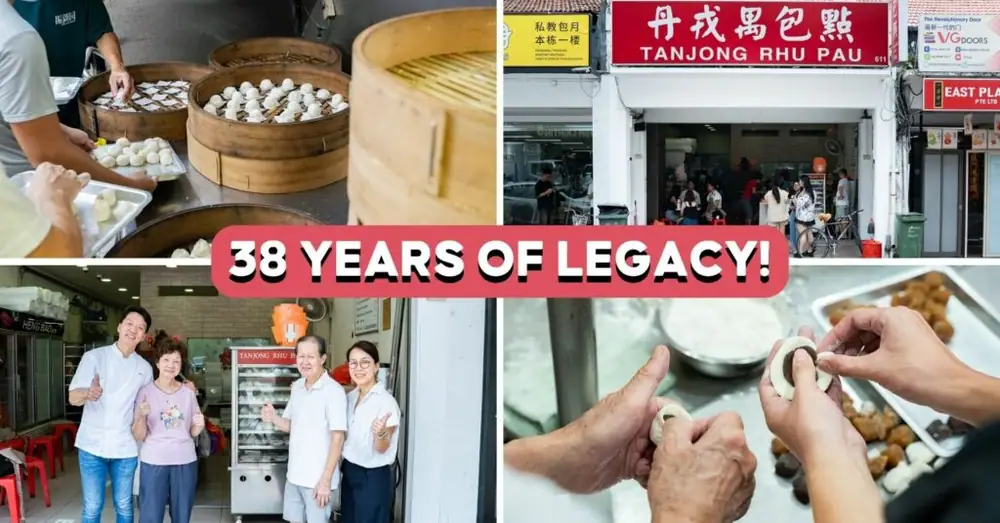
Hence, I was initially relieved when I was told my role at a kitchen tour of Tanjong Rhu Pau would be “just to observe. Write about the process.” But as the tour went on, that plan quickly unravelled, and I soon found myself standing in the kitchen of Singapore’s most prominent bao makers—tasked with replicating their time-honoured bao. Tanjong Rhu Pau: Famous Handmade Bao And Siew Mai Since The 1960s Despite now being run by second-generation owners Yap Wei Jie, 43, and Chloe Yap, 48, Tanjong Rhu Pau remains true to its roots.
Before my severe lack of culinary prowess was exposed, we were first taken on a guided tour of the kitchen conducted by the 38-year-old label. It all starts with the label’s 30-year-old mother dough—older and more experienced in the kitchen than I am—carefully maintained over generations to preserve its signature texture. But this is where arguably the toughest part of the whole process comes in.
I was quietly relieved that this wasn’t the part that they anticipated me to get hands-on, as my skinny arms would have been no match for this task. Besides the steaming room, where baskets of bao are loaded into two massive steamers and whisked out by suction, it was the roasters full of succulent char siew that caught my attention.
Each piece of char siew is coated in the label’s proprietary sauce, which is cooked over a burner and mixed with the meat to achieve that signature sweet and smoky savour. The dough we were given weighed significantly less than the typical 17 grams used for their bao—just enough for beginners to get a proper feel for it.
It begins with identifying the rough side of the dough, before flattening it on the counter. We were then instructed to form a bowl shape with our non-dominant hand to hold the dough, before placing the filling in the centre and using two fingers of our dominant hand to fold and pinch the edges. Following that, we had to tilt the bun 90 degrees while continuing to pinch, which naturally sealed the remaining dough.
Using my index finger to pinch the edges while keeping my thumb was difficult, as my hands were extremely stiff. That meant I was unable to maintain pressure on the filling, which kept sliding out of place. I even had three people from different generations guiding me through my first attempt at making a successful bao—Chloe, Wei Jie, and even the founder himself—but to little avail.
While I struggled, I was amazed at how effortlessly the experts moved through the motions, folding with clockwork precision and completing each bao in seconds. Hey, at least my bao didn’t taste completely different from the real thing—though that probably had more to do with the delicious pre-made filling.
That day, I walked out of the store not just with boxes of my odd-looking bao (and some of the real agreement), but in addition with a newfound appreciation for the craft behind what might seem like an unassuming snack. It is certainly not easy for an establishment like Tanjong Rhu Pau to stay true to its traditions, but in every carefully folded pleat lies a story of perseverance, shaped by decades of tears, sweat, and dedication.
- Who: Tanjong Rhu Pau · Wei Jie · Tanjong Rhu Pau’s