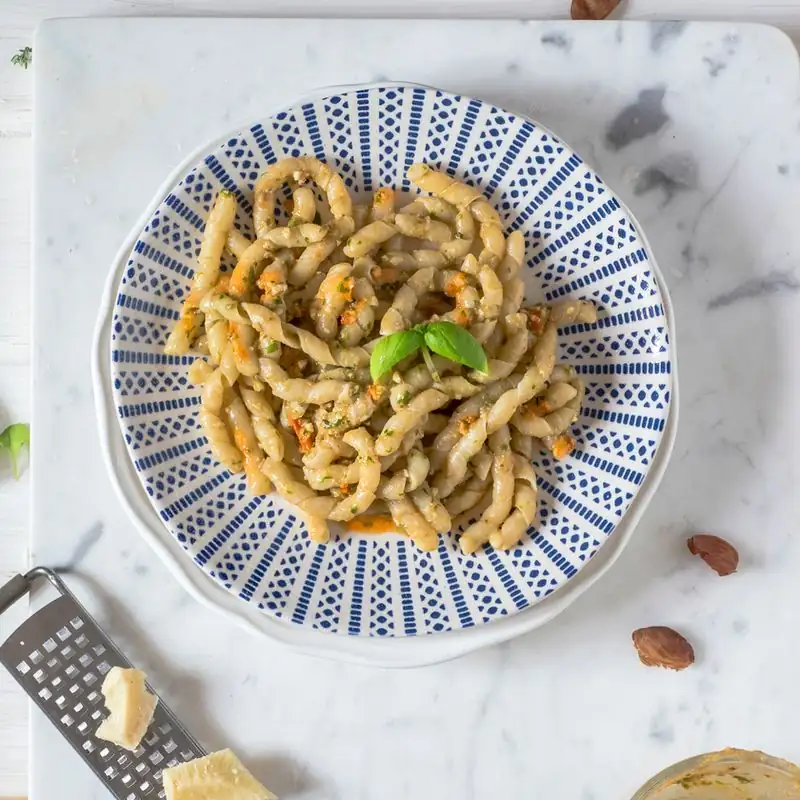
Sicilian Busiate: The Twisted Pasta Perfect for Pesto
Sicilian busiate are a fresh pasta with a characteristic twisted shape, traditionally made around an iron
Busiate, also known as busiati or maccheroni al ferro, are a type of fresh pasta originating from western Sicily, specifically the province of Trapani. This pasta is an important expression of Sicilian culinary culture and a local delicacy. Its unique shape and ability to hold sauces well make it a tasty choice for traditional Sicilian dishes.
What are busiate?
Reminiscent of strozzapreti in shape, busiate are a typical Sicilian fresh pasta that pairs beautifully with ingredients from their homeland—busiate with Trapani pesto, for example, are an exceptional example.
To give busiate their classic shape, they used the buso, the stem of a plant so called in Sicilian dialect. A knitting needle can be used, which is very useful for creating that unique twist. If you don't have one, you could also try using a long wooden skewer, since the diameter doesn't need to be very wide. They pair well with meat and fish sauces, enhancing their flavor. They can also be made with whole wheat flour.
Sicilian Busiate: The Basic Recipe
- 400 g re-milled durum wheat semolina
- 200 g water
- sale
- Knead the semolina with about 200 g of water and a pinch of salt until you obtain a firm, very smooth dough.
- Let it rest covered with a cloth for about 30 minutes.
- Then roll it out into thin sheets (2 mm) and cut it into strips 5 mm wide and 10-12 cm long, then shape them into busiate. Below, you can see the steps to follow.
- Arrange them on a tray, sprinkle them with semolina and leave them to dry for at least 3 hours.
Sicilian or Trapani-style pesto: the typical sauce for busiate pasta
Pesto alla trapanese, also called pesto alla siciliana, is a traditional western Sicilian recipe, originating in the Trapani area and over time becoming one of the island's most beloved condiments. Two names for the same fresh and fragrant sauce, made with tomatoes, almonds, basil, and garlic.
Trapani-style or Sicilian-style pesto: the recipes
- 250 g of ripe tomatoes
- 80 g of peeled almonds
- 1 clove of garlic
- 1 bunch of basil
- 60 g of grated pecorino cheese
- 80 g of extra virgin olive oil
- sale q.b.
- Wash the tomatoes, cut them at the base, and blanch them for a few seconds in water. Drain them, let them cool, remove the skin and seeds, and scoop out the pulp.
- Crush the garlic, almonds, and a few basil leaves in a mortar and pestle until coarsely ground. Then add the tomatoes and continue blending, gradually incorporating the extra virgin olive oil. Finally, add the grated pecorino and season with salt.
- Cook the Sicilian busiate in plenty of salted water, drain when al dente, and toss with the Trapani-style pesto, adding a little cooking water if necessary to make the sauce creamier. Garnish with a few basil leaves and serve immediately.
Seasonings for Sicilian dumplings
In addition to the classic Trapani-style pesto, Sicilian busiate can be seasoned in many ways, with the most typical flavors of the island's cuisine.
- With fish: tuna, swordfish, shrimp, or blue fish, even in simple tomato sauces.
- With eggplant: fried or sautéed, with tomato, basil, and salted ricotta.
- With vegetables: courgettes, peppers, and tomatoes for a fresh and colorful dressing.
- With meat: meat ragù or more rustic and tasty sauces.
- With pesto: in addition to Trapani pesto, you can try pistachio, almond, or seasonal vegetable pesto.
- With ricotta: fresh or salted, for creamy sauces with a truly Sicilian character.