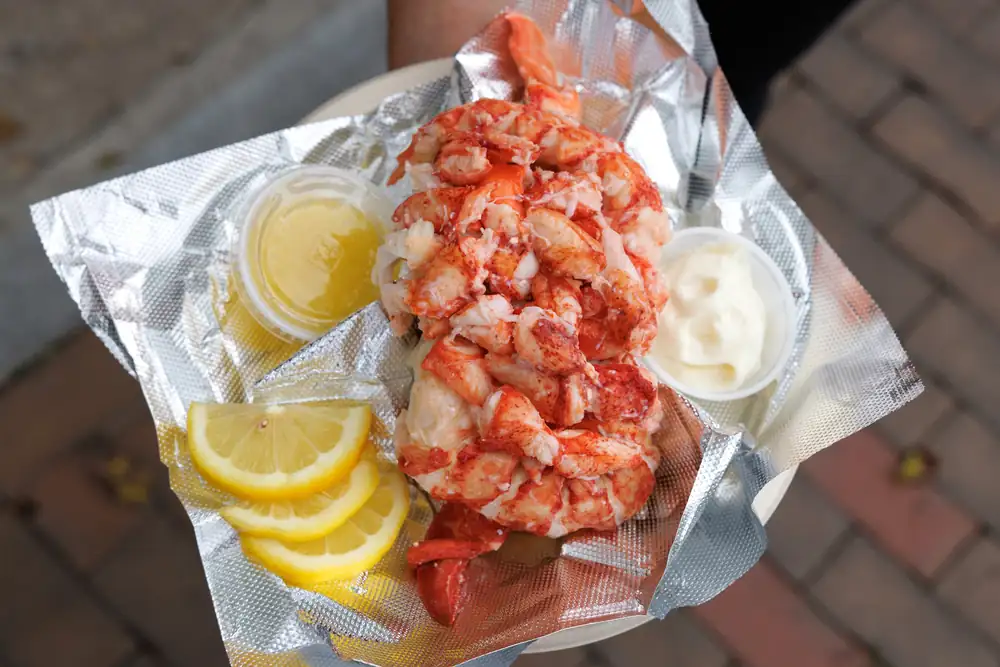
Lobster rolls with melted butter have quietly gained ground in Maine
There are a few food-related assertions that Mainers see as unequivocal truths: Whoopie pies originated here, not Pennsylvania.
What’s probably the hottest take in the eyes of the rest of the country, though, aside from the palatability of Moxie, is that lobster rolls are meant to be served cold with mayonnaise — a frequent disappointment to tourists who come for the iconic dish only to find it treated like canned tuna.
I’ve noticed a shift in the menus of Maine restaurants and seafood shacks though, indicating that attitude might be changing.
Once considered sacrilege in this state (and it still is by some), lobster rolls served with melted butter appear several times among the specials of restaurants participating in Maine Lobster Week, running through Saturday, including at Birdies in Bangor, The Burleigh in Kennebunkport and Red’s Eats in Wiscasset, which has always offered the option, perhaps explaining why tourists flock there.
That’s the only way they’re listed on the menu at Twelve, the pinnacle of fine dining in Portland, where the traditional split-top bun is upgraded to a homemade croissant. Even Bayley’s Lobster Pound in Scarborough, where the mayo version is said to be invented, allows customers to order theirs with butter — and avocado, if they want.
All sorts of toppings and seasonings, from curry to Cajun, have appeared on Maine lobster rolls as their popularity has exploded in the last two decades and restaurants have tried to put their own twist on the now-ubiquitous dish, with many offering so-called flights, allowing customers to try several flavors at a time.
That may have helped pave the way for Mainers to back off from a hardline stance on drawn butter, something we’ve always known goes well with lobster. Why should we deny the delicious combination to people eating it in sandwich form?
When Portland oyster bar Eventide opened in 2012, it had three types of lobster rolls on its menu, including one with dill and mayo and another with tarragon hollandaise, said Amy Caramante of the restaurant group Big Tree Hospitality. The brown butter option vastly outsold the others, she said, making it obvious where the focus should be.
Of the 70,000 lobster rolls that The Highroller Lobster Co. sold this summer, about half were ordered with one of the Old Port restaurant’s mayo options (which include jalapeno and charred pineapple) and half were ordered with butter, said co-owner Peter Bissell. From there, half of the customers who opted for butter paid an extra dollar to have the meat warmed as well.
That’s what Steve Kingston of The Clam Shack in Kennebunk says is the true Connecticut style, which he believes is hard to pull off without overcooking the meat and is mostly offered to appease tourists. His lobster rolls are all made with chilled meat, then the option to smear mayonnaise on the grilled bun, have warm butter drizzled on top or do both, as most people chose.
The butter version’s association with Connecticut, where the style originated, might explain why it’s taken so long for Mainers to give it a shot. Food trucks Bite Into Maine and Cousins Maine Lobster both label their rolls served with butter as “Connecticut style,” making clear that they know it’s not traditional (though Cousins also notes on its website that it’s the most popular).
I understand why it wouldn’t be easy ceding anything lobster-related to a state whose inclusion as part of New England is often called into question. As a Connecticut native who’s lived more than half her life in Maine, I can see both sides. Maine is lobster. Lobster is Maine. How could the local version not be better? On the other hand: butter.
Susan Bayley Clough, whose great-grandmother first mixed lobster with mayo and served it on crustless white bread, personally believes that hot and cold lobster meat taste differently and that the former is better with butter and the latter with mayo.
The mayo version is still the standard at Bayley’s and accounts for about 80% of its lobster roll orders, with 15% of customers opting for butter instead, Bayley Clough estimated.
The other 5% orders them plain, she said.
While those people might consider themselves the true lobster purists, I think Maine and Connecticut can agree: that’s just not right.