Beyond matcha: Asian ingredients are gaining prominence in São Paulo's coffee shops
From familiar ingredients like shoyu and miso to yuzu and ube, ingredients from Asia are appearing in creative blends with coffee.
Matcha is no longer the only prominent Asian ingredient in Brazilian coffee shops. Preparations that include soy sauce, miso, fruits like yuzu, and other lesser-known Asian ingredients are starting to appear in coffee shops—especially in São Paulo, a city that boasts the largest community of Japanese descendants in the world.
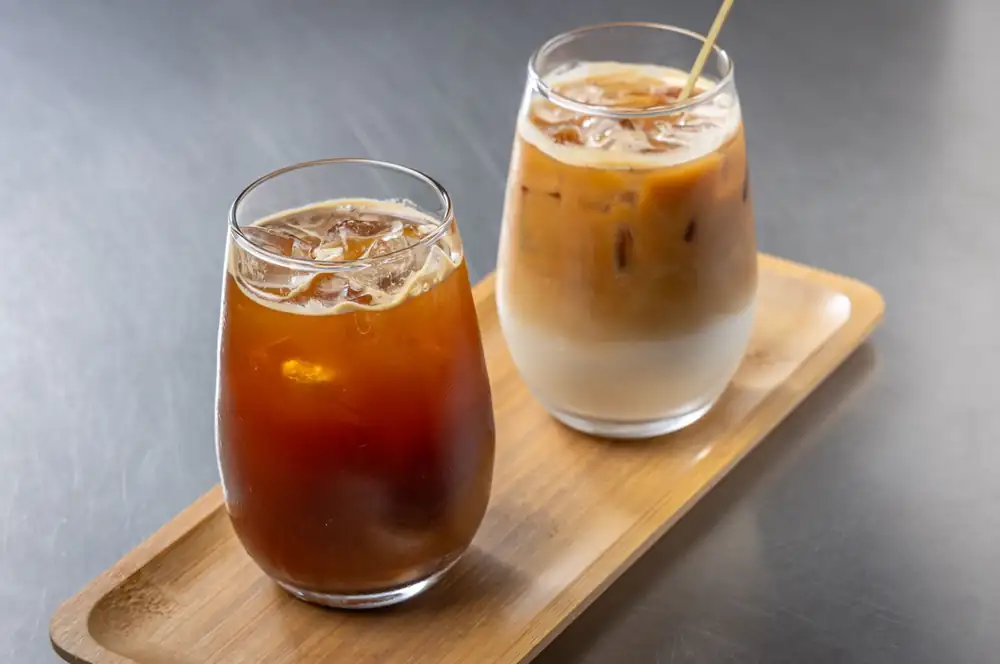
The menu at Aizomê Café in Japan House, on Avenida Paulista, already includes options such as latte and hot chocolate with miso caramel (R$ 29) — fermented soybean paste used in Japanese cuisine — and shoga cold brew (R$ 25), cold-extracted coffee infused with ginger.
“When we bring in pickled ginger, miso, or yuzu, it’s so that the ingredients enhance the coffee and the components of the drink,” explains pastry chef Rafael Aoki of Aizomê. “Shoga [ginger], for example, intensifies the flavor of the bean, bringing out the umami.”
As part of a program aligned with the São Paulo Coffee Festival, Aizomê recently prepared asagohan, a special breakfast following Japanese traditions, and coffee omakase, a tasting menu paired with coffee. The menu was curated by chef Telma Shimizu of Aizomê and barista Cauã Sperling of Fora da Lei Café.
At Mirá Padaria Autoral, located in the Pinheiros neighborhood, the most popular drink, ahead of matcha, is the mocha shoyu (R$ 32), a mixture of milk, espresso coffee, and soy syrup and honey. But the fusion with Japanese ingredients also appears in other items such as the yuzu coffee (R$ 26), a soda made from the fruit mixed with a shot of espresso.
Partner Leonardo Akira, who runs the establishment alongside his partner Júlia Fraga, owes this Latin-Japanese inspiration to his family, of Japanese origin, and to his first experience as a baker in Uruguay. He says that the creative process is similar to that of a laboratory. “The other day, we created a drink with amazake [sweet Japanese rice wine] made from corn. We made coffee with this amazake, which turned into a kind of June festival drink, combining corn with coffee.”
According to coffee expert Ensei Neto, author of the column "A Coffee to Share" in Estadão newspaper, the trend continues a long Japanese gastronomic tradition here, and brings an almost opposite perspective to that of industrialized US coffees: "It seems that what comes from Asia is purer, more natural." Thus, the use of ingredients like miso or shiso even integrates the pursuit of wellness. "These are products that end up bringing benefits and offer something different to the coffee."
For Aoki, it's also a response from the coffee industry to the hype surrounding Asian culture, from music to audiovisual media. "We have many series and films, mainly Korean, entering Brazil. All these small things have been growing and coming together to create a general boom in Eastern culture."
So close and yet so far.
In the age of TikTok, some of these ingredients are reaching our tables after gaining fame on social media. This is the case with ube, or purple yam, from the Philippines, which went viral in the US earlier this year due to its color and vanilla-like flavor. Among the creations using this product, the ube latte stands out. The ingredient made an appearance at the last edition of the São Paulo Coffee Festival, in stands such as that of the oat milk brand Nude and Namu Matcha, in a drink that combines ube with regular yam, corn juice, and plant-based milk.
It also appears on the menu of establishments like the American coffee shop Superwow Coffee, which has a location in Moema, a neighborhood in the southern part of São Paulo. “When they went to compete in the Philippines, our baristas noticed the product and brought it back, creating the ube syrup,” says Ricardo Ribeiro, one of the partners. The public liked it so much that the ube latte (R$ 25) remains a permanent menu item and represents 25% of the drinks sold at the establishment.
But the success of some of these raw materials is hampered by the challenge of obtaining them. Little known in the country, the ube used in Superwow Coffee needs to be imported. On the other hand, Aoki, from Aizomê, emphasizes that popularity facilitates access to products like yuzu, now cultivated in small quantities in the interior of São Paulo. "Between February and April, the yuzu season in Brazil, we buy up to half a ton and do the whole preservation process," he says.
Akira, from the Mirá bakery, reveals that the fruit is one of the Japanese government's major international bets after the success of matcha. This is partly due to its similarity to citrus fruits like lime, which makes it more appealing to the public, but with its own unique aroma and flavor. "It's an ingredient that should be thoroughly explored in the coming years," he states.
Ensei Neto warns, however, that this type of trend cannot become a "copy and paste" of what is done in foreign coffee shops. "We cannot base everything on what comes from abroad and forget to create a coffee culture that is essentially Brazilian."
Aizomê Coffee
Address: Avenida Paulista, 52 (Japan House) – Bela Vista – São Paulo (SP)
Mirá Bakery Authorial
Address: R. Francisco Leitão, 265 – Pinheiros – São Paulo (SP)
Superwow Coffee
Address: R. Gaivota, 501 – Moema – São Paulo (SP)