Take advantage of the end of the albacore tuna season: when to buy it, how to cook it, and why it's at its peak
Juicy, flavorful, and with a firm, distinctive texture. This fish can be found in the market from May onwards, and its availability can extend until the end of September or the beginning of October (known as the 'bonito coastal season').
Does the bonito tuna sold at the end of the season have more fat?
The albacore tuna is primarily fished in the Cantabrian Sea and the Atlantic Ocean, and its traditional season extends through the summer months and early autumn. It is then that it arrives on our shores after traveling long distances, becoming the star of one of the most important fishing seasons for numerous towns in northern Spain.
The amount of fat depends on age, size, physiological state, diet, and fishing area, but as the season progresses, bonito can be found with a greater accumulation of energy reserves, resulting in more fat and juicier, more succulent, and flavorful flesh. However, it's important to remember that bonito requires only brief cooking to prevent it from drying out.
Besides being delicious and incredibly versatile in the kitchen, bonito is an oily fish and, as such, is notable for its content of unsaturated fats, including omega-3 fatty acids, as well as providing high-quality protein, vitamins, and minerals. This is yet another reason to incorporate it into your dishes when it's in season, although you can also find it frozen and canned in various forms (loins, slices, chunks, etc.).
The northern bonito is not just any tuna.
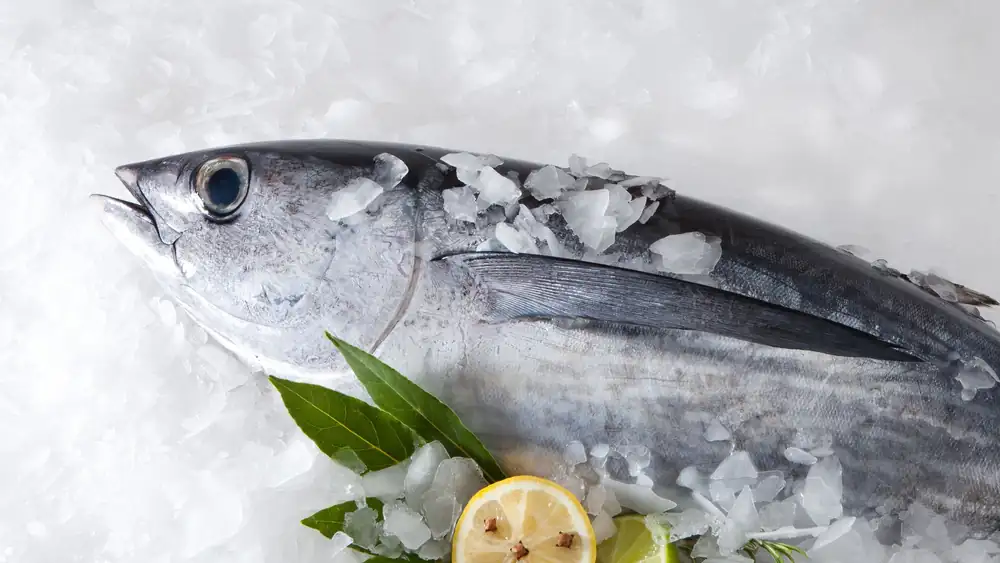
The bonito inhabits the coasts of the Pacific Ocean, the tropical Atlantic Ocean, the Mediterranean Sea, and the coasts of Australia. Its dorsal side is a deep blue, almost black, and its ventral side is a shade very close to white. It belongs to the Scombridae family of the genus Thunnus, as does the tuna.
There are two types of albacore tuna: the southern variety (or Atlantic albacore, Sarda sarda) and the northern variety (Cantabrian albacore, Thunnus alalunga). The latter—also known as 'white tuna'—is caught with a hook and line, weighs no more than 50 kilos, and is of supreme quality, with a delicate flavor and a softer texture. Its color is silvery-blue, and iridescent reflections can be seen on its belly.
The albacore tuna is born in the Sargasso Sea, migrates in winter to the Azores, Madeira, and the Canary Islands, and arrives in spring on the Cantabrian coast, where it feeds mainly on anchovies and sardines. Here it will be caught without nets, using selective and environmentally friendly artisanal techniques that guarantee the sustainability of the fishing grounds and marine resources.
On the other hand, within this same species, we find the bluefin tuna (Thunnus thynnus), a star of Japanese cuisine and an ingredient in numerous salted and cured tuna dishes, and the yellowfin tuna (Thunnus albacares), whose most distinctive features are its yellow fin (hence its English name, 'yellowfin'), its larger size, and its pink flesh. It is the most commonly used for canning due to its greater availability and lower cost.
What to look for at the fishmonger's when buying bonito: shine of the skin, firmness of the flesh and color of the cut.
When you go to the fishmonger, look at several aspects that guarantee the quality of the bonito, such as the skin, which should be shiny, smooth and moist; the flesh is another indicator, and it should be compact, not soft, and have a firm and moist appearance and a uniform reddish or dark red color; and the smell, which in a fresh bonito should be of the sea, clean and pleasant, never too strong, nor acidic or ammonia-like.
How to cook albacore tuna
Albacore tuna is one of the easiest fish to cook. Always keep in mind that overcooking will cause the flesh to lose moisture and become drier. A good trick is to take the tuna out of the refrigerator a few minutes beforehand so it's not too cold when you start cooking it; the cooking time will also depend on the size of the fish.
There are many cooking techniques you can use: griddle, grill, oven, stews, pickling... You can even eat it raw (marinated, in tartare, or carpaccio). If you're griddling or grilling it, choose thicker pieces, and for stews, add it at the end because it cooks in just 3 minutes with the residual heat of the broth and the other ingredients.
Here are some recipes featuring albacore tuna. We hope they inspire you to cook this spectacular oily fish!
It's a dish of maritime origin, the most emblematic in Spain made with bonito tuna, which began to be prepared on boats used to fish for this species to feed the crew. 'Marmitako' is the Basque word for the pot in which this stew with bonito tuna and vegetables is traditionally made.
For an appetizer, lunch, or dinner... pickled bonito is a classic that's also great on toast, in sandwiches, or in salads. And it keeps for quite a while!
Tuna with tomato is a very easy and quick dish to prepare that is both delicious and healthy. It's another classic way to cook this oily fish, a staple of traditional Spanish cuisine.
It's a kind of fish pie or 'giant meatball' very popular in traditional Asturian cuisine, especially in the coastal villages. It's stuffed and cooked in a delicious sauce—perfect for dipping good bread!
Another recipe of Asturian origin is this one: onions stuffed with bonito tuna. Often, the fish used in this recipe is canned. But in this case, we'll use fresh bonito tuna, taking advantage of the fact that this fish is in season.
It is very similar to marmitako, as it contains potatoes and bonito, but it differs from it in that it does not usually contain tomato or choricero pepper, although we will add a little tomato sauce to this stew to give it color.
Marinated and grilled, that's how we cook bonito here, which we finish with rice, peas, peppers, and garlic. It's an ideal main course because it has everything you could want.