A good panettone starts with butter: the choice that changes taste and consistency
In pastry making, even a seemingly simple ingredient can become crucial.
The choice stems not only from the search for a high-quality raw material, but also from the desire to achieve precise characteristics during processing and in the finished product. Flavors, texture, plasticity, and dough behavior thus become integral to the result. Manzotti's journey thus offers a concrete example of how the choice of butter can become a distinctive component in the design of a contemporary pastry shop.
Matteo Manzotti's journey
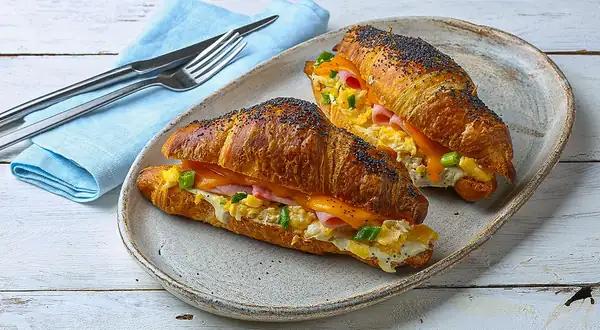
Matteo Manzotti's journey into the world of pastry making began at just 12 years old, following in the footsteps of his father Daniele, a master gelato maker and pastry chef at Caffè Milano in Treviglio. His first experience was in a chocolate shop, taking a course with Riccardo Magni, before moving on to pastry making at 14 or 15. Internships at Sant'Ambroeus in Milan and La Marianna in Bergamo solidified his interest in the industry. Between the ages of 16 and 17, he received his first awards, including first prize at Golositalia, received directly from Iginio Massari. This was followed by some television experience, with appearances on Il più grande pasticcere and Detto Fatto. His professional career continued at the family pastry shop in Caravaggio, leading to the opening of Hand's in Treviglio and the new Pasticceria Gelateria that bears his name, located between Treviglio and Caravaggio, with an adjoining 350-square-meter pastry shop. Another decisive step was his internship in London with Cédric Grolet, an experience that strengthened his focus on technique, precision, rigor, and texture. In the English capital, he still collaborates directly with the DolceVyTA restaurant. Today, Manzotti focuses part of his business on breakfast, with croissants being one of the signature products of his pastry shop, and especially on large leavened products like panettone, which has become his trademark.
Research on leavened products and the choice of butter
Alongside breakfast products, leavened products are now one of Pasticceria Manzotti's main areas of research and success. "We continually strive to improve the recipe, seeking out unique ingredients, and butter is one of them." Among the raw materials used in the laboratory, the Fratelli Brazzale Butter is undoubtedly a standout, chosen primarily for its organoleptic characteristics and its ability to form dough. "They've introduced a product to the market that didn't exist before. It's true, there are Belgian and French butters, but the satisfaction of having an Italian butter, so excellent in terms of organoleptic properties, is important," admits Matteo.
The first perceptible element, according to Manzotti, is its aromatic profile. "When you smell butter, it doesn't taste like cow's milk; it tastes like milk, something delicious. The aroma and flavor are different, while the texture it leaves behind when you knead the dough is frothier and smoother. It's a very plastic butter, but in a completely natural way."
Brazzale butter for panettone and desserts
The choice of butter has become even wider within the laboratory over time. "I use classic Fratelli Brazzale milk butter, in 5 kg blocks for pastries. Until last year, we used it for premium panettone, now we use Brazzale for almost all our products." For Manzotti, the choice of raw material makes a tangible difference, especially in panettone, both in terms of aroma and texture.
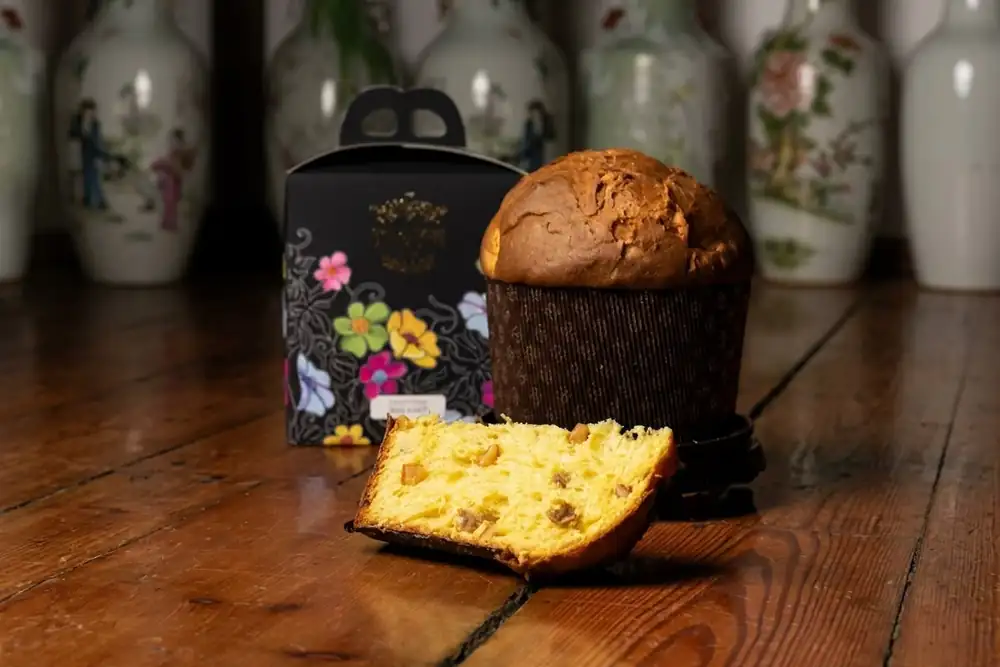
"Everything changes because it remains much tastier. You can really taste the butter aroma at the end. When you open the package and smell it, it's something else: it gives it an aromatic, vanilla-like finish, which is not the same as a panettone where lesser-quality butter was used. The current recipe doesn't include butter flavorings: the aromatic profile is entrusted to the butter itself, along with the aromas derived from orange and lemon essential oils and vanilla."
Workability is also a distinctive feature, especially when the butter is used at room temperature. "You can taste the difference because when cut, straight out of the refrigerator, Brazzale butter is much softer than more common butter. It's a natural butter, untreated in any way, which guarantees truly superb results when used in panettone and other leavened products."
Fresh panettone: production starts later
For the panettone season, Matteo Manzotti's bakery has already prepared a work plan: "This year, we've better equipped ourselves to produce higher daily quantities and keep the product even fresher. Production begins in late October, early November." This decision stems from the desire not to over-prepare artisanal panettone, even when the product's shelf life would allow for it. "My panettone can have a shelf life of up to 90 days. However, I don't think it's right to give my customers a panettone made in early October for the Christmas table."
It's based on a specific production philosophy, based on the use of natural ingredients and the absence of certain additives. "We don't use emulsifiers, we don't use fatty acids. We rely solely on natural ingredients. This means the panettone is more at risk, as it can more easily develop mold. But thanks to the ingredients we use, if kept cool and stored properly, my panettone can last up to 90 days without any problems."
20,000 panettone cakes, but still handmade
Last year's production stood at around 20,000 panettoni, a volume Manzotti aims to maintain in 2026, favoring gradual growth and, rather than sacrificing freshness, intensive production of around 1,000 panettoni per day to ensure process control. The goal isn't to increase volumes at any cost. "We like the idea of industrializing—so to speak—the process, but we still want to keep it under our control. For now, our goal is to win over our customers with excellent panettoni, made one by one, overseen directly by us."
The challenge between classic panettone and special flavors
The number of panettone products will remain at seven or eight, with research always focusing primarily on the quality of the ingredients, even when this means an increase in the cost of the raw materials and, consequently, the final price for the customer. Among the products from the previous season, which will certainly be repeated, was, for example, a panettone made with Vesuvius apricots, aimed at a premium segment, which was very successful.
"A semi-candied apricot," Manzotti continues, "that melts in your mouth, thanks in part to the addition of Brazzale butter. The range is also adapted based on consumer preferences, whose behavior can change from season to season, making it difficult to predict well in advance which panettone flavors will be most popular."