Olives that are too black aren't natural, but colored: what happens before they reach the table?
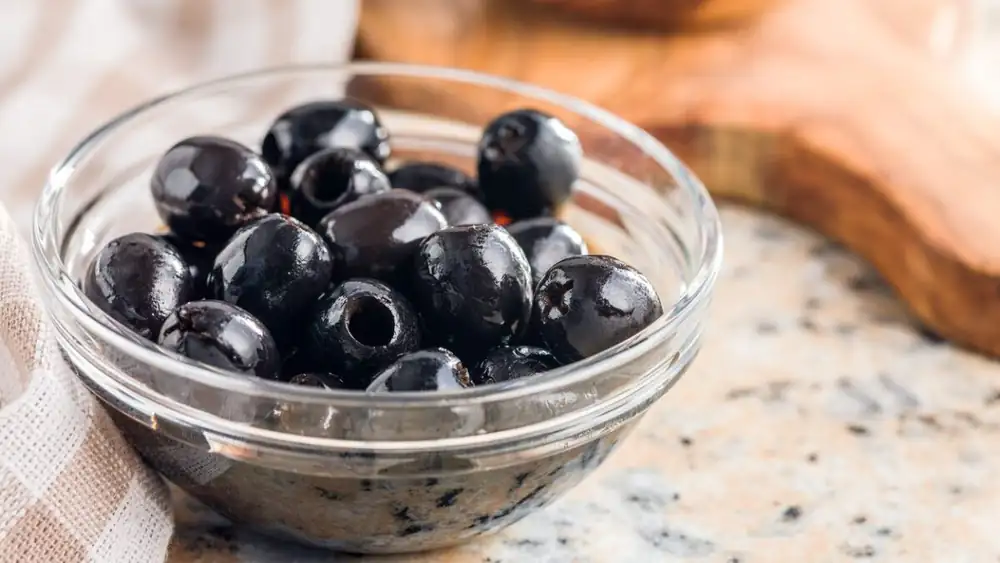
At the supermarket, it's common to come across packaged olives that are pitch black, uniform and flawless, with a shiny skin and a regular, rounded shape. You can find them whole, but most often they're already pitted.
What are colored olives: from green to black
Natural olive varieties are typically divided into green olives, which vary in shade from light to dark, and darker olives, which, as they ripen, take on varying hues ranging from brown to purple, even reddish, as seen with Gaeta olives or Ligurian Taggiasca olives, to name two well-known Italian varieties. Those marketed under the generic name "black olives," however, do not come from a single cultivar; they are green olives harvested from the tree when they are not yet fully ripe and then subjected to industrial processing that causes oxidation, resulting in blackening. Why is this done? An olive that has not fully developed and is still unripe tends to have firmer flesh that is easier to remove the pit with industrial machinery, and the lower oil content allows for a longer shelf life.
How they turn black: adding two additives
The colorants are two additives used industrially in foods: they are legal, not hazardous to health, and perform a purely functional role, as are other external agents that are added to foods for a variety of purposes, generally enhancing them, including stabilizers, emulsifiers, and colorants that enhance their palatability. Once harvested, all the olives destined for the table.
They are treated with an alkaline solution (soda) and exposed to air to cause oxidation, and finally immersed in a solution based on ferrous gluconate or ferrous lactate to permanently fix the dark color.
How to recognize colored black olives
Distinguishing a naturally darker olive from an industrially produced black one is fairly simple: first and foremost, the ingredients listed on the label serve as a guide. Additives, when used, must be listed by law: you may find the abbreviations E579 for ferrous gluconate (the most common) or E585 for ferrous lactate, or the full wording preceded by the word "stabilizer." These two additives are not classified as colorants, but as color stabilizers. An example? A typical label lists these ingredients: "pitted black olives, water, salt, stabilizer: ferrous gluconate." In some cases, you may also notice other abbreviations like E270 (lactic acid) and E330 (citric acid), which are acidity regulators generally found in brined olives. Simply looking at the olive, however, black ones have a standardized appearance, practically perfect in their shape, with a homogeneous distribution and no nuances of color, while in the naturally darker olives different shades and gradations appear: purple, brownish, reddish, never completely black.